Best Electric Forced Air Wall Heaters for Fast Home Heating
When the aim is rapid warmth without ductwork, electric forced air wall heaters offer a compact, efficient solution. This guide highlights five strong options, spanning compact units for small rooms to higher‑capacity models for larger spaces. You’ll find features like built‑in thermostats, oscillation, remote control, and safety protections. Use the buying guide to compare outputs, installation needs, and energy considerations to pick the right heater for your American home.
| Product | Type | Approximate Heating Capacity | Key Feature |
|---|---|---|---|
| Cadet Com-Pak Electric Wall Heater CSC202TW | Single‑panel wall heater | ~2000/1500 W; up to 200 sq. ft. | Quiet operation with safety shutoff |
| Cadet Com-Pak Twin CSTC402TW | Twin double‑fan wall heater | ~4000/3000 W | Wide heat coverage; built‑in thermostat |
| Dura Heat EUH1465 | Forced air heater with pivoting base | 1500 W | Flexible base for corner placement |
| Broan-NuTone 9815WH | High capacity wall heater | 1500 W | Adjustable thermostat; contemporary grill |
| Dreo WH719S | Smart wall heater | 1500 W | App control; 120° oscillation; Alexa/Google |
Cadet Com-Pak Electric Wall Heater CSC202TW
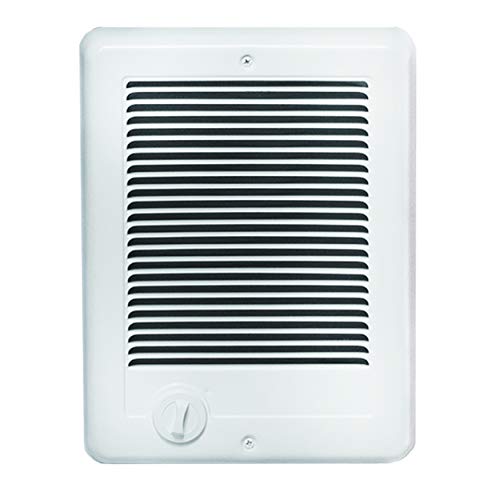
The Cadet Com-Pak CSC202TW provides 2000/1500 watts of heating on 240/208-volt supply, suitable for spaces up to about 200 square feet. Its compact design supports ceiling installation in models rated at 1,500 watts or less. This unit emphasizes quiet operation and even warmth via a circulated air stream. Safety features include automatic shutoff if temperatures exceed safe levels, helping prevent overheating in occupied rooms.
Cadet Com-Pak Twin CSTC402TW

The CSTC402TW is Cadet’s twin‑fan wall heater, rated for 240V and 4000W / 3000W. It includes a built‑in thermostat and supports hardwired installation, with a large grille and a robust enamel finish. This model targets larger rooms or open spaces where higher heat output is desirable, delivering a full range of warmth with two fans and a straightforward installation approach.
Dura Heat EUH1465 Electric Forced Air Heater

The Dura Heat EUH1465 delivers 1500W of PTC ceramic heating for quick warmth in small spaces. Its rugged steel construction suits garages and workshops, while offering flexible use with heat and fan‑only settings. The pivoting base adds placement versatility, making it a practical option for corners or uneven layouts where heat direction matters most.
Broan-NuTone 9815WH High Capacity Wall Heater
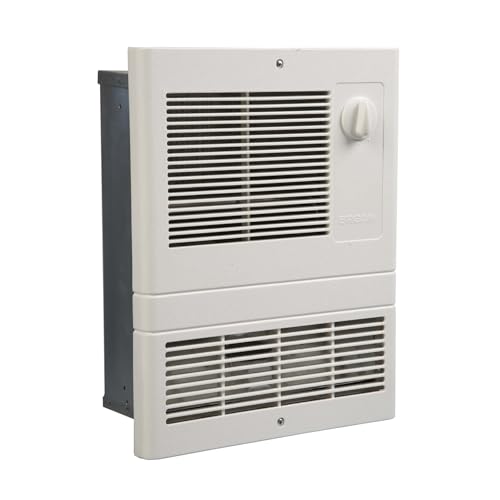
The 9815WH is a high‑capacity 1500W wall heater with a white grille and adjustable thermostat. It is designed to complement modern interiors with its clean lines and a simple control interface. The unit can operate at 120V and can be configured for 240V in some installations, providing flexible electrical compatibility for different homes and rewiring scenarios.
Dreo Smart Wall Heater WH719S

The Dreo WH719S is a 1500W smart wall heater with 120° vertical oscillation and a remote for convenient control. It pairs with a mobile app and supports Alexa/Google Assistant for voice commands. The precise thermostat and fast heating are designed to balance comfort with energy usage, making it suitable for bedrooms and living areas where consistent warmth is beneficial.
Dreo Smart Wall Heater (Alternate Model)

This DREO alternative smart wall heater offers a similar set of features: 1500W output, remote control, app connectivity, and compatibility with voice assistants. The unit emphasizes quiet operation, precise temperature control, and flexible installation options for homes that prioritize smart home integration and energy‑efficient performance.
Buying Guide: Key Purchase Considerations
- Room size and heat output: Select a model with the appropriate wattage for your space. Smaller rooms often need 1000–1500W, while larger living areas may justify 3000–4000W twins.
- Thermostat control: Built‑in thermostats help maintain consistent temperatures. Consider models with front‑mounted or remote thermostats for easy adjustments.
- Heat distribution: Oscillation and multiple fans improve even warmth. If heat direction matters, look for pivoting bases or adjustable louvers.
- Installation: Wall‑mounted units usually require proper electrical wiring; confirm voltage compatibility (120V vs 240V) and whether hardwiring is needed.
- Smart features: App control, timers, and voice assistant compatibility can simplify daily use and improve energy management.
- Safety features: Overheat protection, cool‑to‑touch surfaces, and sensors reduce risk, especially in homes with children or pets.
- Noise levels: For bedrooms or study spaces, prioritize low‑noise models or fan‑less designs when possible.
- Energy efficiency: Look for units with efficient heating elements and ECO modes to minimize running costs over the season.
- Maintenance: Units with permanently lubricated components and simple access panels ease ongoing upkeep.
- Budget vs. longevity: Higher initial cost can be offset by robust build quality and longer service life in high‑traffic areas.
In summary, the best choice depends on room size, installation constraints, and whether smart features or simple manual controls are preferred. The highlighted models cover a spectrum from compact to high output, with practical safety and convenience options for American homes.