Best Electric Fence Fault Finder and Tester Guide for 2026
In this guide, we explore the top-rated electric fence fault finders and testers designed to help ranchers, farmers, and hobbyists quickly locate faults and restore fencing integrity. These devices cover a wide voltage range, provide clear readings, and offer practical features for field use. Below is a concise summary of the five featured products, followed by detailed sections to help you compare options and choose the right tool for your fence system.
| Product | Brand |
|---|---|
| Electric Fence Tester and Fault Finder, 15KV Digital Electric Fence Voltage Tester 200V‑15000V | M MINGYA |
| ALLOSUN Electric Fence Tester Fault Finder Digital Electric Fence Voltage Tester Max 9.9kv, Blue (EM555) | allsun |
| ALLOSUN GK503B NEON Electric Fence Voltage Tester and Fault Finder Max 7 kV, NOT LED, Red | allsun |
| allsun Digital Electric Fence Tester Fault Voltage Meter, Auto On/Off for Pulse Detection 300V-9900V | allsun |
| FenceMate Digital Fence Tester – Up to 19.9 kV, Cordless Fence Detector | FenceMate |
Electric Fence Tester And Fault Finder: 200V‑15000V Range

This M MINGYA tester covers a broad range from 200 to 15,000 volts, making it suitable for a wide variety of electric fence setups. The large LCD display with backlight clearly shows voltage and current direction, helping you pinpoint fault points quickly. A metal-top contact design facilitates fast fault location on multiple fence materials, including steel, aluminum, poly wire, rope, tape, and braid. Its multifunction capability supports rapid checks across different fence configurations, whether used on garden perimeters or larger pasture fencing.
ALLOSUN Electric Fence Tester Fault Finder Digital Electric Fence Voltage Tester Max 9.9kv

The ALLOSUN EM555 unit provides a measurable range up to 9.9 kV with a 57-inch wire length for flexible testing. It emphasizes power-saving operation, turning on only when a pulse is detected and automatically powering down after a short interval without pulses. This feature is ideal for routine maintenance where conserving battery life matters, especially when you test multiple sections of fencing or controllers in a day.
ALLOSUN GK503B NEON Electric Fence Voltage Tester And Fault Finder
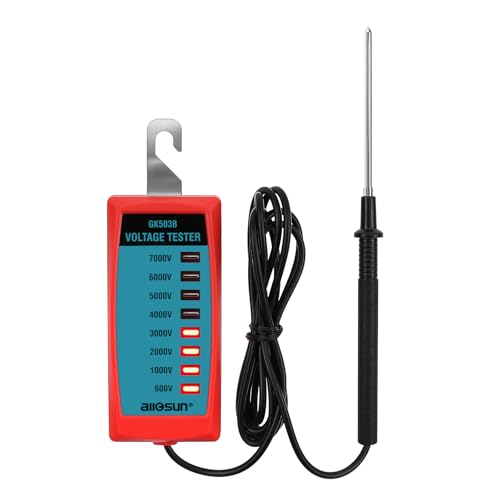
This GK503B model uses neon indicators rather than LEDs to show voltage levels from 0.6 kV to 7 kV. It’s designed for standard duty, low-impedance fences and is compact enough to carry easily in a pocket. The neon lamps are durable and perform well in shaded or evening light. Its usage involves a simple loop contact with the wire and grounding, making it a straightforward tool for field checks where visibility in bright sun may be limited.
allsun Digital Electric Fence Tester Fault Voltage Meter

This 9.9 kV-capable tester is designed for pulse detection with auto on/off functionality. It measures voltage with a large LCD display and supports quick checks along the fence line. The device is marketed toward gardeners and livestock operations, offering a balance of affordability and practical features like low power consumption and an easy-to-use probe-and-ground testing method.
FenceMate Digital Fence Tester Up To 19.9 kV

FenceMate’s model supports a high range of up to 19.9 kV and includes a large, back-lit LCD that displays voltage, current, and current direction simultaneously. It’s designed to work with most energizers and controllers, making it a versatile option for larger properties or more complex fence setups. The belt clip included aids in field movement, helping you keep your hands free while testing along long fence lines.
Speedrite Digital Fault Finder

Speedrite offers a fault finder with a display that shows current, voltage, and current direction simultaneously, and even stores a previous current reading for quick comparison. An audible current indicator and a convenient belt clip add to the device’s field usability, making it easier to monitor changes as you troubleshoot and repair fence sections.
Electric Fence Voltage Tester & Fault Finder: Amperage & Short Locator

This smart digital wireless voltage detector emphasizes quick fault location by displaying both voltage and current, along with the current direction, on a backlit LCD. It highlights rugged design for ranches and farms, and runs on a 9V battery (not included). The dual measurement approach helps users pinpoint faults while assessing amperage and potential shorts, aiding in faster repairs.
Buying Guide
- Voltage range: Choose a tester that covers your fence voltage. If you operate high-voltage systems, a model up to 9.9 kV or 19.9 kV offers better compatibility with common electric fences.
- Display readability: A backlit LCD or neon indicators improve visibility in bright daylight or dusk. Neon indicators can be easier to read in shaded areas, while LED displays excel in dim conditions.
- Power source and efficiency: Look for auto-on/off features and low power consumption, especially when testing long fence lines. Battery type and availability matter for field use.
- Portability and durability: Pocket-sized testers with rugged housings are valuable for frequent field checks on varied terrains and weather conditions.
- Ease of use: Simple contact methods (metal top contact or loop hook) and quick fault-location capabilities help reduce maintenance time.
- Compatibility: Ensure the tester works with your energizer/controller and supports the materials used in your fence (steel, aluminum, poly wire, tape, rope, etc.).
- Data and diagnostics: Models that display current direction and offer historical readings can aid in trend analysis and preventive maintenance.
- Display features: A combination of voltage and current readouts provides a fuller picture of fence health and potential short points.
When selecting a fault finder, consider your typical fence length, the animals it protects, and your maintenance workflow. For larger properties, higher voltage tolerance and robust displays are advantageous, while smaller setups may benefit from compact, battery-saving models with straightforward operation. Reliability in various weather conditions and ease of repair information also factor into long-term operational efficiency.