Best Electric Fence Battery Energiser for Remote, Off-Grid Protection
Answering the demand for dependable fencing in off-grid or low-power situations, this guide highlights five top battery-powered or hybrid energisers. Each option suits a different farming, guarding, or pet-control need. The featured devices range from solar-assisted units ideal for strip grazing to compact battery-powered models for temporary fencing. The top picks are chosen for reliability, ease of setup, and practical power options, helping you select the right level of protection without constant power access. The buyer personas these products serve best include small-to-midacre livestock owners, remote property guardians, and pet containment in areas with limited electrical supply.
| Product | Best For | Power Option | Typical Use |
|---|---|---|---|
| Andmon 10 Miles Solar Fence Charger | Remote or solar-ready fencing | Solar with GEL battery | All-day protection with day/night mode |
| AgriOtter 15 Acre 2-in-1 Energizer | Small to mid-scale livestock | Battery or AC | Flexible power for portable setups |
| Andmon MINI400 20 Miles Solar Energizer | Extended solar fencing | Solar with 12V battery | Up to two weeks without sun |
| Andmon EF050 0.6J Battery Energizer | Off-grid, compact fencing | Battery only | Portable, multi-area protection |
| Zareba 15-Mile Battery Operated | Remote locations with weed challenges | Battery | Low-maintenance, medium-length fencing |
Andmon 10 Miles Solar Fence Charger with Day/Night Mode
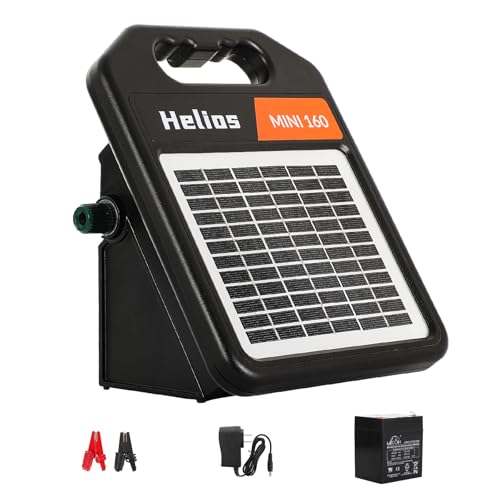
The 10 Miles Solar Fence Charger by ANDMON is a compact, portable solar-powered energiser designed for strip grazing and mobile setups. With a built-in solar panel and GEL battery, it provides reliable power even in low-light conditions. The unit is easy to install—mount on a suitable steel rod and connect to the fence. It’s suited for small paddocks or where routine power is unavailable. Best for ranchers or hobby farmers who need a moveable solution with continuous day/night operation.
Why it’s selected: It emphasizes a balance between portability and dependable solar power. The Day/Night Mode helps maintain fence intensity across changing light, which is useful for grazing rotation and perimeter protection. A single caveat is weather sensitivity—extreme conditions can affect solar charging efficiency, so plan for occasional override with a backup power source if needed.
Best for: Remote properties, strip grazing operations, and temporary fencing where power access is inconsistent. Choose this if you value mobility and solar reliability over high-energy output.
AgriOtter Electric Fence Energizer 15 Acre 2 in 1

The AgriOtter Energizer offers flexible power options with 12V battery capability or standard AC power. Designed for 12V battery use, it allows extended operation beyond two weeks with a typical battery, making it practical for remote barns or seasonal fencing. The unit features large terminals for easier wire connections and a front-mounted layout that simplifies installation.
Best for: Small-to-mid-sized farms or properties that need 24/7 fence operation without a constant electricity supply. Better for: scenarios where owners want the reassurance of battery operation plus occasional AC access. Caution: battery maintenance and terminal care are essential to maintain peak performance; neglecting terminal cleaning can degrade connections.
AgriOtter Electric Fence Energizer 40 Acre 10 Miles

This AgriOtter model covers up to 10 miles for 40 acres and supports 12V battery or AC power. It’s designed for more demanding fencing needs while maintaining simple setup with front-mounted terminals. The dual power option makes it a good long-term choice for expanding operations or property with variable power access.
Best for: Property owners expanding to larger pastures or requiring flexibility to switch between battery and AC power. Choose this if you expect seasonal changes, or you want a robust setup that scales with your fence length. Caution: larger setups may require more substantial wiring and proper grounding for maximum performance.
Andmon MINI400 20 Miles Solar Fence Charger

The Andmon MINI400 is a higher-capacity solar energizer with an output of 0.4 joules and a 18.5V/3W solar panel. It can energize up to 20 miles of fence and features a 12V/4.5Ah sealed lead-acid battery to operate for up to 14 days without sun. Built for reliability in extreme temperatures (-20 to 80°C), this unit suits larger or more dynamic solar setups.
Best for: Farm operations needing substantial solar injection and longer non-sun intervals. Better for: properties with inconsistent sun exposure or where fences extend across larger areas. Caution: battery maintenance remains essential to sustain power during extended shade or cloud cover.
Parmak MAG12-UO 12-Volt Magnum, 30-Mile Range
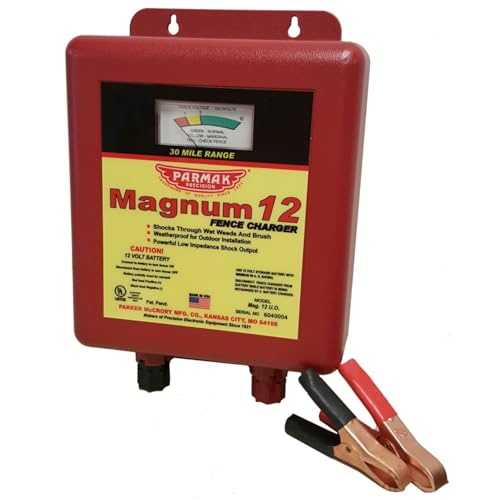
The Parmak MAG12-UO is a 12-volt, Magnum low-impedance charger with a 30-mile range. It includes a built-in performance meter to indicate fence conditions, which helps users monitor effectiveness without guesswork. Continuous operation can extend for several months between battery charges when used optimally, depending on fence configuration.
Best for: Larger enclosures or properties needing a robust, battery-operated system with diagnostic visibility. Choose this if you value long operation between charges and want a built-in gauge for maintenance. Caution: higher energy needs and larger fences may require careful battery management and regular meter checks.
Zareba 15-Mile Battery Operated Low Impedance

The Zareba EDC15M-Z battery-powered charger energizes up to 15 miles of fencing under ideal conditions and maintains effectiveness even in heavy weed environments, delivering up to 3 miles in dense growth. It’s a reliable choice for remote sites where weed management is a challenge and power access is limited. Suitable for many fence types, including high-tensile or polywire setups.
Best for: Remote locations with weed-rich fencing or where weed resistance is common. Choose this if you need a battery-only solution that can handle variable weed conditions. Limitation: weed growth can still reduce effectiveness, so periodic maintenance and weed control help maintain performance.
Buying Guide
Key considerations to help you choose the right electric fence energiser:
- Power source flexibility: Do you need solar, battery-only, or AC-compatible options? Solar is ideal for remote sites; battery-only models work well where no power is available; hybrids offer flexibility.
- Fence length and impedance: Match the energiser’s range to your fence length and plant/weed conditions. Higher miles ratings assume favorable conditions and proper installation.
- Portability vs. capacity: Portable units suit temporary fencing or rotating pastures; larger models support extended fencing and longer operation between charges.
- Environmental durability: Look for units rated for your climate range, especially extreme temperatures and humidity, to ensure reliability year-round.
- Maintenance needs: Consider battery maintenance, terminal accessibility, and ease of wire connections. Some models offer built-in meters to diagnose fence performance.
- Installation ease: Front-mounted terminals and simple mounting are practical features for quick setup on a farm or homestead.
FAQ
- What is the difference between solar and battery-powered energisers?
- How many miles can I realistically expect from a given energiser?
- Can I use multiple energisers on one fence?
- What maintenance does a battery-powered energiser require?
- Is weed management important for energiser performance?
- Which energiser is best for long-term remote use?
Solar energisers include a built-in solar panel and battery, making them ideal for off-grid operation. Battery-powered units rely on an external battery and are best when electricity is readily available or when solar charging isn’t practical.
“Miles” refer to the distance the fence can effectively energize under typical conditions. Real-world results depend on wire type, fence design, weed pressure, and power source.
Yes, but ensure they are compatible and follow manufacturer guidelines for grounding and interference prevention to avoid conflicting outputs.
Regularly check battery health, clean connection terminals, and inspect wires for damage. Periodic testing helps ensure sustained performance in remote locations.
Yes. Weed growth can insulate wire and reduce impulse transmission. Plan weed control or choose energisers rated to handle weed conditions where your fence runs.
Hybrid solar models with a robust battery setup and a high-mileage rating are typically most suitable for long-term remote use, balancing power reliability and environmental durability.