Best Electric Contact Pressure Gauges for Precise Readings in 2026
Answering the demand for accurate, reliable pressure readings, this guide highlights five electric contact pressure gauges suited for automotive, HVAC, and industrial use. Each pick is evaluated for suitability, durability, and clarity of readings. Ideal buyers include automotive technicians, HVAC professionals, DIY enthusiasts, and plant managers seeking sturdy, gauge-style performance with clear scales. The selection aims to balance accuracy, ease of installation, and value across common 0–1000 PSI ranges and compatible mounting styles.
Summary table of selected products:
| Product | Best For | Key Benefit | Mounting |
|---|---|---|---|
| BOSCH Style Line 2″ Electrical Oil Pressure Gauge | Automotive dashboards | Solid chrome bezel; 0–100 PSI; 60° sweep | 2″ dial, 2-1/16″ opening |
| SENCTRL 3000 PSI Glycerin Filled Gauge | High-pressure tests | Glycerin fill; dual scale; corrosion-resistant | 1/4″ NPT lower mount |
| JACO ElitePro Digital Tire Gauge | Professional tire service | ANSI 2A accuracy; 0.50% FS; built-in bleeder | Digital, 1/4″ NPT compatibility |
| SENCTRL 100 PSI Lead-Free Gauge | Water systems & RVs | IP67 waterproof; lead-free construction | 2″ dial; 1/4″ NPT |
| MEASUREMAN 0–100 PSI Gauge | Industrial & domestic | Glycerin-filled; dual scale, 2.5″ dial | Lower mount |
Bosch Style Line 2″ Electrical Oil Pressure Gauge

Best for automotive dashboards requiring a compact, stylish gauge with a clean white dial and chrome bezel. The 0–100 PSI range and a 60-degree sweep provide practical visibility for engine oil monitoring. The chrome mounting panel adds a polished installation look.
Who it’s best for: Automotive enthusiasts and professionals needing a reliable, compact oil pressure gauge that matches factory-style dashboards. Why selected: Combines a classic appearance with practical range and installation ease. Caution: Not suitable for extremely high-pressure systems beyond 100 PSI.
SENCTRL 3000 Psi Glycerin Filled Gauge

Best for high-pressure testing in HVAC, water, oil, and gas lines. The glycerin-filled mechanism reduces pointer flutter and protects internal parts from vibration, while the 304 stainless steel case offers corrosion resistance. Dual scale reads 0–3000 psi and 0–20000 kPa for versatile measurement.
Who it’s best for: Technicians performing high-pressure diagnostics or test rigs. Why selected: Very high pressure range with vibration damping. Caution: Heavier and bulkier than smaller 100 PSI models, requiring sturdier mounting.
JACO ElitePro Digital Tire Pressure Gauge
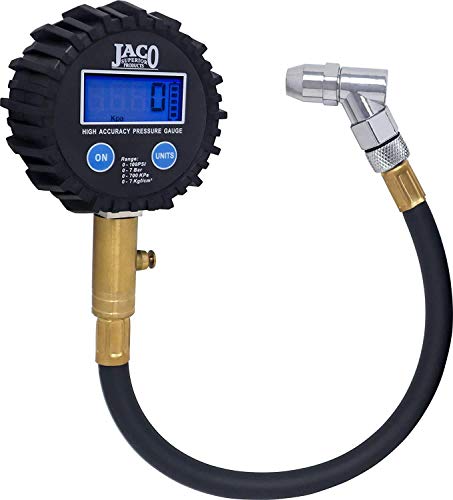
Best for professional tire services requiring shop-grade accuracy. It features ANSI 2A-compliant accuracy, a ±0.50% FS reading, and a precise 0.10 PSI resolution. The bulk, brass-and-steel build and a 10″ rotational hose with a 360° swivel chuck improve reliability and ease of use.
Who it’s best for: Tire technicians and mechanics who rely on precise, repeatable readings. Why selected: Combines high accuracy with a robust, versatile hose and chuck. Caution: Higher price point than basic analog gauges.
SENCTRL 100 Psi Lead-Free Gauge

Best for water-based and potable systems, RVs, and well pumps. The IP67 waterproof rating helps resist moisture-related readouts, and the 304 stainless steel case provides corrosion resistance. The 2″ dial with 1/4″ NPT mounting makes it a practical choice for home and small commercial setups.
Who it’s best for: Homeowners, RV owners, and small installers needing a lead-free, water-resistant gauge. Why selected: Emphasizes safety with lead-free materials and durability in damp environments. Caution: May have slower response under rapid pressure fluctuations due to waterproofing design.
MEASUREMAN Pressure Gauge 1/4 NPT
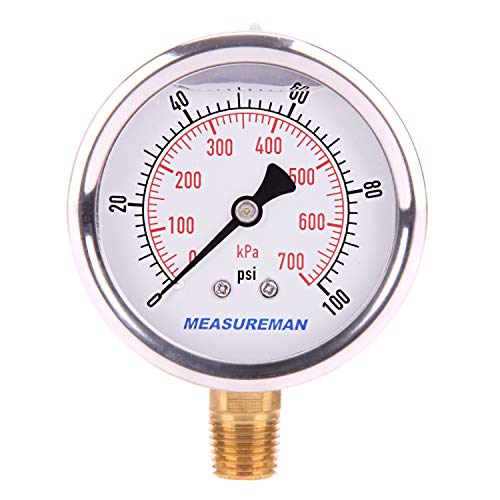
Best for general industrial and domestic pressure monitoring with glycerin filling and a 304 stainless steel case. The 0–100 psi range is suitable for small-scale air and liquid systems, and the 2.5″ dial supports easy reading from a distance. The lower mount design simplifies installation on compact panels.
Who it’s best for: DIY projects, small shops, and home improvement setups needing reliable, readable pressure data. Why selected: Reliable glycerin-filled gauge with dual-scale display for versatile use. Caution: Limited to up to 100 PSI, not suitable for high-pressure needs.
Buying Guide
What should you consider when choosing an electric contact pressure gauge?
- Pressure range: Match the gauge range to the system you monitor (0–100 PSI is common for automotive and small systems; higher ranges suit industrial tests).
- Fill type: Glycerin-filled gauges dampen pulsations, improving durability in vibrating environments. Unfilled gauges may respond faster but vibrate more.
- Mounting style: Lower mount or panel mount affects installation space and readability. Ensure thread size (NPT) matches your setup.
- Materials: Look for stainless steel or brass wetted parts for corrosion resistance, especially for water or oily environments.
- Dial size and readability: Larger dials (2.5″ or more) offer easier reading from a distance; shorter sweeps may be sufficient for quick checks.
- Abrasion and impact resistance: Hardened housings and protective guards help in workshop or on-vehicle environments.
- Environmental protection: IP ratings indicate moisture resistance; choose accordingly for outdoor or damp installations.
- Accuracy and standards: Check stated accuracy (e.g., ±0.5% FS) and whether it aligns with your precision needs.
Which gauge type is best for your application?
- Automotive oil pressure: Small 2″ dials with 0–100 PSI ranges are common and aesthetically suitable for dashboards.
- High-pressure testing: Glycerin-filled, rugged cases with higher psi ranges (thousands) are preferred for lab or industrial use.
- Water and potable systems: Lead-free materials and IP ratings ensure safety and reliability in wet environments.
- Tire and service work: Digital or highly accurate analog gauges with robust hoses support rapid, repeated checks.
Usage tips for accurate readings
- Zero the gauge after installation and before first use.
- Avoid exposure to direct heat sources that could alter readings or damage seals.
- Regularly inspect seals and connections for leaks and corrosion.
- Calibrate or verify against a known standard if precision is critical for your task.
FAQ
- What is an electric contact pressure gauge?
- What does glycerin-filled mean for a pressure gauge?
- Which gauge is best for my car’s oil pressure?
- Are waterproof gauges necessary for outdoor installations?
- How accurate is a professional tire gauge?
- What should I check before buying a gauge?
An electric contact pressure gauge is a device that provides pressure readings, often with a traditional dial or digital display, used in automotive, HVAC, or industrial systems to monitor force or pressure.
Glycerin-filled gauges use glycerin inside the case to dampen pulsations, improving durability and reducing needle flutter in high-vibration environments.
For typical car oil monitoring, a 2″ dial with 0–100 PSI range, like the Bosch Style Line gauge, provides clear readings and fits common dashboard openings.
IP67-rated gauges are recommended for outdoor or damp environments to resist moisture and condensation in the display window.
Professional-grade tire gauges can achieve readings within ±0.50% FS, offering high repeatability for tire maintenance.
Check the mounting type, dial size, pressure range, wetted materials, and environmental protections to ensure compatibility with your system.