Best Electric Baseboard Heaters With Remote Control for Cozy Homes
Answering the demand for convenient warmth, these electric baseboard heaters with remote control help you customize comfort without getting up. The top models suit different buyers: DIY homeowners seeking easy install and smart control, busy families needing scheduling and energy savings, and small to medium rooms where quiet operation matters. The following selections highlight reliable options with remote or app-based control, designed for 120V–240V systems and typical residential layouts.
Summary table: Selected products for quick comparison
| Product | Type | Best For | |
|---|---|---|---|
| Mysa Smart Thermostat LITE for Electric Baseboard Heaters | Smart thermostat | Tech-savvy homes, schedules, remote control | WiFi, app, HomeKit/Alexa/Google |
| Comfort Zone CZ600 Electric Baseboard Heater | Convection baseboard heater | Balanced, quiet heating in medium rooms | Two heat settings, adjustable thermostat |
| Cadet Baseboard Heater Ul 120V/4.17A | Baseboard heater, 500W | Smaller spaces, easy floor mounting | Remote control included |
| GiveBest Electric Wall Heater with WiFi and Remote | Wall/portable heater | Versatile room heating, remote and app control | WiFi, remote, touch panel |
| Dreo Smart Wall Heater WH719S | Wall-mounted heater | Wide-area warmth, smart integration | App control, voice compat with Alexa/Google |
Mysa Smart Thermostat LITE For Electric Baseboard Heaters
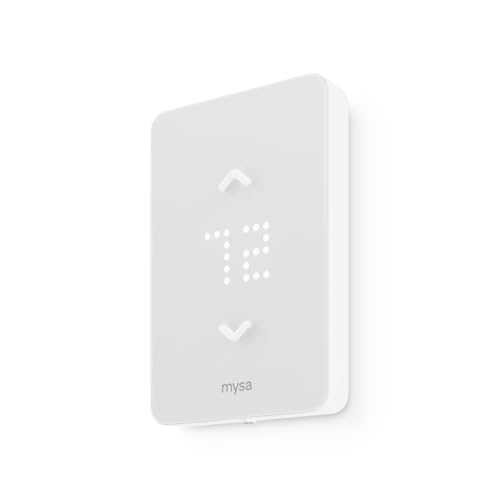
The Mysa LITE is designed for high/line voltage electric baseboards, offering WiFi connectivity and scheduling without a hub. It’s best for homes where occupants want precise control over individual rooms via the mobile app, with voice assistant compatibility for hands-free adjustments. The 7-day scheduling helps reduce heating costs by aligning temperatures with routines, while HomeKit, Alexa, and Google integrations support multi-device control. A potential limitation is requiring a compatible high-voltage baseboard setup; verify wiring before installation.
- Best for tech-forward homes seeking app-based control and scheduling
- Better for independent room control rather than whole-house zoning
Comfort Zone CZ600 Electric Baseboard Heater

The CZ600 offers reliable convection heating with two heat settings and an adjustable thermostat. It’s well-suited for medium-sized rooms where quiet operation and steady warmth are priorities. Best for those who want straightforward, durable heating with simple control. A caveat: no built-in smart features, so pairing with a separate smart thermostat would be necessary for remote control.
- Best for straightforward, reliable baseboard heating in moderate spaces
- Choose this if you prefer no-frills operation and solid heat output
Cadet Baseboard Heater Ul 120 V/4.17 A White 30″

This Cadet unit provides compact, budget-friendly heating with simple remote control. It’s ideal for smaller rooms or as an additional zone in a larger space. Best for occupants who want a quick retrofit with minimal installation effort. Limitation: 500W output may be insufficient for larger areas without supplemental heaters.
- Best for small rooms or supplementary heating
- Better for quick, budget-friendly setup
GiveBest Electric Wall Heater With WiFi And Remote

The GiveBest model combines wall-mount flexibility with remote and app control. It features three heating modes, a programmable thermostat, and energy-conscious ECO options. It’s suitable for rooms where space is at a premium or where a wall-mounted solution provides quicker heat distribution. A potential limitation is the need to secure WiFi connectivity for smart features and ensure proper clearance for safe operation.
- Best for wall-mounted flexibility and smart control in larger rooms
- Choose this if you want multi-mode heating with remote access
meross Matter Smart Thermostat For Electric Baseboard Heaters
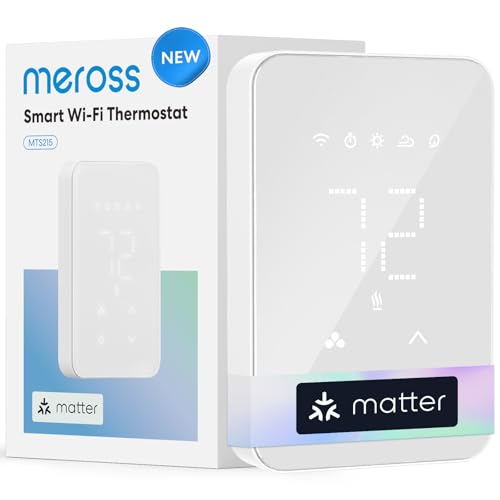
This meross thermostat emphasizes compatibility across multiple ecosystems via Matter, plus voice control and energy-saving scheduling. It’s best for homes seeking broad smart-home integration (Alexa, HomeKit, Google, SmartThings) and the option to manage energy use via a visual schedule. Note that this device targets high-voltage systems; verify compatibility with your wiring and installation requirements.
- Best for multi-platform smart-home integration
- Choose this if you want Matter compatibility and remote scheduling
meross Smart Thermostat For Electric Baseboard Heaters 120V-240V

This meross model is designed specifically for high-voltage systems, with a four-wire install requirement and load capabilities suitable for 1920W at 120V or 3840W at 240V. It’s best for homeowners who want a robust, wired smart thermostat with clear installation requirements and voice control across ecosystems. A limitation is the required four-wire installation and confirmation of compatibility with your baseboard setup before purchase.
- Best for high-voltage baseboard installations
- Choose this if you need strong smart features with explicit wiring prerequisites
Dreo Smart Wall Heater WH719S

The Dreo WH719S offers 120° oscillation for even heat distribution, remote control, a timer, and smart-home compatibility. It’s best for rooms that benefit from broad warmth and flexible scheduling. Its wall-mount design saves floor space, and the 1°F temperature precision supports fine-tuned comfort. A potential limitation is that it is a wall heater rather than a traditional baseboard unit, which may influence placement decisions in some rooms.
- Best for wide-area coverage and flexible scheduling
- Better for rooms where wall mounting is preferred over baseboard installation
Buying Guide: Key Considerations For Electric Baseboard Heaters With Remote Control
What should you check before buying? Consider wattage and room size, voltage compatibility, and whether you want a wired or wireless solution. For smart features, evaluate whether the device requires a hub, supports your preferred assistant (Alexa, Google, HomeKit), and offers scheduling or energy-saving modes. For safety and installation, verify clearances, mounting options (floor vs. wall), and whether a neutral or multi-wire setup is needed.
What type of space is best for smart baseboard control?
Small to medium rooms benefit greatly from adjustable thermostats that run on schedules. Larger areas may require multiple units or a more robust wall heater with broader coverage to maintain consistent warmth without hotspots.
How do you choose between wall-mounted and floor-mounted options?
Wall-mounted units save floor space and can distribute heat more evenly in rectangular rooms. Floor-mounted or baseboard heaters are often easier to retrofit in existing baseboard cavities and may deliver steady, low-profile warmth with fewer installation constraints.
Is a hub required for smart features?
Some models operate directly over WiFi without a hub, while others require a compatible hub or rely on Matter compatibility for cross-platform control. Check your home network setup and preferred ecosystems before buying.
What about safety and maintenance?
Look for tip-over switches, overheat protection, stay-cool surfaces, and quiet operation. Regular cleaning to remove dust buildup around vents will help maintain efficient heating and prolong the unit’s life.
How do I maximize energy savings?
Use programmable schedules to lower temperatures when you’re away or asleep. Pair smart thermostats with room zoning if possible, so you’re not heating unoccupied spaces. Monitor usage via the app to identify patterns and adjust accordingly.
Which product type should I start with?
For ease of use and modern conveniences, a smart thermostat like Mysa LITE or meross models is ideal. If you want straightforward, no-fuss heating with optional remote control, a conventional unit such as the Comfort Zone CZ600 or Cadet baseboard heater can be paired with a separate smart controller for similar results.
Frequently Asked Questions
- What is the main advantage of a baseboard heater with remote control?
- Do these devices work with standard home assistants?
- Can I retrofit an older baseboard system with a smart thermostat?
- Is it better to choose a wall heater or a baseboard option for remote control?
- What should I do to maximize energy savings?
- Are there safety concerns with remote-controlled heaters?
Remote control and app access allow precise temperature management and scheduling without needing to manually adjust the unit.
Many models support Apple HomeKit, Amazon Alexa, Google Home, or Matter compatibility for broad smart-home integration.
Some high-voltage thermostats require four wires and may need professional installation. Always verify wiring compatibility before purchasing.
Baseboard units blend with long rooms and offer even heat, while wall-mounted heaters save floor space and can heat specific zones effectively.
Set schedules, enable adaptive modes when possible, and ensure the thermostat controls are integrated with other energy-saving routines in your smart home.
Always follow installation instructions, keep clearances from walls and furniture, and ensure tip-over and overheat protections are active where applicable.