Best Dual EV Charging Stations for Homes and Small Businesses
Looking for practical, reliable dual EV charging stations that can power two vehicles at once? This guide highlights top options, explaining who each is best for and why. The selections cover versatile home use, multi-vehicle households, and budget-conscious setups. Ideal buyers include households with two EVs, small businesses seeking compact dual-port solutions, and users needing robust outdoor-ready charging. Below, a quicksummary table helps compare key points at a glance.
| Product | Best For | Key Benefit |
|---|---|---|
| REV+ Dual-Port 50A (11.5 kW) | Two EVs at home | High power, 25ft cable |
| REV+ Dual-Port 50A (12 kW) | Two vehicles, USA-made | 12 kW output, 18ft cable |
| ClipperCreek HCS-D50P | Enhanced durability | Two-charger split, 9.6 kW |
| Enphase Level 2 Dual EV Charger | Commercial or high-traffic | 32A, rugged, weatherproof |
| VDLPOWERVP Level 2 | Flexible home setup | Smart app, long cable |
REV+ Dual-Port Level 2 EV Charger 50 Amps — 11.5 kW
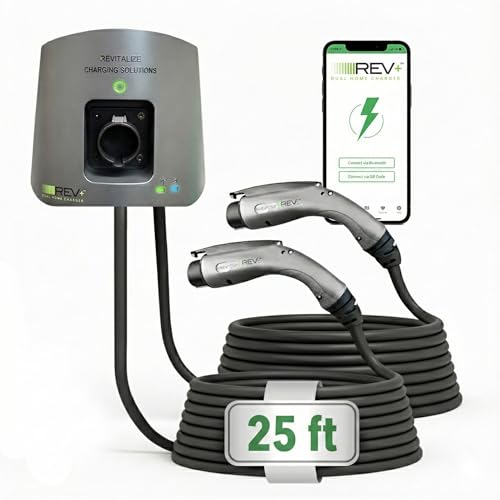
Two independent charging ports let two EVs or plug-in hybrids charge simultaneously, making it ideal for households with more than one vehicle. It supports wide vehicle compatibility via the J1772 standard, including popular models like Bolt, Kona, Niro, Leaf, and more with adapters for some brands. The charger delivers 50 amps at 240 VAC, enabling up to 11.5 kW of power and charging significantly faster than Level 1. Best for households with two vehicles that need reliable, fast charging.
Best for: homes with two EVs or plug-in hybrids needing simultaneous charging. Limitations: some vehicles may require adapters for certain brands; ensure your electrical panel supports 50A circuits.
REV+ Dual-Port Level 2 EV Charger 50 Amps — 12 kW

This model provides two independent ports with a 12 kW total output. It maintains broad compatibility with J1772-equipped vehicles, including several popular makes. The 50 A capability supports faster charging, while the 18-foot cable offers flexible installation. Best for multi-vehicle homes that want higher charging power while preserving two separate ports.
Best for: higher power dual charging in a home setting. Limitation: slightly shorter cable than some options; verify space for both ports and cable reach.
ClipperCreek HCS-D50P Dual Charging Station

The HCS-D50P splits electricity between two vehicles on a single 50 amp circuit, delivering up to 9.6 kW per two-port configuration. It uses a NEMA 14-50 plug and offers up to 38 miles of range per hour of charging, making it a reliable dual-port option for moderate households or small fleets. Best for: budget-conscious dual charging with strong reliability. Caution: total output is limited to 9.6 kW across both ports.
Enphase Level 2 Dual EV Charger

Safety certified with a robust, weather-resistant build, this dual charger supports 32 amps and is designed for challenging environments. The HCS-D40 variant is built for commercial or high-traffic settings, featuring a rugged connector and a NEMA 4 enclosure. Best for: commercial or shared-use sites where durability matters. Limitation: fewer high-power options compared to some consumer models.
VDLPOWERVP Level 2 EV Charger — 11.5 kW

Offers 11.5 kW charging with a 48-50A adjustable current and a long 27.3-foot cable. It includes smart app connectivity for remote monitoring, scheduling, and status updates. Best for: flexible home charging with app control and longer reach. Caution: ensure your Wi-Fi coverage is stable for app features.
Buying Guide
- Power needs: Consider whether you need a single 50 A unit feeding two ports or two separate 40-50 A outputs. Higher total power can cut charging time for each vehicle.
- Cable length: Measure installation distance and choose cables long enough to reach both parked cars without strain. Longer cables may be bulkier to manage.
- Vehicle compatibility: Most Level 2 chargers use the J1772 standard; ensure your vehicles are compatible or adapters are available for specific models.
- Outdoor vs indoor use: If mounting outside, prioritize weatherproof enclosures and rugged connectors. Some models are rated for all-weather operation, others are more suitable for indoor garages.
- Smart features: Wi-Fi/Bluetooth apps enable scheduling and remote monitoring. Check for compatibility with your home network and mobile devices.
- Installation considerations: Verify electrical panel capacity and whether a dedicated circuit is required. Some units are easier to install with existing 50 A circuits; others may need professional wiring.
- Cost vs value: Dual-port units with higher amperage and longer cables tend to offer better long-term value for households with two EVs or for small businesses.
FAQ
- Do dual-port chargers share a single circuit? Many models split power between two ports on one circuit, while others offer separate ports with individual outputs. Check the product specs to confirm.
- Is a longer cable always better? A longer cable increases installation flexibility, but can add complexity and weight. Choose a length that fits your space without excess.
- Can I use a dual-port charger for different EVs simultaneously? Yes, most dual-port chargers support two different vehicles at once, provided both cars use the J1772 plug (or adapters where needed).
- What maintenance is required? Regular inspection of connectors and cables is advised. Ensure weather seals remain intact and cables are not damaged.
- Are smart charging features worth it? Smart features enable scheduling to exploit off-peak electricity rates, remote monitoring, and alerts, which can reduce operating costs over time.
- Do these units require professional installation? Many installations should be performed by a licensed electrician, especially when integrating with high-amperage circuits. Review local electrical codes first.