Best Door Bell for the Deaf and Hearing Impaired: 5 Top Picks for Clarity and Safety
Finding a reliable doorbell system that clearly alerts through visuals and sound is essential for people who are deaf or hard of hearing. The models below emphasize strong visual alerts, adjustable sound levels, long-range operation, and durable construction for home, office, or classroom use. Each option is selected for accessibility, ease of use, and solid performance in real-world environments.
| Product | Key Feature | Range | Alerts |
|---|---|---|---|
| Jsieem Wireless Doorbell 1200Ft (1 Button, 3 Receivers) | Flashing light when pressed; multiple receivers | Up to 1200 ft | LED flash; 36 chimes; 4 volume levels |
| Jsieem Wireless Doorbell 1200 Ft (2 Receivers) | LED indicator and flashing light; 2 receivers | Up to 1200 ft | 4 levels of volume; 36 melodies |
| CallToU Hearing Impaired Doorbell | Dual sensory alerts: strobe plus adjustable volume | Up to 1000 ft | 55 melodies; silent mode; IPX5 weatherproof |
| Safeguard Supply Wireless Doorbell Kit | Long-range signal through walls; plug-in receiver | Up to 1000 ft | 18 tunes; flashing strobe option |
| CallToU 1000ft Portable Doorbell | Back-clip portable design; multiple modes | Up to 1000 ft | 5 tones; 4 modes; 0-110dB volume |
Jsieem Wireless Doorbell With 3 Receivers: Best Visual Alerts

The Jsieem model includes a waterproof, dustproof doorbell button and three receivers to place around living areas, bedrooms, or classrooms. When pressed, the button triggers a bright LED flash in addition to a chime. This makes it easy for deaf or hard-of-hearing users to notice door visitors even if they miss an audible alert. Features include switchable modes (ringing only, flashing only, or both) and a wide selection of chimes. Four volume levels provide options for different times of day or household noise levels. The setup supports multi-room coverage and reduces missed visitors in larger homes or shared spaces.
Jsieem 1200 Ft Doorbell With 2 Receivers

This setup provides two receivers, enabling alert coverage across more rooms without losing signal strength. It supports four volume levels up to 110dB and 36 melodies, so households can tailor alerts to preferences and daily rhythms. The LED indicator works in tandem with sound to assist hearing-impaired users, making visitors easier to detect even in noisy environments. The system is designed for reliability in apartment buildings or larger homes where signal penetration and coverage are critical.
CallToU Hearing Impaired Doorbell With Strobe And 1000ft Range

CallToU’s unit emphasizes dual sensory alerts with adjustable volume from silent to 100dB and a two-intensity strobe light. The device supports night use with Silent Night Mode, allowing the strobe to alert without sound, ideal for bedrooms or shared living spaces. With 1000 ft range and IPX5 weather resistance, it’s suitable for indoor use in homes, apartments, clinics, or cottages. Features include 55 melodies and the ability to assign distinct chimes to different doors, enabling precise location awareness for caregivers or family members.
Safeguard Supply Wireless Doorbell Kit
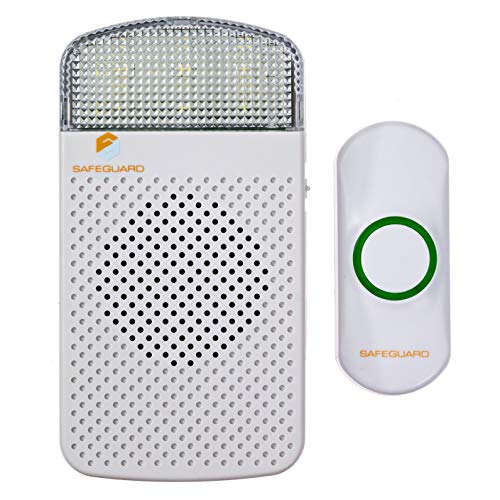
This kit emphasizes long-range performance and reliable wall penetration even through reinforced materials. The push button runs on a CR2032 battery, and the plug-in receiver can be stationed in a central location to maximize audible and visual alerts. With 18 distinct tunes and a clear flashing option, it supports environments such as multi-story homes or classrooms where a broad audible/visual alert is advantageous. Setup is straightforward, and the system is designed to remain resilient in various weather conditions when used in semi-outdoor spaces.
CallToU 1000ft Portable Hearing Impaired Doorbell

The portable design includes a belt clip, enabling alerts from anywhere in the home or office. It offers four modes of notification: ringing with vibration, ringing with flashing light, both, or flashing light alone. Five different ringtones and a wide volume range (0-110dB) ensure visibility and audibility in various contexts. This model is particularly practical for caregivers or residents moving around larger spaces who need a flexible, wearable alert device to prevent missed visitors or emergencies.
Buying Guide: Key Considerations For Deaf And Hearing Impaired Doorbells
When choosing a doorbell system optimized for deaf and hearing impaired users, consider the following factors:
- Visual Alerts: Look for prominent flashing lights or strobe options. Some models offer multiple intensities, which can be important for sensitivity and visibility in bright rooms or noisy environments.
- Audible Alerts And Customization: A range of chimes and volume levels (including silent or low-noise modes) helps accommodate different times of day and household preferences. A system with multiple chimes can also help identify which door is active in larger spaces.
- Range And Signal Penetration: Long-range systems (1000–1200 ft) are ideal for multi-story homes, apartments, or classrooms. Check whether the signal can penetrate walls and floors without significant drop-off.
- Power And Connectivity: Battery-powered push buttons are easy to install, but consider plug-in receivers for steady power and consistent alerts. Some kits offer portable receivers that can be carried around or placed in multiple rooms.
- Weather Resistance: IPX5 or better is preferable for outdoor usage or entryways exposed to rain and temperature changes.
- Durability And Water/Dust Resistance: Look for waterproof buttons and sturdy enclosures to withstand daily use and accidental splashes.
- Ease Of Setup: A straightforward setup with clearly labeled components minimizes installation time and reduces the risk of misalignment between transmitter and receivers.
- Location Awareness: The ability to assign different tones or door-specific alerts helps caregivers and family members quickly identify where visitors are arriving.
Overall, the best doorbell for deaf and hearing-impaired users combines a bright visual alert with reliable audio options, flexible placement, and robust range. The five models highlighted above offer a range of configurations—from multi-receiver networks to portable options—designed to improve visitor awareness and safety in everyday settings.