Best Domestic Water Booster Pump Packages for Reliable Home Water Pressure
If you’re seeking dependable help for home water pressure, you’re likely looking at compact booster pumps that fit under sinks, in utility rooms, or near water heaters. This guide highlights five solid options and explains who each is best for. Whether you need better shower pressure on higher floors, a quieter model for villas, or a system that supports constant hot water circulation, these picks are suited for common American homes. The table below compares each product’s ideal usage at a glance.
| Product | Best For | Key Benefit |
|---|---|---|
| ZYIY 115V Automatic Domestic Water Pressure Booster Pump | Small homes, flats, or apartments | Automatic operation with solid flow (30 L/min) |
| ZYIY 120W Water Pressure Booster Pump (25 L/min) | Shower boosting and multi-story homes | Suction capability from lower floors |
| ZHKUO Water Pressure Booster Pump (24V, 150W) | Quiet operation, above-tank installs | DC 24V, high lift, easy DIY install |
| ZYIY 120W Water Pressure Booster Pump (15 L/min) | Kitchen and bathroom circuits needing steady pressure | Integrated water flow switch |
| HoldwellS 115V Shallow Well Jet Pump | Homes with shallow wells or yard irrigation | High flow and long head for reliable supply |
ZYIY 115V Automatic Domestic Water Pressure Booster Pump
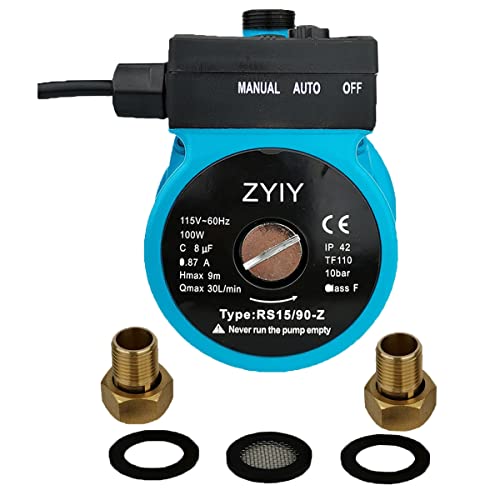
Best for compact spaces and straightforward installs. This 115V pump delivers up to 30 L/min (8 GPM) with a 9 m (30 ft) head. It is designed for bathrooms, kitchens, and small homes where water pressure dips during peak usage. The unit emphasizes low energy consumption, high flow with leak-tight construction, and a silent operation profile. It works well in homes where a plug-and-go solution is preferred and where water scarcity or long waits before hot water are common concerns.
singles, couples, or small families living in apartments or townhomes needing a reliable, low-profile booster without complex plumbing. Caution: Ensure the 115V supply and wiring comply with local codes; verify that the loop and distribution lines can accommodate the 30 L/min flow rate without excessive pressure spikes.
ZYIY 120W Water Pressure Booster Pump for Home

This model is designed to automatically adjust to household needs, maintaining steady pressure with minimal leakage and low noise. It’s well suited for bathrooms, kitchens, villas, and even solar-heated systems where water pressure can slip on higher floors. The pump’s capability to draw from one or two floors below helps ensure water delivery on upper levels. It’s ideal for homes that require a simple, automatic solution to fluctuating water pressure and where solar or boiler integration could be a consideration.
Who it’s best for: multi-story homes or households with variable water usage seeking an automatic, flow-stable solution. Caution: System compatibility with your existing boiler or solar setup should be confirmed to avoid mismatch in head and flow expectations.
ZHKUO Water Pressure Booster Pump

This 24V DC booster pump emphasizes quiet operation and energy efficiency, with a maximum flow around 45 L/min and a lift head of up to 25 m. Its 1/2″ connection and copper line provide reliable plumbing integration for showers, kitchens, and general home water systems. It’s particularly suitable for installs where noise minimization is important, and the built-in converter supports a wide voltage range. The unit is designed to be installed quickly without professional help, though verification of power supply and head requirements is still advised.
Who it’s best for: homeowners prioritizing quiet operation and DIY-friendly installation. Caution: Confirm the 24V supply and ensure the converter is compatible with your local electricity standards.
ZYIY 120W Water Pressure Booster Pump for Home with Flow Auto Switch

This booster pump includes a flow switch to automatically regulate pressure, maintaining steadier water supply to taps and fixtures. It’s aimed at homes where maintaining consistent pressure is essential, such as kitchens with multiple fixtures or showers that experience fluctuation. It’s best for households that want automatic pressure adjustments to reduce manual interventions and to improve overall water delivery in variable-demand periods.
Who it’s best for: households that need reliable automatic pressure control across fixtures. Caution: While the flow switch provides stability, ensure the wiring and electrical sourcing match the unit’s 115V standard and that the pump’s head does not exceed system requirements.
HoldwellS 115V Shallow Well Jet Pump

Designed for shallow wells and larger water needs, this unit offers strong flow (up to 1320 GPH) and a maximum head of 164 ft, making it suitable for homes with elevated storage or remote irrigation zones. It features an automatic pressure switch and protective features for safer operation. The model is a practical choice when a robust, high-capacity supply is necessary, particularly where well water is the primary source.
Who it’s best for: homes relying on shallow well water or needing robust irrigation support. Caution: Plan for electrical and pressure tank compatibility, and consider a professional for initial setup if unfamiliar with well pump systems.
Buying Guide
What should I look for in a domestic water booster pump?
Key factors include flow rate (gallons per minute), head (feet or meters of lift), voltage requirements (115V is common in the U.S.), noise level, energy efficiency, and installation simplicity. If you live in a multi-story home, prioritize higher head and a model with an automatic switch to maintain steady pressure across fixtures.
How do I choose the right head and flow?
Match the head to the maximum vertical distance water must travel from the tank or source to your fixtures. For most homes, 9–25 m (30–82 ft) is sufficient. The flow rate should align with the busiest fixture cluster (e.g., shower + faucet). If the pump’s flow is too low for your needs, you’ll experience noticeable pressure drops during peak usage.
What about installation and compatibility?
Look for units with standard 1/2″ to 3/4″ connections and a plug-in design for easier setup. Consider whether you need a DC or AC model, especially for solar-powered or off-grid configurations. DIY-friendly models are convenient, but ensure your electrical work complies with local codes.
Are there any limitations to consider?
Some models have limited compatibility with certain water sources or require a minimum distance from the source to prevent backflow. Always verify that your plumbing system’s pressure, pipe material, and tank configuration support the pump’s maximum head and flow. Noise, vibration, and occasional leaks can occur if improperly installed.
How should I plan for maintenance?
Regular checks on electrical connections, fittings, and pressure settings help maintain efficiency and longevity. Drain and inspect the pump periodically to prevent mineral buildup or corrosion, especially in hard water areas.
Quick recommendations by scenario
- Small apartment or single-story home with moderate needs: ZYIY 115V Automatic Domestic Water Pressure Booster Pump
- Multi-story homes with variable usage: ZYIY 120W Water Pressure Booster Pump with Flow Auto Switch
- Quiet operation and easy DIY install: ZHKUO Water Pressure Booster Pump
- Shallow well or irrigation-heavy homes: HoldwellS 115V Shallow Well Jet Pump
- High-demand kitchens with several fixtures: ZYIY 120W Water Pressure Booster Pump (15 L/min)
FAQ
- What is the typical use case for a domestic water booster pump?
Used to increase water pressure in homes with low water pressure or high demand, improving shower, faucet, and appliance performance. - Can I install these pumps myself?
Many models are designed for DIY installation, but follow local plumbing codes and electrical requirements. A professional can help with complex systems. - What is “head” and why does it matter?
Head measures the maximum vertical distance water can be pumped. It determines how high the water can reach and how well pressure is maintained on upper floors. - Will these pumps work with solar or boiler systems?
Some models support solar or boiler integration; check compatibility with your system’s voltage and pressure needs. - How loud are these pumps?
Most listed options emphasize quiet operation, but installation quality and mounting can affect noise levels. - Do these pumps require a pressure tank?
Some configurations use a pressure switch alone; others pair with a pressure tank for smoother cycling and longer pump life.