Best Direct Garment Printing Machines for Small Businesses
Direct garment printing (DTG and DTF) machines offer fast, vibrant fabric prints for apparel and textiles. This guide highlights five top options suited for small shops, home studios, and independent creators. Each pick prioritizes ease of use, reliable ink systems, and strong print quality. Read on to compare what each model does best, who it’s for, and where to avoid potential drawbacks.
| Product | Brand | Best For |
|---|---|---|
| KOMHOW R1390 DTF Printer | KOMHOW | Small apparel shops and multi-color designs |
| A3 L805 DTG & DTF Printer | SHENGJINSH | Moderate-volume DTG and DTF with a large print area |
| Procolored K13-Lite (HL-500) DTF Printer | Procolored | Custom apparel brands and Etsy sellers |
| DXZ A3 DTG Printer | DXZ | High-detail cotton prints and beginner-friendly use |
| HIXSOP DTF Printer A4 L805 | HIXSOP | All-in-one workflow with roll feeder and auto-maintenance |
KOMHOW R1390 DTF Printer – A3 Direct To Film
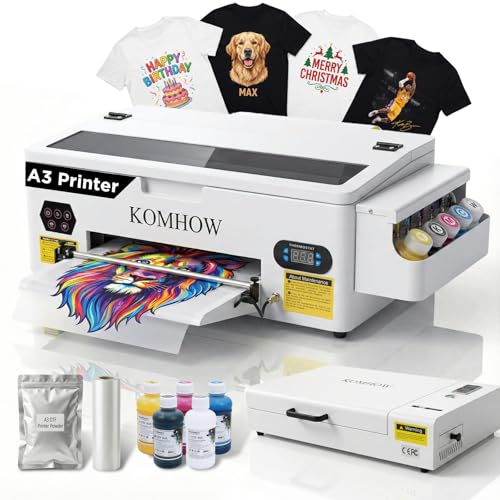
The KOMHOW R1390 is designed for small businesses and independent creators who handle small-batch, multi-color orders. It emphasizes a low learning curve and simple maintenance to help start printing confidently. The built-in white ink circulation system reduces common white ink issues, aiding daily upkeep. It delivers high-resolution output suitable for logos, detailed illustrations, and complex graphics on various fabrics.
Best for: small apparel shops and brand owners who need reliable, detailed DTG/DTF capability in a compact package. Limitations: the oven inclusion adds a broader setup footprint and may require additional space and ventilation considerations.
A3 L805 DTG & DTF Printer

The A3 L805 blends DTG and DTF capabilities in one machine, with a 16.5×11.7 inch print area. It uses a 6‑color printhead and supports CMYK+WW or CMYK LC LM configurations. This model is best for operators needing versatility between direct garment prints and film transfers, including hoodies, totes, and cotton fabrics. A key advantage is broad material compatibility and the option to print on white textiles with deep color saturation.
Best for: shops requiring flexible output for T‑shirts, hoodies, and other textiles. Caution: verify the ventilation and space needs for the printer and any attached curing steps.
Procolored K13-Lite (HL-500) DTF Printer

The K13-Lite is an A3 DTF printer aimed at custom apparel production. It targets larger transfer designs and multi-logo layouts, making it ideal for startups, Etsy sellers, and small brands that need flexible transfer capability. An optional smokeless oven option can improve room comfort by reducing fumes during curing. The model uses a beginner-friendly interface with one-touch ink pumping to streamline first-time use.
Best for: new DTF businesses seeking an approachable A3 option with optional curing enhancement. Caution: consider the oven and space requirements for a full setup in a home or studio.
DXZ A3 DTG Printer

The DXZ A3 DTG Printer emphasizes exceptional print quality with up to 2800 x 1440 DPI resolution. It targets cotton apparel and offers user-friendly operation that suits both beginners and experienced users. The included water-based inks are eco-friendly and skin-safe, appealing to families and sensitive-skin wearers. This model is best for those prioritizing sharp images and high color fidelity on white or light fabrics.
Best for: artists and small shops producing high-detail garments. Limitation: DTG print performance can vary with fabric blend; confirm fabric compatibility for your typical orders.
HIXSOP DTF Printer A4 L805

HIXSOP’s A4 L805 DTF printer targets DIYers seeking an all-in-one workflow with a roll feeder and semi-automatic cleaning. It emphasizes white ink circulation, an automated maintenance routine, and an integrated cutter to streamline film handling. The system reduces ink waste and simplifies daily use, making it suitable for home studios and small workshops focusing on quick-turnaround prints on multiple textiles.
Best for: home studios and small shops needing a plug‑and‑play workflow with integrated finishing steps. Caution: larger jobs may require more frequent clearing of jams if the feeder experiences heavy use.
Buying Guide: Key Considerations for Direct Garment Printing Machines
Print technology: Decide between DTG (direct garment) and DTF (direct to film) based on desired workflow, substrate variety, and curing steps. DTF generally offers easier multi-fabric compatibility and simpler transfers, while DTG often provides deeper soft hand on cottons.
Print area and resolution: Larger print areas enable bigger designs; higher DPI yields sharper details. Match print size to your typical artwork and garment sizes.
Ink system and maintenance: Look for built-in white ink circulation, automatic cleaning, and easy ink handling. Lower maintenance means less downtime for small teams.
Ease of use: Consider one‑touch pumping, touchscreen interfaces, and bundled software. For beginners, a gentle learning curve reduces setup time.
Ventilation and curing: Some machines pair with ovens or curing units. Ensure you have adequate space and ventilation for any curing equipment.
Fabric compatibility: Check whether the printer handles cotton, blends, and dark fabrics well. Some systems excel on light fabrics but require adjustments for darks.
Footprint and power: Measure space and confirm electrical requirements. Some all‑in‑one kits are larger due to integrated curing or roll handling.
FAQ
- What’s the main difference between DTG and DTF printers? DTG prints directly onto fabric and typically offers soft hand and deep colors on cotton. DTF prints to a film that is transferred to fabric, often enabling deeper color on a wider range of fabrics.
- Is an oven required for these machines? Some kits include an oven for curing; others require a separate curing step. Check whether curing is integrated or needs an external unit.
- Who should buy a wide‑area DTG/DTF printer? Small business owners, brand owners, and creators handling frequent color‑rich designs in low to mid volumes.
- Are these printers difficult for beginners? Many entry options emphasize beginner‑friendly interfaces and automated maintenance to ease onboarding; verify the exact features before purchase.
- Can these printers print on dark fabrics? Dark fabrics typically require white underbase or special effects; confirm white ink flow and underbase capabilities for your common items.
- What maintenance should I expect? Look for automated cleaning cycles, white ink circulation, and easy access to replaceable parts to minimize downtime.