Best Digital Thermostats for Electric Baseboard Heaters: Top Picks for 2026
Choosing the right digital thermostat for electric baseboard heating can improve comfort and cut energy use. This guide reviews five top options, highlighting accuracy, smart features, and installation considerations. Whether you want simple manual control or full Wi‑Fi connectivity, these models are designed for line‑voltage systems and baseboard setups commonly found in American homes.
Summary of Selected Products
| Product | Brand | Key Benefit | Voltage |
|---|---|---|---|
| Honeywell Home RLV4305A1000 | Honeywell Home | High accuracy and silent TRIAC switching | 120/240V |
| Mysa Smart Thermostat LITE | Mysa | Wi‑Fi smart control for line voltage | 120/240V |
| meross Smart Thermostat | meross | Smart integrations with HomeKit/Alexa/Google | 120/240V |
| Honeywell TL7235A1003 Pro Non‑Programmable | Honeywell | Reliable digital control, easy readout | 240V |
| Mysa Smart Thermostat 240V | Mysa | High‑voltage compatibility with four wires | 240V |
Honeywell Home RLV4305A1000 5-2 Day Programmable Thermostat

The Honeywell RLV4305A1000 is a 5‑2 day programmable thermostat designed for electric baseboards, convectors, and fan‑forced heaters. It emphasizes precision with an accuracy of ±0.27 degrees Fahrenheit for baseboard and convectors, and its TRIAC switching enables 100 percent silent operation. Great for rooms with varying schedules, this model helps maintain comfortable temperatures with minimal energy waste. Its 2‑time program per day supports weekday and weekend flexibility, and the device is built to handle high‑load baseboard environments.
Mysa Smart Thermostat LITE
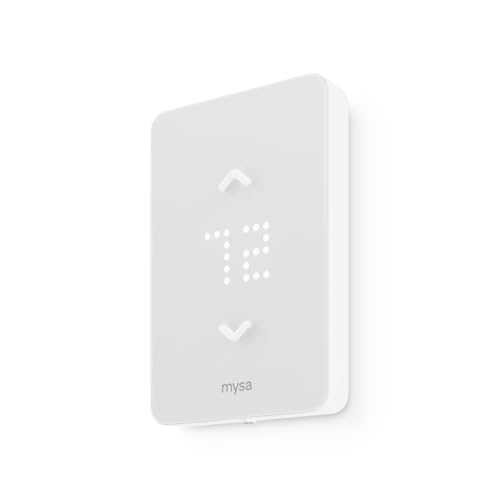
The Mysa Smart Thermostat LITE provides Wi‑Fi control for line voltage baseboard heaters, offering DIY installation for 120V/240V systems. It supports scheduling to save energy, plus remote control via an app. Notable is its emphasis on energy savings—potentially reducing heating costs by creating tailored daily routines. It integrates with Apple HomeKit, Alexa, and Google, enabling voice commands and scenes. Installation requires four wires and attention to whether your wiring meets high‑voltage requirements.
meross Smart Thermostat For Electric Baseboard
The meross thermostat targets high‑voltage systems with a maximum output load of 16A (1920W at 120V, 3840W at 240V). It supports 120V–240V installations for baseboards, convectors, and similar heaters. The setup prioritizes ease of install, requiring at least four wires in the electrical box. Smart integrations include Apple Home, Alexa, and Google, with voice control possible through Siri, Alexa, and Google. It’s designed to reduce temperature swings while maintaining comfort and energy efficiency.
Honeywell Home RLV3150A1004 Non‑Programmable Digital Electric Thermostat
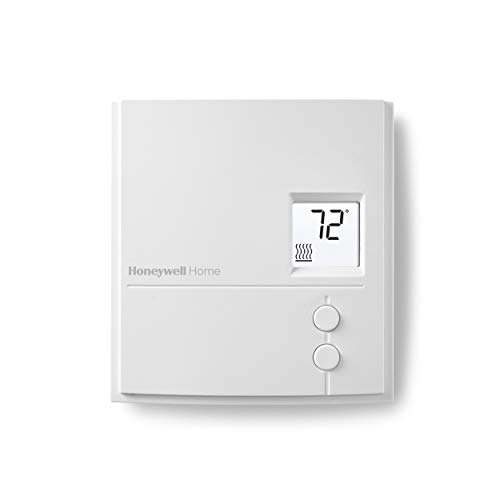
The RLV3150A1004 is a non‑programmable digital thermostat designed for line‑voltage heating, including baseboards, convectors, and radiant heaters. Its simple push‑button operation offers straightforward control, with a heating indicator for at‑a‑glance confirmation that the heat is on. The device is suitable for users who prefer manual temperature adjustments without scheduling, providing reliable performance in a compact form factor.
Mysa Smart Thermostat For Electric Baseboard Heaters 240V

This Mysa model targets 240V installations with four‑wire setups and a 1900W at 120V/3800W at 240V load capacity. It emphasizes a compact form with features like adaptive display brightness and remote control via a free app. It supports HomeKit, Alexa, and Google, enabling voice commands and automation. compatibility notes highlight the need for proper wiring and ensuring your baseboard system is compatible with high‑voltage smart control.
Buying Guide: Key Purchase Considerations
When selecting a digital thermostat for electric baseboard heating, consider the following factors to balance comfort, energy savings, and ease of use:
- Voltage compatibility: Ensure the thermostat supports 120V or 240V line voltage and your specific baseboard setup.
- Wiring requirements: Many smart thermostats require four wires (including a neutral or a second live) for full functionality. Verify your existing wiring before purchase.
- Programmability vs. manual control: Programmable models can save energy with schedules, while non‑programmable units offer simple, reliable operation.
- Smart home integration: If you want voice control or automations, choose devices that work with HomeKit, Alexa, Google Home, or SmartThings.
- Accuracy and noise: Look for precise temperature control (low deviation) and devices with silent switching to avoid audible noise.
- Installation complexity: Some models are DIY friendly, while others may benefit from professional installation, especially for high‑voltage systems.
- Energy savings features: Schedules, occupancy sensing, remote access, and energy reports can contribute to colder rooms staying comfortable without wasting heat.
- Reliability and safety: Features like overheating protection, reset behaviors, and high‑quality enclosures are important for long‑term use in living spaces.
Comparative Considerations
For homes with existing smart ecosystems, the meross and Mysa lines provide robust integration at different price points. If you prioritize pure manual reliability, traditional Honeywell models such as the RLV4305A1000 or the TL7235A1003 offer strong performance with straightforward interfaces. For those who want a balance of smart features and high‑voltage compatibility, Mysa’s 240V models or the 120/240V variants from Honeywell provide flexible options. Always confirm your baseboard configuration, number of wires, and whether your system supports adaptive display, scheduling, or remote control before purchasing.