Best Digital Phase Converters for Converting Single-Phase to Three-Phase Power in the U.S.
Industrial and workshop users increasingly rely on digital phase converters to power three-phase equipment from a single-phase supply. This guide highlights top-rated models compatible with 200–240V systems, emphasizing ease of installation, compact design, and reliability for residential and light commercial use. Below you’ll find five strong options, a quick product summary, and a buying guide to help you compare performance, efficiency, and safety features.
| Product | Brand | Input/Output | HP Range | |
|---|---|---|---|---|
| DPS 10HP MY-PS-10 | DPS | 200–240V to 200–240V | 10 | UL Listed; single motor only |
| VEVOR 5HP Digital Phase Converter | VEVOR | 220V Input/Output | 5 | Compact, efficient, one motor only |
| LGIB 10HP Single Phase To 3 Phase | LGIB | 220–240V Input/Output | 10 | Digital phase shift, plug‑and‑play |
| Bonvoisin 20HP Single Phase To 3 Phase | Bonvoisin | 220–240V Input/Output | 20 | High capacity, one motor only |
| PL-5 Pro-Line Rotary Phase Converter | NAPCco Pro-Line | 208–240V | 5 | Rotary type, suitable for CNC and loads |
Choosing the right digital phase converter depends on motor horsepower, startup requirements, and the load type. This article reviews five well-regarded options, with unbiased notes on installation ease, safety features, space needs, and efficiency. Use the buying guide to compare key considerations like isolation vs. non-isolation design, build quality, and compatibility with CNC or hobbyist equipment.
DPS Single Phase To 3 Phase Converter – 10HP

The DPS 10HP model is designed to convert single-phase power into a 3-phase supply capable of running larger motors. It states input/output compatibility at 200–240V, and is UL Listed, suggesting compliance with safety standards. The device is described as easy to install and compact, making it suitable for home workshops or small industrial spaces where space is at a premium. This unit is intended for one motor at a time, aligning with typical usage in dedicated machine setups.
DPS 5HP Model For 3HP Motors

The DPS 5HP unit supports 200–240V single-to-three-phase conversion and is specified for use with a 3HP (2.2kW) motor. It emphasizes straightforward hookup and a compact form factor, with the claim of one DPS being used for one motor only. This makes it a common choice for smaller lathes, mills, or drill presses that require reliable three-phase power without a larger, dedicated power circuit.
VEVOR 3 Phase Converter – 5HP
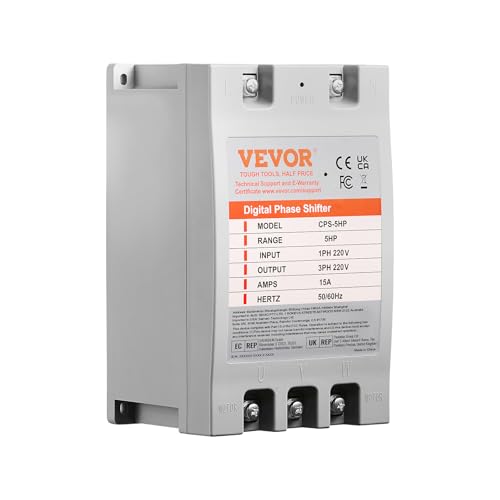
VEVOR’s 5HP digital phase converter focuses on precise phase conversion for 220V equipment, delivering a compact footprint and straightforward installation. It emphasizes energy efficiency and minimal high-frequency interference, which can be beneficial for sensitive electronics in a shop setting. The unit is described as suitable for residential and light commercial use and is designed for one motor at a time, a common constraint for small-scale operations.
Bonvoisin 20HP Single Phase To 3 Phase

The Bonvoisin model offers a higher horsepower rating at 20HP with 15kW capacity, ideal for larger single machines or multi-tool systems that require robust three-phase power from a single-phase source. It is designed for one motor operation and emphasizes accurate conversion and safety, suggesting a straightforward wiring approach with two input live wires and three output leads to the motor. It is positioned as a reliable option for heavier workloads in workshops or small fabrication shops.
PL-5 Pro-Line Rotary Phase Converter

The PL-5 Pro-Line Rotary Phase Converter provides a rotary design intended to start and run motors up to 2.5 HP and other loads at 208–240V, with the note that a larger unit (PL-10) exists for up to 10HP. This model emphasizes its two-component setup: an electrical control panel and an idler motor, a classic configuration for versatile applications including CNC equipment and resistive/inductive loads. It suits users who need dependable phase conversion for moderate motors and varied applications.
Buying Guide: Key Purchase Considerations
When selecting a digital phase converter, consider the following factors to ensure compatibility and long-term value:
- Motor horsepower and load type: Match the converter’s continuous rating to the motor’s running HP and peak startup requirements. Heavier loads or CNC equipment may need higher-capacity units or rotary converters.
- Input/Output voltage: Most models here operate at 200–240V; confirm your supply and motor rating align with the converter’s output to avoid performance or safety issues.
- Single-motor constraint: Several units specify use for one motor only. If you plan to drive multiple machines, you may need a larger unit or separate converters.
- Isolation vs. non-isolation design: Isolated converters reduce electrical noise to sensitive equipment but often come at higher cost and size. Non-isolation designs are compact and economical but may transfer line noise.
- Startup performance and efficiency: Digital phase converters often claim precise phase conversion with energy-efficient operation. Look for features like automatic restart after power loss and low-frequency interference mitigation.
- Installation footprint: Space constraints are common in home workshops. Compare dimensions and weight to ensure the unit fits your workspace without compromising accessibility for wiring and maintenance.
- Safety and compliance: UL-listed or equivalent certifications indicate adherence to safety standards. Check for protective features such as overload protection and proper enclosure materials.
- Maintenance and serviceability: Consider units with accessible wiring and clear installation manuals. A converter with readily available replacement parts can reduce downtime.
- Future-proofing: If you anticipate expanding to higher horsepower tools, selecting a scalable or compatible model (or a larger unit) can be more economical than upgrading twice.
Bottom line: For hobbyists and light commercial users, compact digital phase converters such as the 5HP to 10HP options offer practical solutions that balance space, cost, and reliability. For higher-demand settings, the 20HP unit provides additional headroom, though it may require careful electrical planning and one-motor operation. Always verify motor compatibility and start-up requirements with the manufacturer’s specifications before purchase.