Best Differential Water Pressure Switches for Reliable Well Water Supply
Choosing a differential water pressure switch helps ensure your well pump starts and stops smoothly, protecting both the pump and your plumbing. The following selections are among the most relevant options for American households, offering adjustable ranges, durable construction, and straightforward installation. This guide highlights five top choices, compares their key features, and provides practical buying considerations to help you pick the right switch for your well system.
| Product | Brand | Pressure Range | Stem/Connection | Notes |
|---|---|---|---|---|
| Merrill MPS4060 | Merrill | 40-60 psi | 1/4″ NPT | Adjustable differential; robust contacts |
| Merrill MPS5070 | Merrill | 50-70 psi | 1/4″ NPT | Higher range; adjustable differential |
| WHK Water Pressure Switch | WHK | 40-60 psi | 1/4″ NPT | Durable ABS cover; UL listed |
| Xlajiao 40-60 | Xlajiao | 40-60 psi | 1/4″ NPT | Brass body; simple installation |
| Stitokg 9013FSG2J24 | Stitokg | 40-60 psi | 1/4″ NPT | Reliable 40/60 switching |
Overview: The five picks above span a range of common well pump applications, from standard water-only use to flexible differential adjustments. They emphasize durable construction (brass or robust housings), standard 1/4″ NPT connections, and clear pressure switch behavior (turn-on/off thresholds). Whether you need a compact replacement or a slightly higher pressure setting, these options offer dependable performance for residential wells in varying conditions.
Merrill MPS4060 Water Well Pressure Control

The Merrill MPS4060 is designed for electrically driven water well pumps across jet, submersible, and reciprocating systems. With a cut-in of 40 psi and a cut-off of 60 psi, this model provides an adjustable differential to tailor start/stop behavior to your water demand. Large silver contacts are specified for longer service life, making it a solid choice for households seeking reliable pump protection and consistent water pressure.
Merrill MPS5070 Water Well Switch

The Merrill MPS5070 extends the range to 50-70 psi, suitable for setups where higher pressure thresholds are preferred due to pipe length, elevation, or storage tank dynamics. Like the 40-60 model, it features an adjustable differential and a 1/4″ female NPT connection. The switch is designed for durable, long-term performance in a variety of well configurations, delivering dependable cycling behavior while protecting pumps and plumbing from pressure fluctuations.
WHK Water Pressure Switch for Well Pump
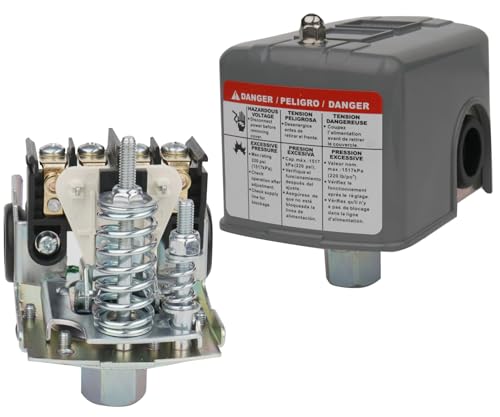
WHK’s 40-60 psi switch is built for reliability, featuring a durable construction with an ABS exterior cover and large silver contacts to extend service life. UL certification adds a layer of assurance for electrical safety. The product is designed to maintain a steady water pressure while protecting the pump and plumbing system from pressure spikes, making it suitable for a broad range of residential well installations.
Stitokg 9013FSG2J24 Pressure Switch

The 9013FSG2J24 from Stitokg offers 40-60 psi with a 1/4″ NPT connection and is positioned as a straightforward replacement option for well pump pressure control. It emphasizes easy installation and robust performance in challenging environments, making it a practical choice for homeowners looking to refresh an aging switch without altering system dynamics.
Xlajiao 40-60 Psi Well Pump Pressure Switch

Designed for well pumps, Xlajiao’s 40-60 psi model uses a brass body for durability and an ABS housing to shield internal components from water and dust. The standard 1/4″ female NPT connection supports quick installation with jet, submersible, or reciprocating pumps. The switch performs reliably in typical residential settings where stable water pressure is required without frequent cycling.
Buying Guide: Key Considerations for Choosing a Water Well Pressure Switch
When selecting a differential pressure switch for a water well, several factors influence performance and longevity, including pressure range, differential adjustment, construction materials, and installation compatibility. These considerations help ensure the switch aligns with your home’s water usage, well depth, storage tank configuration, and plumbing layout.
- Pressure range and differential: Most residential systems use a 40-60 psi range; some homeowners prefer 50-70 psi. A switch with adjustable differential lets you tune how quickly the pump starts and stops in response to pressure fluctuations, affecting pump cycling frequency and wear.
- Connection size and fit: The standard 1/4″ NPT connection is common, but verify compatibility with your pump’s port size and existing fittings to avoid leaks or the need for adapters.
- Materials and durability: Brass bodies offer corrosion resistance in aggressive water or mineral-rich environments, while ABS housings protect internal circuitry from dust and moisture. Consider UL or other safety certifications for electrical reliability.
- Electrical compatibility: Ensure the switch is rated for your pump motor type and electrical system, including voltage and amperage. A robust switch reduces the risk of arcing and extends motor life.
- Installation and maintenance: Look for switches with clear wiring diagrams and easy access to contacts. Replacement options with widely available parts simplify future service.
- System impact: A higher cut-off or broader range may reduce cycling but could require a larger storage tank or longer piping. Assess how the switch interacts with pump size, tank pressure, and household demand.
- Warranty and support: Manufacturers offering comprehensive warranties and customer support can save time and cost if issues arise during installation or operation.
Practical guidance: For most single-family homes with standard well setups, a 40-60 psi or 50-70 psi switch with adjustable differential provides a balanced mix of quick response to demand and reasonable pump cycling. If your piping has significant elevation changes or you use a larger storage tank, opting for a higher cut-off range (like 50-70 psi) may help maintain consistent pressure with fewer cycles.