Best Dehumidifier or Air Conditioner Hybrid Systems for Room Comfort
Combining dehumidification with air conditioning can improve comfort, reduce humidity, and improve overall indoor air quality. The following selections highlight portable and window AC options that pair cooling with effective dehumidification or moisture-management features. Each product includes a quick overview of how its dehumidification capability complements cooling in real-world spaces.
| Product | Brand | Key Dehumidification Feature | Notes |
|---|---|---|---|
| Dreo AC515S Portable AC | Dreo | Integrated dehumidifier mode with low-noise operation | 12,000 BTU cooling; drainage-free design |
| Midea 10,000 BTU Portable AC | Midea | Dehumidifier mode via 3-mode operation | Smart control and voice compatibility |
| Midea 12,000 BTU Window Unit with Heat | Midea | Dry mode and heat option for seasonal comfort | Quaet energy use; suitable for larger spaces |
| Dreo 12,000 BTU Portable AC | Dreo | 3-in-1 mode with dehumidifier and fan | 46dB noise isolation |
| Hisense 8,000 BTU Smart Inverter Window AC | Hisense | Dehumidifier mode with inverter efficiency | Energy Star efficiency |
Dreo AC515S Portable Air Conditioner With Dehumidifier

The Dreo AC515S portable air conditioner combines cooling power with a built-in dehumidifier to reduce moisture in spaces up to 12,000 BTU of cooling capacity and 16-foot reach. Its self-draining, drainage-free design helps minimize water handling in humid environments. The unit emphasizes quiet operation, using a noise-isolation approach around the compressor to keep noise near 46dB, which is ideal for bedrooms or home offices. With APP, voice, and remote control options, users can tailor cooling, dehumidification, and fan settings for comfortable living spaces. Its temperature range and multi-speed fan provide flexible comfort control.
Key features include: a 3-in-1 mode (cooling, dehumidifying, fan), a wide operating range (65°F–86°F for precise comfort), and easy controls with a compact remote. The integrated dehumidifier mode helps remove excess humidity during humid days, supporting a drier environment without sacrificing cooling performance. Ideal use cases include bedrooms, living rooms, and home offices that experience high humidity or condensation during summer.
Midea 10,000 BTU Portable AC With Dehumidifier

This Midea portable air conditioner delivers 10,000 BTU ASHRAE cooling, suitable for spaces up to about 300 square feet, with a dehumidification-focused operating mode. The SmartCool design supports smart control via the SmartHome app for iOS and Android, enabling remote mode switching, scheduling, and even voice integration with Alexa or Google Assistant. The unit emphasizes effortless operation through a clear LED display and a compact remote, plus a 24-hour timer to maintain comfort without manual adjustments. Its three-mode operation includes cooling, dehumidification, and fan-only for year-round flexibility.
In humid climates, the built-in dehumidifier helps reduce moisture, supporting faster evaporation of sweat and a more comfortable indoor climate. The unit’s energy-saving features and app-based controls can simplify daily use, especially in apartments or rooms where moisture control is a priority. Installation is straightforward, and the unit is designed for portability, allowing you to move it between rooms as needed.
Midea 12,000 BTU Window AC With Heat And Dehumidifier

This Midea 12,000 BTU window unit is designed for larger spaces up to 550 square feet and includes heat and dehumidification capabilities. The unit offers multiple modes (Heat, Auto, Cool, Dry, Fan) with a 24-hour timer and energy-saving features. An LED display, remote control, and SmartHome app compatibility allow control from across the room and voice-enabled commands via Alexa or Google Assistant. The heat option broadens seasonal usability, while the dry mode targets humidity reduction during warmer months. Energy efficiency comes from inverter-style technology and an energy-conscious CEER rating.
For homes with variable humidity and temperature needs, this window unit can serve as a single solution across seasons—cooling in summer, dehumidifying during humid days, and warming when temperatures drop. The copper components and easy installation process make it a practical choice for rooms without the need to retrofit ductwork. Its 12,000 BTU capacity makes it well-suited for living rooms, family rooms, or larger bedrooms where humidity management is a priority.
Dreo 12,000 BTU Portable AC With Dehumidifier

The Dreo AC515S portable air conditioner combines 12,000 BTU cooling with a drainage-free design and a three-in-one mode that integrates cooling, dehumidification, and fan operation. The unit emphasizes a quiet operation profile, with noise isolation around the compressor to minimize disruption in quiet spaces like bedrooms or study areas. It supports APP-based control in addition to voice and remote operation, enabling scheduling and adjusting humidity targets. The adjustable temperature range (65–86°F) helps tailor comfort in hot seasons, while the dehumidification feature assists in maintaining a balanced humidity level.
This model is designed for flexibility in room layouts, offering easy portability and a compact footprint for apartments or homes without centralized cooling. The combination of a strong cooling capacity with a dedicated dehumidification function makes it suitable for users who want both temperature and moisture management without installing a separate dehumidifier.
Hisense 8,000 BTU Smart Inverter Window AC With Dehumidifier
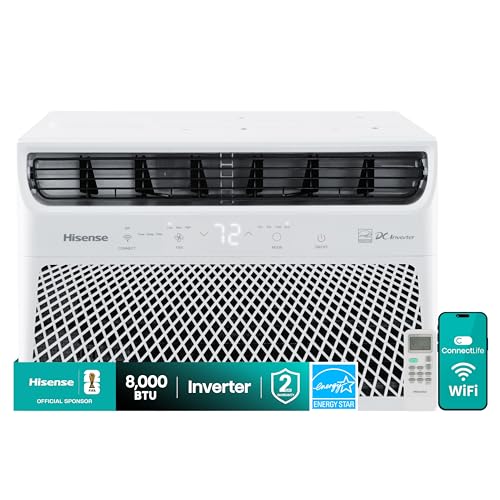
The Hisense 8,000 BTU smart inverter window air conditioner combines cooling with a dehumidifier function and inverter-driven efficiency. It is designed for windows and offers easy installation, quiet operation, and energy-saving capabilities that align with ENERGY STAR standards. The inverter technology provides more precise temperature control and smoother performance, which can contribute to more stable humidity levels as well. This unit is suitable for medium-sized rooms up to 350 square feet and integrates with modern smart home ecosystems for voice and app-based control.
In humid environments, the dehumidification mode helps reduce lingering moisture while maintaining comfortable temperatures. Its energy efficiency and compact form factor make it a practical choice for homeowners looking to optimize both cooling and humidity control without compromising on noise or energy use. The window-installed design is ideal for rooms where ducted systems are unavailable or impractical.
Buying Guide: Key Purchase Considerations And Comparisons
- Room size and BTU rating: Match the unit’s cooling capacity to the room size. For spaces up to 300–350 sq ft, 8,000–10,000 BTU units are typical; for larger rooms, 12,000 BTU units are more appropriate. A higher BTU does not automatically equate to better humidity control, but it helps with rapid temperature reduction which can indirectly aid comfort in humid spaces.
- Dehumidification effectiveness: Look for units with dedicated dehumidifier modes or “dry” settings. Some models offer self-evaporating drainage-free designs, which simplify moisture management without constant drainage. For best results, select a unit that maintains humidity around 40–60% depending on comfort preference and climate.
- Portability vs. window installation: Portable ACs offer flexibility but may require more floor space and drainage considerations. Window units typically provide strong dehumidification and cooler performance with quieter operation but require window access and proper installation.
- Smart features: Apps, voice control, and timers can help optimize humidity and temperature without manual adjustments. Some units support Alexa or Google Assistant for hands-free operation and easier scheduling during humidity spikes.
- Noise level: For bedrooms or workspaces, prioritize models with low decibel ratings during dehumidification or quiet cooling modes. Noise isolation features around compressors can reduce disruption.
- Energy efficiency: Look for ENERGY STAR certification and inverter-based technology in window units for better long-term energy savings. Consider a model with adjustable fan speeds to balance comfort and power use.
- Maintenance: Check filter accessibility and ease of cleaning. A washable filter and accessible front panels simplify routine maintenance, which helps sustain performance in humid conditions.
- Drainage considerations: Some portable units require drainage tubes or pumps, while others are drainage-free using self-evaporating technology. Assess your space’s humidity and drainage options when choosing between portable and window units.
- Seasonal versatility: For homes with varying seasons, units that combine cooling with heating or dehumidification in one device can offer year-round comfort and convenience.