Best Deep Cycle Storage Battery Options for Off-Grid Power and RVs
Discover top deep cycle storage batteries suited for off-grid homes, RVs, boats, and backup power. This guide highlights five solid choices, explaining who they’re best for and why. Each option emphasizes longevity, safety, and maintenance needs to help buyers pick with confidence.
Buyer summary table
| Product | Best For | Key Benefit |
|---|---|---|
| Renogy Deep Cycle AGM Battery 12V 200Ah | Home RV or cabin setups needing maintenance-free AGM | Low self-discharge; high discharge current |
| 12V 100Ah LiFePO4 (VEMDIA) | Compact, lightweight upgrades for RVs and boats | Smart BMS, long life, drop-in fit for Group 31 |
| WattCycle 48V 100Ah LiFePO4 | High-capacity home storage and multi-unit racks | Massive capacity with scalable architecture |
| WOXABHSL 4x 12V 100Ah LiFePO4 | Versatile multi-battery setups for solar and RVs | Automotive-grade cells, long cycle life |
| 12V 300Ah LiFePO4 (Yeagulch) | High-energy storage for extended off-grid use | Large capacity with strong BMS protections |
Renogy Deep Cycle AGM Battery 12V 200Ah

Features indicate maintenance-free operation with AGM separators and valve-regulated technology. The battery supports high discharge currents up to 2000A peak, making it suitable for RVs, cabins, and off-grid systems. It is designed to minimize acid leakage and reduce upkeep, aligning with buyers who prefer low-maintenance power storage.
Best for: Home and RV users who want a large-capacity, maintenance-free option. Why selected: High discharge capabilities paired with very low self-discharge rate. Caution: AGM chemistry can be sensitive to prolonged high-temperature environments; ensure proper ventilation in enclosed spaces.
12V 100Ah LiFePO4 Battery (VEMDIA)

Features highlight an upgraded 100A Smart BMS with all-weather safety, automatic low-temperature cut-off, and a drop-in fit for Group 31 compartments. With 15,000+ cycles at lower DoD and a 10-year lifespan, this LiFePO4 option is ideal for RVs, boats, and solar storage where weight and longevity matter.
Best for: Lightweight upgrade with advanced BMS. Why selected: Long cycle life and safety features reduce long-term replacement costs. Caution: Requires appropriate charging equipment compatible with LiFePO4 chemistry.
WattCycle 48V 100Ah LiFePO4

This 48V pack delivers 5120Wh usable energy and supports up to 20 parallel units, making it a strong choice for larger home energy storage and backup systems. It uses BYD prismatic LiFePO4 cells with a robust 100A BMS, offering significant safety protections and advanced thermal management for dependable performance in varied conditions.
Best for: High-capacity, scalable storage installations. Why selected: Large energy, scalable architecture, and active thermal management. Caution: Higher upfront complexity when integrating multiple units; ensure proper mounting and wiring for racks.
WOXABHSL 4x 12V 100Ah LiFePO4
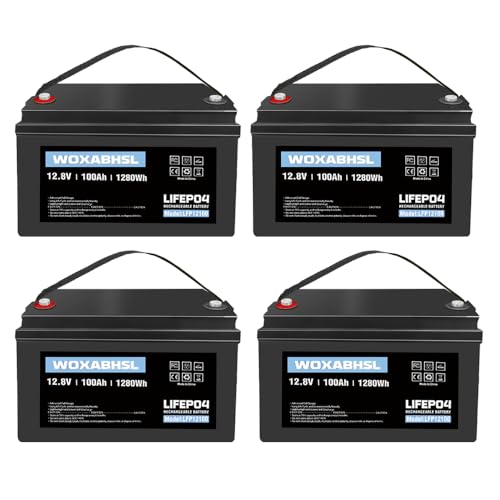
This kit emphasizes automotive-grade LiFePO4 cells with a 10-year service life, designed for flexible solar, RV, and marine applications. The package targets multi-battery configurations with strong longevity and compatibility for varied setups, including emergency power and off-grid storage.
Best for: Users planning multi-battery configurations with long-term durability. Why selected: High cycle life and versatile use cases. Caution: Verify compatibility with existing BMS and wiring standards in your system.
12V 300Ah LiFePO4 Battery (Yeagulch)
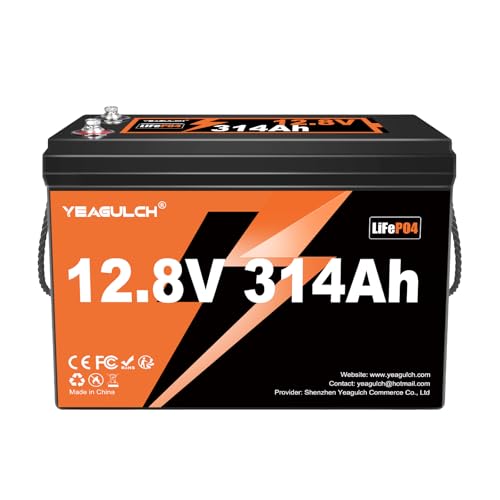
A high-capacity LiFePO4 option designed for extended off-grid storage, solar energy projects, and backup power. It includes a 200A BMS and emphasizes safety protections, high energy density, and a relatively light form factor for its capacity. Best for: Intensive energy storage with long service life. Why selected: Large capacity reduces the number of modules needed for big storage goals. Caution: Heavier and may require reinforced mounting in some installations.
Buying Guide
What matters most when choosing a deep cycle storage battery?
- Chemistry: AGM, LiFePO4, and flooded lead-acid each have trade-offs in weight, cycle life, maintenance, and safety. LiFePO4 often offers longer life and better safety at comparable costs.
- Capacity and voltage: Match capacity (Ah) and system voltage to your power needs and inverter/charger specs. Consider future expansion when selecting a modular or scalable system.
- Battery Management System (BMS): A strong BMS protects against overcharge, over-discharge, short circuits, and temperature extremes. Look for low-temperature cut-off and balance features.
- Temperature tolerance: Some chemistries perform better in extreme temperatures; ensure installation space allows proper ventilation or insulation as needed.
- Weight and form factor: Heavier packs may require robust mounting and support. LiFePO4 weighs less than lead-acid for the same capacity, easing installation.
- Maintenance: AGM and LiFePO4 are typically maintenance-free, but LiFePO4 still requires compatible chargers and periodic checks of wiring and fuses.
- Scalability: If you plan to expand, consider systems that support parallel units and master/slave configurations for easier growth.
Practical buying considerations
- System compatibility: Ensure your inverter, solar controller, and charging equipment support the chosen chemistry and voltage.
- Warranty and service life: Longer useful life reduces long-term ownership costs; review expected cycles at a given DoD.
- Safety features: Look for over-current protection, automatic thermal shutoff, and proper fire/safety design for the installation space.
FAQ
- What is the difference between AGM and LiFePO4 batteries?
AGM uses absorbed glass mat technology and is maintenance-free but has shorter life and lower cycling compared to LiFePO4, which offers longer life and lighter weight. - How many cycles can LiFePO4 batteries deliver?
Most LiFePO4 cells offer thousands of cycles; exact numbers depend on DoD and usage. - Is a bigger capacity always better for off-grid systems?
No. Capacity should match your typical load and planned reserve, plus inverter efficiency and charging sources. - Do LiFePO4 batteries require special chargers?
Yes. Use chargers compatible with LiFePO4 chemistry to avoid excessive charging voltages. - Can these batteries be used in RVs and boats?
- Are maintenance-free batteries truly maintenance-free?
Yes. The listed options include models designed for mobile, marine, and remote installations with appropriate BMS protections.
Maintenance-free typically means no water refilling or acid handling, but periodic checks of connections and charging equipment are still advised.