Best Deep Cycle Marine Battery for Trolling Motor and Boat Power
Choosing the right deep cycle battery for a trolling motor involves assessing weight, lifecycle, safety, and compatibility with marine environments. This guide highlights five top options across AGM and lithium chemistries, focusing on endurance, recharge speed, and suitability for boats, RVs, and off-grid use. Each product section provides key specs drawn from the listed features to help inform a confident purchase.
| Product | Chemistry | Approx. Weight | Key Benefit |
|---|---|---|---|
| WEIZE 12V 100Ah AGM | AGM Lead-Acid | About 25-27 lbs | Low self-discharge; maintenance-free |
| Newport Vessels 12V 50Ah AGM | AGM Lead-Acid | 32 lbs | Lightweight for marine use; sealed |
| LiTime 12V 100Ah LiFePO4 | LiFePO4 | About 25 lbs | Bluetooth monitoring; long life |
| MARSENERGY 12V 100Ah LiFePO4 (R-1PC) | LiFePO4 | ~21 lbs | High cycle life; compact |
| HRBEENERGY 12V 100Ah LiFePO4 | LiFePO4 | ~19-21 lbs | Smart BMS; broad cycle range |
Overview: This selection covers both traditional AGM options and modern LiFePO4 batteries, giving options for weight-sensitive vessels, long-term storage, and rich cycle life. Each product is tailored to trolling motors and marine use, with safety features, temperature tolerance, and compatibility noted in their features.
WEIZE Deep Cycle AGM 12V 100Ah Battery
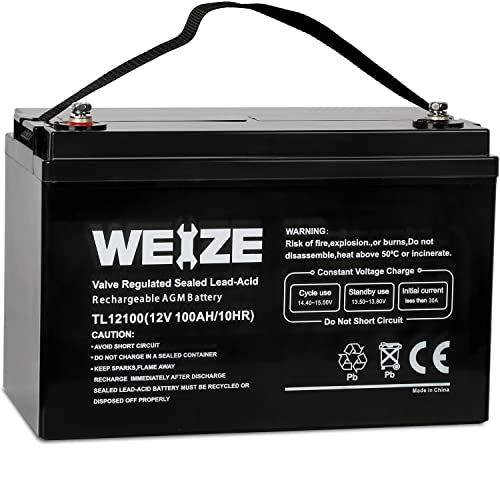
WEIZE’s 12V 100Ah AGM battery is designed for maintenance-free operation with a sealed lead-acid design. Its compact dimensions (about 12.99 x 6.73 x 8.43 inches) support easy mounting in tight spaces typical of smaller boats or RV setups. The AGM chemistry minimizes acid leakage risk and supports a 1150A max discharge current for short bursts. It features a typical operating window suitable for trolling motors, with a lower self-discharge rate of about 1-3% monthly under proper storage and temperature. The battery’s 14°F to 122°F charging window and a best operating temperature around 77°F help ensure reliability in varied climates.
Key considerations: AGM batteries deliver solid performance at a lower upfront cost and are widely compatible with trolling motors. However, they are heavier than lithium options and have a finite cycle life. WEIZE emphasizes a maintenance-free approach and longer storage readiness compared to flooded deep cycles, making it attractive for boats that aren’t used daily.
Newport Vessels 12V 50Ah Deep Cycle AGM

Newport Vessels promotes a lightweight, sealed AGM battery designed for trolling motors and marine use. At roughly 32 pounds, this option balances portability with robust marine-grade construction. The sealed design supports leak-proof operation in rough seas, and its 12V system aligns well with many standard trolling motors and electronics. The product highlights emphasize durability and reliability for long boating sessions without routine maintenance.
Considerations: While the 50Ah capacity is lower than larger AGM models, its lighter weight can be advantageous on smaller craft or where mounting space is limited. Regular use and charging will maximize longevity, but it may require more frequent recharges for higher-power trolling motors or extended days on the water.
LiTime 12V 100Ah Trolling Motors LiFePO4 Battery

LiTime’s LiFePO4 12V 100Ah battery focuses on smart features and resilience. It includes Bluetooth monitoring for real-time status, discharge control, and system checks via a companion app. Low-temperature protection helps safeguard performance in colder waters, and the battery carries multiple safety protections, including overcharge, over-discharge, and short-circuit safeguards. Weighing around 25 pounds, it offers a high energy density and ample cycle life for trolling motor users who prioritize long-term reliability and remote monitoring on the water.
Important notes: LiFePO4 chemistry provides significant longevity and stable performance, but the upfront cost is higher than AGM. The built-in BMS and Bluetooth features offer added value for users who want to track health and adapt charging strategies to weather conditions and mission duration.
MARSENERGY 12V 100Ah LiFePO4 Battery (R-1PC)

MARSENERGY presents a compact 100Ah LiFePO4 option with a claimed 4500 to 15000 deep cycles depending on depth of discharge. With a weight around 21 pounds and dimensions that fit Group 24 boxes, this battery is designed to be a drop-in upgrade from lead-acid setups. The product emphasizes a strong lifecycle and compatibility with trolling motors, RVs, and home energy storage. A built-in BMS and durable construction address safety, including resistance to temperature variations and environmental conditions.
Considerations: Lithium batteries like this offer dramatically longer lifespans and lighter weight, but require careful charging management and proper BMS integration. Users should verify their trolling motor’s compatibility with lithium systems and ensure appropriate charging sources are used to maximize cycle life.
HRBEENERGY 12V 100Ah LiFePO4 Battery with BMS

HRBEENERGY offers a 100Ah LiFePO4 battery featuring a built-in 100A smart BMS. The battery is positioned as a direct upgrade from lead-acid and AGM systems, with a stated 10-year lifespan under proper use and strong cycle life. The BMS protects against overcharging, over-discharging, over-current, and short circuits. The battery is compact, low-weight, and designed for trolling motors, RVs, and marine applications, with emphasis on safety and longevity in varying climates.
Considerations: This option aligns with users seeking robust life cycles and onboard safety protections. Potential buyers should confirm compatibility with their boat’s charging setup and ensure proper ventilation and wiring to support the BMS protections and a steady charging regime.
Buying Guide: Key Purchase Considerations For Trolling Motors
Chemistry And Lifespan
Lead-acid AGM batteries deliver reliable, immediate availability at a lower price. They are heavier and offer fewer cycles than lithium options. Lithium Iron Phosphate (LiFePO4) batteries provide longer lifespans, significantly more deep cycles, and lighter weight, which is beneficial for smaller boats or vessels with weight constraints. They also support smart BMS protection and remote monitoring in many models.
Weight And Space
Weight matters for performance and handling on boats. LiFePO4 options typically weigh substantially less than lead-acid equivalents with the same capacity. Consider your battery box size, mounting space, and weight distribution to optimize stability and balance on deck or in storage compartments.
Cycle Life And Warranty
Cycle life indicates how many full charge-discharge cycles a battery can sustain. A higher cycle life translates to longer service life and lower replacement frequency. Review the manufacturer’s stated cycles at standard DoD (depth of discharge) levels and check for warranties that cover defects and performance over time.
Charging Systems And BMS
Ensure your trolling motor’s charger and the boat’s electrical system are compatible with the battery chemistry. LiFePO4 batteries often require dedicated chargers or set charging voltages. A smart BMS protects against overcharge, over-discharge, and short circuits, but you should verify the BMS specifications and its protection thresholds for cold-weather operation and high-current draws.
Temperature Performance
Marine environments expose batteries to heat, sun, and cold. Look for batteries with wide operating temperature ranges and explicit protection features for low and high temperature conditions. LiFePO4 options frequently perform well across varied climates, while AGM designs are resilient but have limits in extreme temperatures.
Maintenance, Safety, And Leaks
AGM batteries are maintenance-free, with sealed designs that resist leaks. Lithium options are also sealed and user-friendly but require careful handling and charging practices to maximize longevity. Always follow manufacturer guidelines for ventilation, disposal, and disposal-to-recycling considerations after service life ends.
Cost Versus Long-Term Value
Initial cost for lithium solutions is higher, but their longer lifespans and lighter weight can translate to lower total cost of ownership over time. AGM units may appeal to budget-conscious buyers who want robust performance with simpler charging needs.