Best Deep Cycle Batteries for RV: Top 5 for Off-Grid RV Living
When selecting a deep cycle battery for an RV, reliability, lifespan, and maintenance needs are crucial. The following five products represent a mix of proven AGM and lithium options designed for camping, travel, and off-grid use. Each choice is evaluated for RV reliability, safety, charging compatibility, and overall value in typical American RV setups. This guide helps you compare performance, weight, and endurance without the guesswork of price alone.
| Product | Brand | Type | Capacity | Notes |
|---|---|---|---|---|
| Weize Deep Cycle AGM 12V 100Ah | WEIZE | AGM | 100Ah | Low self-discharge; solid for RVs and solar |
| Renogy Deep Cycle AGM 12V 100Ah | Renogy | AGM | 100Ah | Strong safety and series/parallel flexibility |
| GRNOE 2-Pack 12V 100Ah LiFePO4 | GRNOE | LiFePO4 | 100Ah per cell | Long cycles, built-in BMS |
| WEIZE Dual Purpose AGM 12V 90Ah Group 24M | WEIZE | AGM | 90Ah | Dual purpose; good for starting and deep cycle |
| Renogy Deep Cycle AGM 12V 200Ah | Renogy | AGM | 200Ah | High capacity for bigger RV setups |
Weize 100Ah AGM Deep Cycle Battery
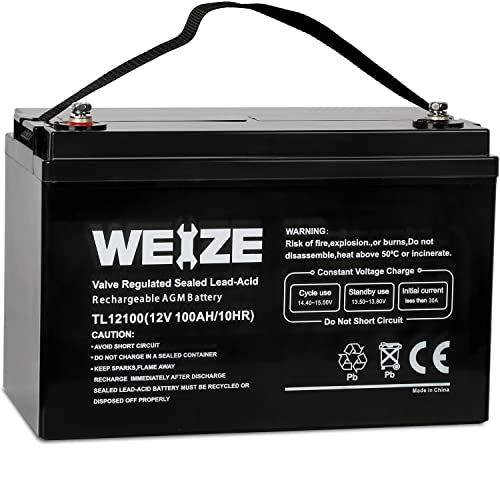
The Weize 12V 100Ah AGM battery is maintenance-free and designed for RVs, solar setups, trolling motors, and off-grid systems. Its AGM design minimizes acid leakage and reduces maintenance needs. The unit supports a wide operating temperature range and offers a robust 1100A peak discharge for short bursts, making it suitable for startup loads and accessory use in RVs. With a low self-discharge rate, it stores energy longer between recharges, which is helpful for weekend trips or extended boondocking.
Key considerations include the size and terminal orientation, which fit typical RV compartments. The battery’s specification highlights indicate reliable performance in varying climates, but it benefits from proper temperature management to extend life.
Renogy 12V 100Ah AGM Deep Cycle Battery

Renogy’s AGM 12V 100Ah model is a trusted option with strong safety credentials and proven cycle life. It supports series and parallel connections, enabling scalable battery banks for larger RV systems. The integrated sealed design minimizes venting and maintenance, a practical feature for RV owners who want reliable power without routine checks. Renogy’s product lineage and global usage provide a broad compatibility base for solar charge controllers and inverters.
Consider the safety profile and compatibility with existing RV electrical systems. This battery is well-suited for campers looking to expand their off-grid capabilities while keeping a straightforward maintenance routine.
GRNOE LiFePO4 12V 100Ah (2-Pack) With BMS

This option uses lithium iron phosphate (LiFePO4) chemistry, offering significantly more deep-cycle life and lighter weight than AGM alternatives. Each battery features a built-in 100A BMS with temperature protection, protecting against overcharge, over-discharge, and short circuits. The dual-pack arrangement implies a pair of batteries can power more demanding RV setups, with quick-charge potential and deep-cycle resilience suitable for extended trips in remote locations.
It’s important to note the weight and cold-weather behavior; LiFePO4 remains robust in varied temperatures but benefits from a proper charging strategy and a compatible charger to maximize lifespan.
WEIZE 90Ah Dual Purpose AGM Group 24M

This WEIZE model combines starting power with deep cycling in a dual-purpose AGM package. It is designed for marine and RV use, offering relatively quick charging and a dependable run for a range of RV appliances. The Group 24M designation makes it a conventional fit for many RV trailer setups and provides a balance between cranking capability and cycling endurance. It’s particularly suitable for owners who need both engine-starting power and cabin electronics support in one battery.
When selecting this option, ensure your charger and charging strategy are aligned with AGM chemistry to maintain long-term performance and prevent sulfation or self-discharge issues in off-grid contexts.
Renogy 200Ah AGM Deep Cycle Battery

Renogy’s 200Ah AGM battery provides a high-capacity option for larger RV electrical setups or off-grid cabins. AGM technology reduces maintenance concerns and supports a longer shelf life when stored properly. A larger capacity means fewer cycles between charges, which can be advantageous for off-grid trips with limited solar input or extended travel days without marina services. It is compatible with typical RV inverters and solar controllers, provided the system can accommodate the higher current draw.
Consider space constraints and weight, as higher capacity units are heavier and larger. This choice is ideal for full-timers or RVers who require substantial energy reserves for appliances, heating, and entertainment systems.
Buying Guide
Key purchase considerations for RV deep cycle batteries:
- Battery chemistry: AGM is maintenance-free and robust for diverse climates; LiFePO4 offers longer cycle life and lighter weight but requires compatible charging equipment. Assess your climate, usage patterns, and charging sources (solar, generator, shore power).
- Capacity and weight: Higher Ah ratings extend runtime but increase weight and space needs. Match capacity to your load profile, inverter size, and available mounting space in the RV.
- Discharge rate and cycle life: Look for higher discharge currents for starting loads and deep-cycle resilience for extended use. LiFePO4 typically provides longer cycle life than AGM in demanding scenarios.
- Charging compatibility: Ensure your charger and solar controller support the battery chemistry. Some LiFePO4 batteries require specific charging voltages and cut-off parameters to maximize lifespan.
- Temperature tolerance: Cold weather can reduce performance. Batteries with low-temperature protection or built-in BMS features help prevent damage in chilly RV storage areas.
- Maintenance and safety: AGM requires minimal maintenance; LiFePO4 is puncture-resistant and safer in terms of thermal runaway but still needs proper handling and user adherence to charging specs.
- System integration: Consider whether you need a dual-purpose battery to power both starting and deep-cycle loads, or separate batteries for engine start and house loads. Series/parallel configurations may be required for higher voltages.
- Warranty and support: A solid warranty and accessible customer support matter for RV users who rely on reliability on the road or remote sites.
Comparison snapshot: AGM options tend to be heavier but cost-effective and widely supported by existing RV electronics. LiFePO4 options offer longer life and lighter weight but require compatible charging equipment and may have higher upfront costs. For builders and campers who prioritize longevity and overall efficiency, LiFePO4 can be a compelling long-term investment, while AGM remains a dependable, budget-friendly choice for many RV setups.