Best Deep Cycle Batteries for Inverters
Lock in reliable, long-lasting power for off-grid systems, RVs, and backup setups with deep cycle batteries tailored for inverters. This guide highlights top AGM and LiFePO4 options, focusing on durability, discharge capability, and maintenance needs. Explore five well-regarded choices and a practical buying guide to help compare performance, safety, and compatibility for your power needs.
| Product | Brand | Type | Capacity |
|---|---|---|---|
| Weize Deep Cycle AGM 12V 100Ah | WEIZE | AGM | 100 Ah |
| Renogy Deep Cycle AGM Battery 12V 200Ah | Renogy | AGM | 200 Ah |
| 12V 100Ah Group 24 LiFePO4 (VATREr Power) | VATRER POWER | LiFePO4 | 100 Ah |
| CHITOLI 12V 100Ah Group 24 LiFePO4 | CHITOLI | LiFePO4 | 100 Ah |
| Interstate Marine Deep Cycle Battery 12V 100Ah | Interstate Batteries | AGM (Marine) | 100 Ah |
Note: Selecting the right deep cycle battery depends on your inverter type, cycling needs, and climate. AGM batteries offer maintenance-free operation and good resilience in varying temperatures, while LiFePO4 options provide longer life and higher depth of discharge with lighter weight. Each option below is chosen for common American off-grid and RV setups where robustness and safety are priorities.
Weize 100Ah AGM Deep Cycle Battery
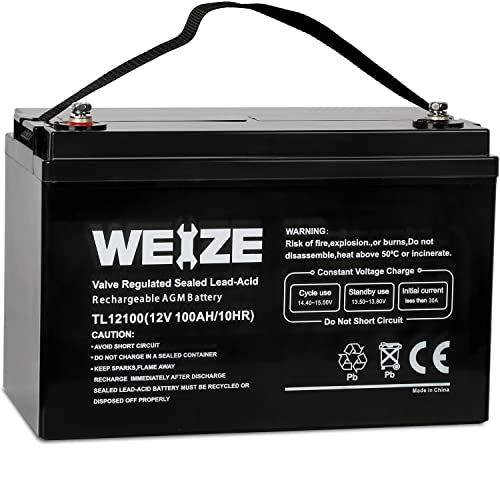
The Weize 12V 100Ah AGM battery combines maintenance-free operation with a compact sealed design. Its AGM technology minimizes acid leakage and reduces self-discharge, making it suitable for RVs, solar setups, trolling motors, and off-grid systems. Operational temperature guidelines span a broad range, supporting charging from 14℉ to 122℉ and discharging down to -15℃. A recommended 1100A max discharge current (5 seconds) supports brief high-demand periods. The long-life benefit comes from a low monthly self-discharge rate of 1–3% when stored properly.
Renogy 200Ah AGM Deep Cycle Battery

Renogy’s AGM deep cycle battery delivers solid discharge performance with low internal resistance and the ability to support high discharge currents. The thick plate design and sealed technology help prevent acid leakage, enabling maintenance-free operation. Shelf life is optimized by low self-discharge; Renogy claims a rate below 3% per month at standard temperatures. This model is well-suited for RV power systems, cabins, marine use, and off-grid storage where reliability matters over long periods between recharges.
VATRER POWER LiFePO4 12V 100Ah

This 12V LiFePO4 battery provides strong protection features, including a built-in 100A BMS with overcharge, over-discharge, and short-circuit protection. It supports wide operating temperatures from -20℃ to 60℃ with high and low temperature cutoffs, helping protect the cells during extreme conditions. Its expandable configuration allows multiple units to scale energy storage from 1.28kWh up to 20.48kWh, suitable for larger off-grid or backup power systems.
CHITOLI 12V 100Ah LiFePO4 Group 24

CHITOLI’s LiFePO4 100Ah battery emphasizes safety, lightweight design, and long cycle life. With thousands of life cycles at varying depths of discharge, this battery provides a durable energy source for RVs, trolling motors, and home energy storage. A smart BMS guards against overcharging, over-discharging, and short circuits, making it a reliable choice for users seeking a compact, high-density lithium solution with consistent performance.
Interstate Marine Deep Cycle 12V 100Ah
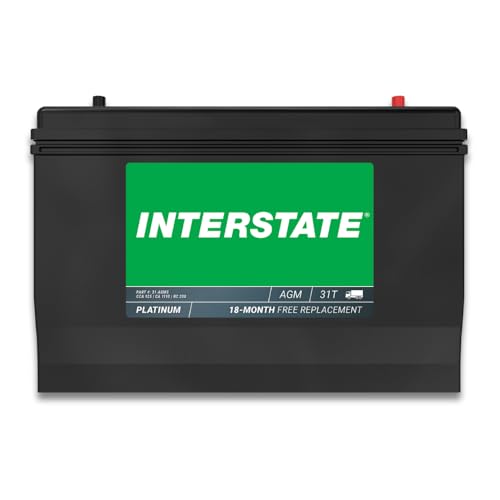
Interstate’s marine deep cycle battery blends deep-cycle capability with durable construction for extended operation in harsh marine environments. Built with thick plates to sustain repeated discharges, it aims to deliver reliable performance for trolling motors, power accessories, and other marine electronics. The design targets longevity and stability under continuous use, offering a robust option for people who demand endurance in challenging watercraft setups.
Buying Guide: Key Purchase Considerations
- Battery chemistry and weight: AGM batteries are maintenance-free and heavier, while LiFePO4 cells are lighter, offer longer life, higher depth of discharge, and better cycle counts. Choose based on your inverter’s acceptance of charging profiles and weight constraints.
- Capacity and depth of discharge: Higher Ah ratings provide longer runtime, but real-world usable capacity matters. LiFePO4 commonly allows deeper discharge without harming life span, while AGM batteries may require gentler cycling.
- Discharge current and peak loads: Inverter sizing matters. Ensure the battery’s max discharge current aligns with the inverter’s surge requirements to avoid voltage drops or damage.
- Temperature tolerance: Extreme temperatures affect performance and lifespan. Look for batteries with wide operating ranges or built-in temperature protections (BMS features for LiFePO4).
- Maintenance and safety: AGM is generally maintenance-free but can gas under heavy charging. LiFePO4 offers safety advantages with stable chemistry and a robust BMS, though cost is higher.
- Expansion and system scaling: If planning future capacity expansion, select batteries that support parallel or series configurations, and verify compatibility with your inverter and charge controller.
- Physical footprint and weight: Consider space constraints in RVs or solar enclosures. LiFePO4 options are typically lighter for the same capacity.
- Warranty and brand support: A strong warranty and readily available replacement parts can reduce long-term risk, especially for off-grid installations.