Best DC-Powered Air Conditioning Units for RVs, Off-Grid Living, and Vehicle Cabins
Answering the needs of buyers seeking off-grid comfort, this guide features DC-powered air conditioners designed for RVs, trucks, campers, and other battery-powered setups. These units run on 12V or 48V DC and are chosen for energy efficiency, quiet operation, and versatility. The top picks suit different use cases: full-time RV travelers, off-grid campers, and fleet vehicles that rely on batteries or solar. Below, you’ll find a quick product overview table followed by detailed sections, helping you compare cooling power, energy use, and installation suitability at a glance.
| Product | Best For | DC Power Range | Approx. Cooling (BTU) |
|---|---|---|---|
| Gasbye Dual Hose Portable A/C | Full-size cooling for mid/large rooms | DC Inverter | 14,000 BTU (ASHRAE 128) |
| Cybertake S2 Pro Portable A/C | Tent, RV, and cabin versatility | DC 48V / 100-240V AC | 5,100 BTU cooling / 6,100 BTU heating |
| Somokg 12V RV A/C | Off-grid vans and small campers | 12V DC | 11,000 BTU cooling |
| Xenjum 12V RV A/C | Off-grid camping with low energy use | 12V DC | 11,000 BTU cooling |
| Jrswin 12V Truck Cab A/C | Trucks, motorhomes, long-haul setups | 12V DC | 11,000 BTU cooling |
Gasbye Dual Hose Portable A/C Review

Best for: Buyers who want full-size cooling with dual-hose efficiency in a portable form. This Gasbye unit uses a full DC inverter compressor to deliver steady cooling with a 13.6 CEER energy rating. Its dual-hose design helps maintain indoor pressure for faster temperature control and reduces energy waste common in single-hose models. The unit cools rooms up to 500 square feet and operates quietly at about 45dB in inverter mode, making it suitable for bedrooms and living spaces where sleep quality matters.
Why selected: The combination of true 14,000 BTU performance (ASHRAE) with energy-saving inverter tech and dual-hose architecture stands out for larger spaces that still prioritize low noise and efficiency. The unit’s dimensions indicate a true full-size appliance rather than a compact model that inflates BTU figures, which is important for accurate space planning.
Limitations: True BTU capacity is larger than some “mini” claims; ensure your space accommodates the footprint (15.5″ D × 17.7″ W × 29.3″ H). Noise helps in sleep contexts but may be audible in very small rooms when ramping up from idle.
Cybertake S2 Pro Portable A/C For Outdoor Use
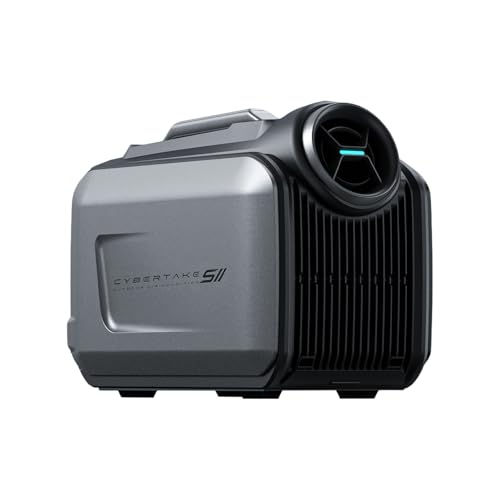
Best for: Campers and tents needing independent climate control with versatile power options. The S2 Pro can be powered via AC walls, 48V DC from a portable power station, or vehicle power (12V/24V). It conditions spaces up to about 130 square feet with 5,100 BTU of cooling and 6,100 BTU of heating, offering rapid response to changes in outdoor conditions. Eco+ mode promises efficient operation, and four modes (Cool, Heat, Dehumidify, Eco+) provide flexible control in varying environments.
Why selected: The multi-source power capability makes it ideal for remote or outdoor settings where standard AC power isn’t guaranteed. The 0-12 hour timer and three fan speeds support individualized comfort without constantly running the unit.
Limitations: Boost converter (sold separately) may be required for certain power configurations, and the unit is best used in smaller to moderate spaces rather than large, open rooms.
Somokg 12V RV A/C For Off-Grid Travel
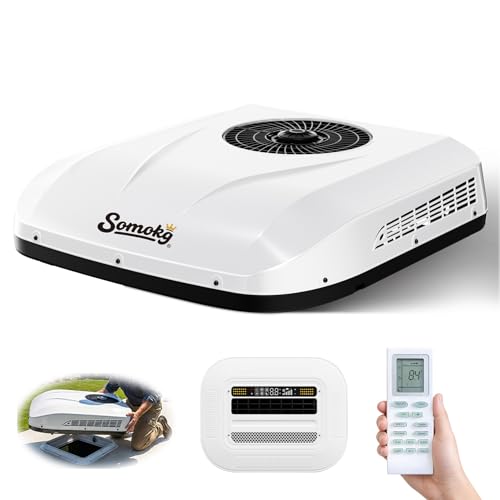
Best for: Off-grid RV travelers seeking a high-power 12V cooling unit that runs on battery or solar power. This 11,000 BTU unit is designed for battery-based operation and supports about 12 hours of cooling in Eco Mode with a 400Ah battery. It features a soft start to minimize startup surges and a quiet output around 35dB, making it well-suited for vehicles where reducing engine idling or generator use is a goal.
Why selected: The unit’s robust 12V economy pairing with low-noise operation is a strong match for campers prioritizing battery life and quiet interiors. It’s a practical choice for long weekends or extended off-grid trips where power management is key.
Limitation: It relies on an appropriate battery setup to achieve the stated runtime; ensure system capacity aligns with daily cooling needs.
Aspligo 12V Truck Cab A/C for On-the-Go Cooling

Best for: Truck drivers and heavy-vehicle operators needing reliable 12V cooling with a remote control. This model delivers 10,000 BTU of cooling power and uses a compact design suitable for cab spaces. It includes a remote control and a clear LED display for convenient operation while on the road.
Why selected: The 10,000 BTU capacity is well-suited for cab environments where space is restricted but consistent cooling is essential during long hauls. The included remote control enhances convenience for drivers and co-pilots alike.
Limitation: Power consumption is substantial (approximately 800W) and the outdoor unit size is relatively large; verify cab mounting and ventilation compatibility before purchase.
Xenjum 12V RV A/C With Soft Start

Best for: Off-grid campers seeking quiet operation and rapid cooling with minimal power draw. The Xenjum unit delivers 11,000 BTU cooling and uses a soft-start feature to reduce startup surges, saving battery life and enabling longer off-grid runs. It is designed for 12V battery use and is compatible with solar setups for extended camping trips.
Why selected: It emphasizes energy efficiency and low noise (around 35 dB), which improves comfort in small RVs and tents. The unit’s 12V operation aligns with typical solar and battery configurations in boondocking scenarios.
Limitation: It’s best used where there is a reliable 12V supply; high ambient temperatures may still demand substantial battery draw for rapid cooling.
Jrswin 12V Truck Cab A/C System

Best for: Long-haul trucks and off-grid vehicles needing steady 11,000 BTU cooling with stable 12V DC operation. It emphasizes high-efficiency cooling and safe 12V DC operation to avoid engine idling. The unit supports a broad operating range and is designed for reliability in demanding travel conditions.
Why selected: The 11,000 BTU output and 350 CFM airflow provide strong cooling for cab environments, helping drivers stay comfortable during extended trips. Multi-layer circuit protection adds durability for rugged road use.
Limitation: This model targets 12V DC use; confirm your electrical system can sustain the required current, especially when running other devices off the same battery bank.
Buying Guide: How to Choose a DC-Powered A/C for Vehicles and Off-Grid Use
- Power source compatibility: Decide between 12V DC, 24/48V DC, or mixed AC/DC options. Match with battery capacity, solar input, or generator availability to sustain cooling.
- Cooling capacity vs. space: Measure your space. Larger rooms require higher BTU and dual-hose configurations to prevent hot air backflow. For campers and vans, 11,000–14,000 BTU units often fit typical interiors.
- Energy efficiency and noise: Look for inverter compressors and low dB operation. Energy-efficient models extend battery life and improve sleep quality in small spaces.
- Portability vs. installation: Portable units offer flexibility but may require constant venting. Fixed rooftop or cab units can be more efficient but need proper mounting and wiring.
- Ventilation and exhaust: Dual-hose designs generally provide better room pressure management. If a single hose must be used, ensure adequate space and airflow to prevent pressure imbalances.
- Durability and environment: Consider units with robust cooling in hot climates, and models designed for vibration and movement in vehicles.
FAQ
- What does DC-powered mean for RV air conditioners?
DC-powered A/C units run directly off battery power or a vehicle’s DC supply, reducing engine idling and generator use in off-grid settings.
- Is a dual-hose design always better than a single-hose design?
Generally, yes. Dual-hose units pull room air from inside and vent hot air outside through two hoses, reducing negative pressure and improving cooling efficiency.
- Can I run a 12V A/C with a small battery pack?
Yes, but runtime depends on battery capacity and demand. High BTU units consume substantial current; plan for larger battery banks or solar input if long operation is needed.
- Do these units require professional installation?
Portable and some mobile units are plug-and-play, while rooftop or cab-mounted systems typically require professional installation, wiring, and venting considerations.
- What safety considerations apply to 12V A/Cs in vehicles?
Ensure proper insulation, secure mounting, adequate ventilation, and fuse protection to prevent electrical hazards and battery drain during operation.
- Which unit is best for off-grid camping?
Units with 12V DC operation, low noise, and efficient energy use—such as off-grid-oriented models—are ideal for boondocking, where power is limited.