Best DC Power Distribution Units for Safe, Reliable Electrical Projects
Yes—this guide helps you pick the right DC power distribution unit (PDU) for hobby electronics, DIY projects, or small-scale builds. The top picks below cover a range of input options, channel counts, and mounting styles. Each product is described with who it’s best for, key features, and practical trade-offs to help you decide fast.
Summary table of selected products:
| Product | Best For | Voltage / Current | Channels / Sections |
|---|---|---|---|
| Tanbupu 16A 2×12 | Compact, expandable layouts | 48V, 16A total | 2 x 12 positions |
| OONO Screw Mount 6 Channel | Balanced control with individual switches | 0–50V DC, up to 30A total | 6 channels |
| Electronics-Salon 10 Position Fuse Module | Fuse-protected, panel-mount setups | 5–32V DC, 40A total | 10 positions |
| OONO 20A 2×10 Barrier | Versatile input options, modular | 48V max, 20A | 2 x 10 |
| yddmyo 2×12 Breakout | Simple expansion for 2×12 layouts | AC/DC, 15A | 2 x 12 |
Tanbupu 16 Amp 2×12 Position Distribution Module

Best for compact, expandable layouts in low-volt builds. This 16A, 48V rated module supports multi-module expansion, with 2×12 screw-terminal blocks for wide wiring latitude. The nylon housing and copper core deliver sturdy conduction suitable for hobby electronics and small control projects. Handy for users who value a flat, smooth surface and reliable connections.
Who it’s for: hobbyists and compact project builders needing a high-density distribution block that can grow with your setup. Caution: ensure total current does not exceed 16A for the entire system to prevent overload.
Key features at a glance:
- 16A, 48V maximum
- 2×12 positions; 26 AWG to 12 AWG wires
- High-quality nylon body with copper core
Screw Mount 6 Channel Rocker Switch DC Power Distribution Strip

Best for projects requiring individual channel control and expansion capability. With 0–50V DC operating range and up to 30A total input, this module gives six routed channels, each capable of up to 10A. The 7.62 mm pitch and M3 screws simplify mounting and wiring for compact benches and cabinets.
Who it’s for: makers who want independent on/off control per channel while staying within a small footprint. Limitation: per-channel current can be limited by the fused design; verify your load per channel to avoid tripping.
- 6 channels; 0–50V DC
- Up to 30A total input; 10A per channel
- Expansion-ready with modular connections
Electronics-Salon 10 Position Fuse Module Board

Best for panel-mounted fuse-protected circuits in 5–32V DC systems. This 10-position board supports a 40A total rating and uses a compact 150mm x 72.5mm footprint. It’s suited for setups needing centralized protection with easy panel integration and accessible screw terminals.
Who it’s for: users who want pre-fused channels with a panel-mount approach. Caution: ensure the fuse values align with your actual loads to avoid unnecessary replacements.
- Panel mount; 5–32V DC
- 40A total, 30A per position rating
- 10 positions; 7.62 mm input pitch
OONO 20A 2×10 Barrier Terminal Distribution Module
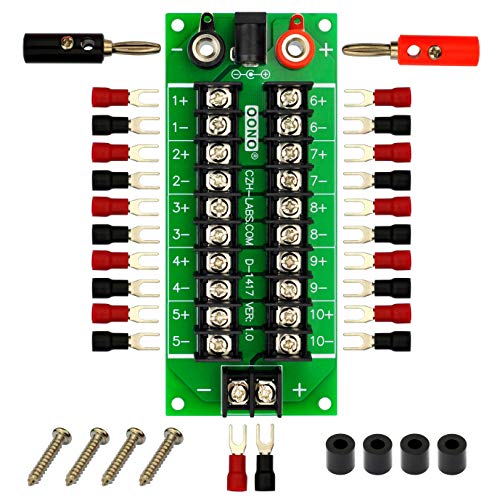
Best for flexible input options and modular growth. This 2×10 distribution module supports up to 48V and 20A, with barrier terminal blocks, banana jacks, or a DC power jack as inputs. It is designed for multiple module extensions and provides clear separation of channels for neat wiring.
Who it’s for: builders who value multiple input choices and future expansion without swapping hardware. Limitation: external input methods may have lower per-input current limits (e.g., banana jack 6A, DC jack 5A) compared to the total rating.
- Barriers, banana jacks, or DC input options
- 48V, 20A total; 2×10 channels
- Compatible with module expansion
yddmyo 2×12 Position Breakout Board

Best for simple expansion of 2×12 layouts in AC/DC projects. It features 2×12 terminal blocks, a 5.0 mm pitch, and wire range 26–12 AWG. Useful when you need straightforward, dense distribution for compact builds.
Who it’s for: budget-conscious builders needing easy expansion for larger 2×12 networks. Caution: verify wire gauge compatibility with your target current, as smaller gauges may heat up with higher loads.
- 2×12 positions; 5.0 mm pitch
- Wire range 26–12 AWG
- Aids expansion for 2×12 configurations
Buying Guide: Key Purchase Considerations
What voltage and current do you need?
Match the module’s voltage rating and per-channel current to your project’s load. If your system runs on 12–24V, ensure the module supports that range and that the total current does not exceed component ratings.
How many channels are required?
Count the number of independent power paths you must control. Choose modules with at least as many channels as needed, plus some headroom for expansion.
What mounting and enclosure options matter?
Panel-mount, DIN-rail, or free-standing blocks affect ease of installation in your enclosure. Consider whether a pluggable or swappable terminal block design will simplify future maintenance.
What input options are most convenient?
Barrier terminals, banana jacks, or DC power jacks provide different wiring approaches. If you expect frequent changes, look for flexible input options and modular expansion capabilities.
Fuse protection and safety features
Fused channels prevent damage from short circuits. Confirm fuse ratings and whether you can replace fuses to tune protection levels for your loads.
Wiring gauge and terminal spacing
Ensure the wire gauge you plan to use fits the module’s accepted range. Check terminal pitch to avoid cramped wiring in tight enclosures.
Expansion potential
Some PDUs are designed to chain or stack with other modules. If your project may grow, prioritize units that advertise expansion compatibility and shared power feeds.
Practical quick-start tips
- Plan a wiring diagram before assembly to minimize crossovers.
- Label inputs and outputs to simplify troubleshooting.
- Keep a spare fuse kit on hand for quick replacements.
FAQ
- What is a DC power distribution unit used for? A DC PDU splits a DC supply into multiple outputs, often with individual channels or fuses for protection and easier wiring.
- Can I mix input types on a single PDU? It depends on the model; some support multiple input methods (barrier, banana, DC jack), while others require a single input type.
- Do I need fuses on every channel? Not always, but fuses protect each channel and help prevent damage from faults. Check the product’s fuse configuration and replacement options.
- Is DIN rail mounting necessary? DIN-rail mounting is common in industrial and some hobby enclosures; choose DIN-rail if you have a compatible enclosure and want easy mounting.
- What wire gauge should I use? Most PDUs support 20–12 AWG ranges; use the largest gauge within the rated range to minimize resistance and heat.
- How do I prevent overloading a PDU? Calculate total load and compare to the module’s total current rating; distribute loads across channels and avoid exceeding per-channel limits.