Best DC Motor Options for Wind Turbine Power Generation
When selecting a DC motor for wind turbine projects, the right choice depends on voltage ranges, RPM, and how the device will be used to generate electricity. The following five products are well-suited for small to educational wind turbine builds, hobby projects, and hands-on learning. Each option offers several voltage profiles, practical mounting, and compatibility with simple gearing or direct-driven setups.
| Product | Voltage Range | Approx. RPM | Notes |
|---|---|---|---|
| EUDAX Mini Generator Motors (B078MSFFH5) | 3V, 4.5V, 12V | 1500 – 6500 RPM | Compact, multiple voltage options with a plastic motor holder. |
| Sntieecr 6 Set Mini Generator Motors | 3V, 4.5V, 12V | 1500 – 6500 RPM | Complete beginner kit with mounts, propellers, andLEDs. |
| EUDAX 6 Set Mini Generator Motors | 3V, 4.5V, 12V | 1500 – 6500 RPM | Multi‑functional kit including propellers and LEDs for educational use. |
| QINIZX Small Wind Turbine Generator | DC 0–36V range (typical), tested with 12V to 24V setups | Up to several thousand RPM depending on fan | Large blades; designed for explicit wind‑powered demonstrations. |
| Aobao 4pcs Electric Motors DC 3V | DC 1.5–9V; rated 3V | 1730 RPM | Compact, low‑noise, suitable for DIY wind turbine experiments. |
EUDAX Mini Generator Motors 3V-12V DC Motor

The EUDAX mini generator motor provides a compact platform for wind turbine experiments and small DIY projects. It offers 3V, 4.5V, and 12V operation with corresponding RPM ranges of approximately 1500, 2500, and 6500. The motor body measures about 24 mm in diameter with a short height, making it easy to integrate into compact wind turbine nacelles or handheld wind kits. A 14 cm lead length supports straightforward wiring to LEDs, storage batteries, or small power management circuits. This model is suitable for classroom demonstrations or hobby builds that emphasize kinetic to electrical energy conversion.
Sntieecr 6 Set Mini Generator Motors
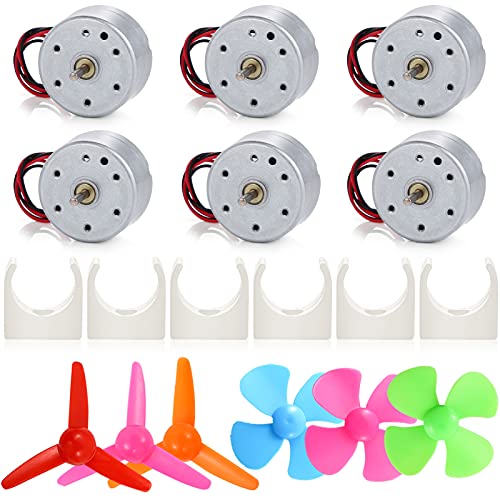
The Sntieecr six‑pack offers a complete beginner’s wind turbine kit. It includes six mini DC motors, six mounting brackets, and multiple propeller configurations with two‑way propeller options. Each motor supports voltages of 3V, 4.5V, and 12V, delivering corresponding RPMs around 1500, 2500, and 6500. The kit emphasizes the energy conversion concept: as the bearing rotates, electricity is generated, and the system can be driven by wind, hand cranks, or solar inputs. This bundle is ideal for science projects and interactive demonstrations of wind‑to‑electric energy conversion.
EUDAX 6 Set Mini Generator Motors

This six‑pack from EUDAX includes additional motors and mounting hardware designed for multi‑unit wind turbines or classroom demonstrations. Similar voltage options (3V, 4.5V, 12V) pair with rated speeds from 1500 to 6500 RPM, enabling experiments across different wind conditions and gearing setups. The kit’s improved mounting and accessory selection support diversified projects—from single‑bladed mini turbines to multi‑tower demonstrations—providing a robust platform for practical energy‑generation experiments.
QINIZX Small Wind Turbine Generator

The QINIZX wind turbine kit is tailored for teaching and demonstrations. It includes a large 17.5 cm blade diameter and a DC motor rated for broad voltage use (0–36V). The design emphasizes safe operation with a note that natural wind may be insufficient for robust energy generation; it performs best with a powered fan or blower at an appropriate angle. The included motor, blades, and assembly guide help learners observe how wind energy is transformed into electrical energy, making it a strong candidate for classrooms or hobby projects exploring wind power basics.
Aobao 4pcs Electric Motors DC 3V
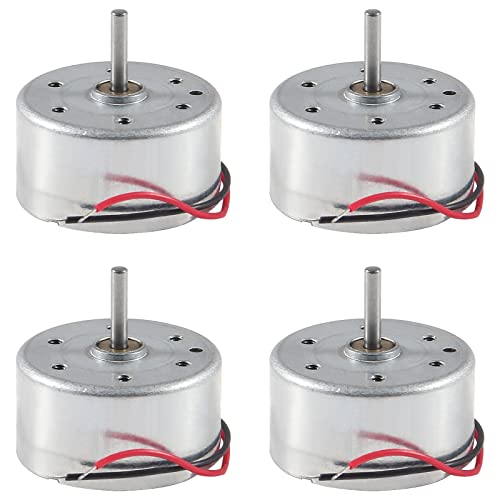
Aobao offers four compact DC motors suitable for compact wind turbine experiments and DIY toys. With a rated 3V operation and a speed around 1730 RPM, these motors fit neatly into small turbine assemblies or educational kits. The 24.2 mm diameter body and modest shaft size enable easy integration into DIY nacelles or gear trains. The kit’s design prioritizes stability, light weight, and low noise, making it a practical option for students and hobbyists building small-scale wind energy demonstrations.
Buying Guide: Key Purchase Considerations
When choosing a DC motor for wind turbine projects, consider the following factors to balance performance, cost, and applicability:
- Voltage and RPM profiles: Motors with multiple voltage options (3V, 4.5V, 12V) provide flexibility for different wind conditions and gearing strategies. Higher RPM can generate more electricity under the right wind, but it may require more robust bearing and control components.
- Mechanical compatibility: Look for standardized shaft sizes and mounting options to simplify integration into a turbine nacelle, hub, or test rig. Include propeller adapters if needed.
- Durability and material quality: Aluminum housings and robust bearings reduce wear in gusty or variable wind environments. Consider insulation and moisture resistance for longer lifespans in outdoor setups.
- Educational value vs. performance: Beginner kits (with mounts, propellers, and LEDs) are excellent for demonstrations and learning, while higher‑RPM motors with greater voltage ranges support more advanced experiments and practical output testing.
- Safety and handling: Ensure proper insulation of wiring and safe routing of moving parts. Use guards for rotating components in educational settings or demonstrations.
- Upgrade paths: A kit with multiple motors and accessories enables varied configurations (single turbine, multi‑blade setups, hand‑crank power sources) as skills grow.
These five selections provide a spectrum from compact educational kits to more robust generators suitable for hands‑on wind turbine experimentation. Each option supports basic energy conversion concepts and can be wired to LEDs, small batteries, or microcontrollers for real‑time voltage and current monitoring. When pairing with a turbine blade system, consider a simple gearing arrangement to optimize rotation rate and electrical output under the expected wind range.