Best DC Motor Generators for DIY Power Projects
Choosing the right DC motor for a DIY generator or wind-turbine project can boost performance and reliability. This guide highlights five notable DC motors from popular brands, each aligned with generator-style applications—from wind-up toys to wind turbines and small power kits. Compare voltages, speeds, and torque to find an option that fits your build, whether you need high RPM for quick power or high torque for steady output.
Summary of selected products
| Product | Voltage Range | Key Strength |
|---|---|---|
| EUDAX Mini Generator Motors (3V-12V) | 3V, 4.5V, 12V | Compact, beginner-friendly, multiple operating voltages |
| XD-3420 High Torque DC Motor 12V/24V | 12V-24V | High torque, low-noise operation, CW/CCW |
| Together-life 12V 30W DC Motor | 12V | High speed with efficient controller options |
| AeKeatDa 24V Permanent Magnet Motor | 24V | Sturdy aluminum body, copper windings for efficiency |
| EUDAX 6 Set Mini Generator Motors | 3V, 4.5V, 12V | Beginner-friendly kit with propellers and LEDs |
These options span small to mid-size DIY power projects, from educational kits to practical generators. Review the listed features to determine which motor best supports your voltage needs, RPM targets, and mounting considerations.
EUDAX Mini Generator Motors 3V-12V

Voltage options span from DC 3V to 12V, with speeds listed at 1500 RPM (3V), 2500 RPM (4.5V), and 6500 RPM (12V). The motor body diameter is around 24 mm, with a compact height and a shaft sized for small gear or pulley systems. This makes it suitable for toy projects, small wind turbines, or as a compact power source in educational kits. The included holder supports quick mounting in flat or lightweight builds.
XD-3420 High Torque DC Motor 12V/24V

Designed for both 12V and 24V systems, this permanent magnet DC motor offers CW/CCW rotation, high torque, and a compact form factor. Typical rated speed is 3500 RPM at 12V and 7000 RPM at 24V, with torque around 1 kgf.cm (12V) and 2 kgf.cm (24V). It is described as low-noise with smooth drive characteristics, making it suitable for DIY generators, small mills, and light industrial projects where reliable torque is important.
XD-3420 High Torque DC Motor 12V/24V (Variant)

This is another listing for a similar 12V/24V CW/CCW motor with identical torque and speed ranges. It provides the same benefits in a different listing, which can help with availability and pricing comparisons. The motor’s high-speed capability supports generator tests where quick ramp to voltage is desired, while its torque supports stable load handling in DIY wind or water turbine experiments.
12V 30W Permanent Magnet DC Motor (Together-life)
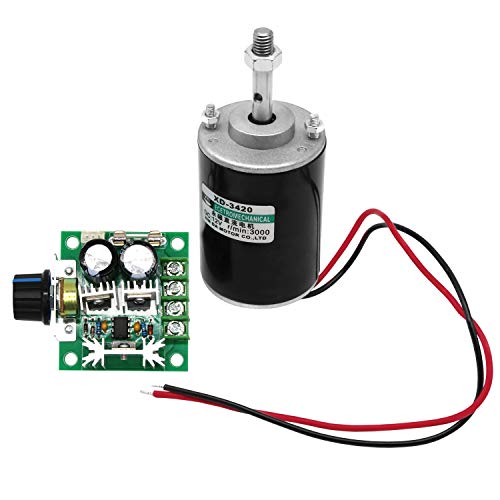
This motor features a 12V operating range with a 30W rating, delivering solid performance for DIY generators and associated devices. It uses copper windings and offers CW/CCW control, enabling straightforward mono-directional or bidirectional setups. The included speed controller is noted for efficiency, high torque, and protection features. It’s a practical option for small-scale generators, wind-sail experiments, and compact mechanical projects needing reliable power conversion.
MYFULLY 24V DC 350W Brushed Motor

Powered by 24V, this motor delivers up to 350W with 2800 RPM on the listed spec. It features an aluminum body and copper coil for durability and efficient operation, with a torque rating of 0.9 Nm. The device supports reversible rotation, enabling flexible applications in small generators, winders, and gear-driven setups. The build is suitable for heavier DIY energy projects or wind turbine experiments requiring robust output.
EUDAX 6 Set Mini Generator Motors Kit

This beginner-friendly kit includes six mini generator motors with mounting brackets, propeller blades, LED indicators, and quick connectors. Voltage options include 3V, 4.5V, and 12V with corresponding speeds at 1500, 2500, and 6500 RPM. The kit is designed for wind-driven or solar experiments, LEDs, and simple educational projects. It supports hands-on learning and iterative testing for small-scale power generation systems.
Buying Guide
- Voltage compatibility: Match motor voltage to your power source and expected generator output. Lower voltages can be safer and simpler for educational kits; higher voltages open up more efficient energy capture for turbines.
- Speed and torque: If your project prioritizes quick voltage ramp, seek higher RPM motors. For stable load, focus on higher torque ratings at the target voltage.
- Direction control: Motors with CW/CCW capability offer flexibility for reversible generators and bidirectional testing, but may require more complex controllers.
- Durability and materials: Aluminum bodies and copper windings improve heat dissipation and efficiency, especially under continuous operation or higher loads.
- Mounting and accessories: Kits with brackets, shafts, and propellers simplify assembly and alignment, reducing setup time and misalignment risks.
- Noise and smoothness: Low-noise motors are advantageous in educational environments and compact builds where sound can be a concern.
- Expandability: Consider whether a motor kit includes components for future upgrades (additional propellers, gears, or LED indicators) to support ongoing projects.
- Application fit: For wind turbines, prioritize motors designed for higher RPM at the chosen voltage and gear-friendly shaft sizes. For DC generators or wind-up experiments, look for stable torque and reliable reverse-current protection in the controller.
Multiple perspectives help in selecting a motor: beginners may prefer ready-made kits with mounting hardware and LEDs, while advanced builders may prioritize higher wattage, torque, and voltages suitable for larger demonstrations or small-scale turbine projects. Always verify the motor’s shaft dimensions, mounting holes, and required power circuitry to ensure compatibility with your generator design.