Best 12V to 24V Converters for Vehicles and Gear
If you need to power 24V devices from a 12V source, these DC-DC converters provide safe, reliable step-up or step-down options. They’re ideal for golf carts, scooters, and automotive projects. The top picks below cover waterproof units, high-current models, and compact modules for tight spaces. Best for boaters or off-road enthusiasts who require robust protection and stable output.
Summary of selected products:
| Product | Best For | Key Feature | Output |
|---|---|---|---|
| DC 12V to 24V 10A 240W Converter (YAXIGE) | 12V systems needing fixed 24V output | High efficiency, waterproof shell | 24V, 10A |
| DC 24V to 12V 10A Buck Converter (HOMELYLIFE) | 24V to 12V devices | Over-voltage/over-temperature protection | 12V, 10A |
| DC 24V to 12V 30A 360W (YIPIN HEXHA) | High-current 24V to 12V | Durable aluminum shell | 12V, 30A |
| Nilight 24V to 12V 20A 240W | Mid-range 24V to 12V | Excellent waterproof/dustproof design | 12V, 20A |
| Acridine 24V to 12V 30A 360W | High-power automotive systems | Automatic protection features | 12V, 30A |
DC 12V To 24V Boost Converter 240W (YAXIGE)

Input: DC 10-16V (recommended 12V); Output: 24V fixed, 10A, 240W. High efficiency up to 97%. Protection includes overload, overcurrent, over temperature, short circuit, and overvoltage. Durable aluminum shell with silicone seal for waterproof, shockproof, moisture-proof, and dustproof performance.
Best for: 12V systems that must supply a steady 24V load, such as certain lighting arrays or sensors on vehicles. Why chosen: Fixed 24V output and robust protection help maintain stable operation in mobile environments.
Limitation: Not ideal if you require variable 24V output or higher than 10A continuous current.
DC 24V To 12V Buck Converter 10A 120W
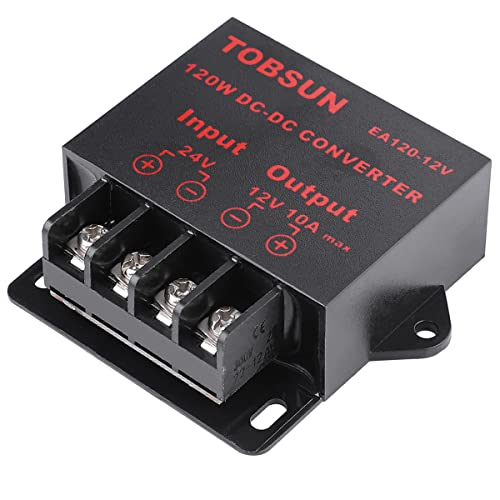
Input range: DC 18V-32V; Output: 12V 10A; Efficiency above 90%. Includes comprehensive protection: over-voltage, over-current, over-temperature, short-circuit auto protection, with automatic recovery.
Best for: Projects needing reliable 12V power from 24V sources, such as motorcycle or automotive electronics. Why chosen: Solid protection suite and high efficiency support long-term use.
Limitation: Not suitable if your input falls outside 18-32V or if you need more than 10A continuous current.
DC 24V To 12V 30A 360W Buck Converter (YIPIN HEXHA)

Input: 24V; Output: 12V; Max 30A; 360W. Features an aluminum shell with silicone seal for waterproof, anti-shock, anti-humidity, and dust-proof durability. Built-in intelligent protection covers overload, overcurrent, overtemperature, and short circuit.
Best for: High-power 12V loads in harsh environments, like golf carts or club cars. Why chosen: High current capacity paired with strong environmental sealing.
Limitation: Higher current means more heat; ensure adequate cooling in tight enclosures.
Nilight 24V To 12V 20A Converter 240W

Input: DC 24V; Output: 12V 20A; 240W. Superior waterproof and anti-shock protection using an aluminum shell and silicone seal. Efficiency up to 96% with synchronous rectification.
Best for: Moderate 12V loads in vehicles or outdoor equipment that require rugged, weather-resistant power conversion. Why chosen: Excellent protection and high efficiency in a compact form.
Limitation: At 20A, major loads may push the capacity; verify your total draw.
Acridine 24V To 12V 30A 360W Converter

Input: 24V; Output: 12V; Max 30A; 360W. High conversion efficiency up to 95% with built-in protection: overload, over-current, over-temperature, under-voltage, and short-circuit. Durable, with protective features for vehicle systems.
Best for: Heavy-duty automotive applications requiring steady 12V power from 24V systems. Why chosen: Balanced high current capacity and robust protection.
Limitation: May require attention to heat in continuous heavy loads; ensure venting and spacing.
Buying Guide
What to consider when choosing a 12V to 24V or 24V to 12V converter:
- Current needs: Match the maximum output current to your load plus a margin for startup surges.
- Input voltage window: Ensure your source stays within the converter’s accepted range for stable operation.
- Output type: Fixed versus adjustable voltage; fixed 24V or 12V outputs simplify wiring and stability.
- Protection features: Look for overload, short-circuit, over-temperature, and over-voltage protections.
- Environment: Waterproof or dustproof housings plus sealing for outdoor or vehicle use.
- Efficiency and heat: Higher efficiency reduces heat; consider ventilation for high-current models.
- Size and mounting: Ensure the unit fits your space and allows secure mounting in a vehicle or cabinet.
Frequently Asked Questions
- What is the difference between a boost and a buck converter? A boost (12V to 24V) raises voltage; a buck (24V to 12V) lowers voltage to a safe level for 12V devices.
- Do these converters require a battery to operate? They typically draw power from a DC source within the specified input range; a vehicle battery or similar supply is common.
- Can I run 12V and 24V devices from the same unit? Most units are designed for one direction (12V to 24V or 24V to 12V). Choose the appropriate type for your load.
- What maintenance is needed? Regular inspection for mounting integrity, wiring, and sealing; check for heat buildup in enclosed spaces.
- Are these units safe for long-term operation? When properly rated for the load and adequately protected, they are designed for reliable operation in vehicle or industrial settings.
- What should I do if the output drops? Verify input voltage, load current, and ensure no protection shutdowns are active; check for overheating or loose connections.