Best Battery-Powered Alternatives for Plug-in to Battery-Powered Conversions
For outdoor trips, emergencies, or off-grid setups, converting a plug-in device to battery power can add valuable portability. This article highlights five practical Amazon picks that help you run small electronics, lights, and chargers on a DeWalt, Milwaukee, or USB battery setup. Each option offers distinct power, compatibility, and charging features to keep devices running without wall outlets.
Summary of chosen products: a quick glance at core specs and capabilities to compare at a glance.
| Product | Brand | Power & Output | Key Features |
|---|---|---|---|
| Azocek 220W Power Inverter (DeWalt 20V) | Azocek | DC 20V to AC 110V, 220W | 2 USB ports, 1 Type-C PD, LED work light |
| TANHEYIN 300W Power Inverter | TANHEYIN | DC 20V to AC 110V, 300W | PD 65W Type-C, 2 AC outlets, multiple ports |
| Azocek 220W Milwaukee 18V | Azocek | DC 18V to AC 110V, 220W | 2 USB QC, 1 Type-C PD, LED light |
| Lenink AC Power Supply Adapter for 3 AA | Lenink | 3 AA equivalent output | Continuous supply, short/overcurrent protection |
| powkey 200W Portable Power Bank | powkey | 200W total, 110V AC, multiple ports | Pure sine wave, fast recharge, multi-device |
These selections emphasize converting plug-in devices to battery-based power, with emphasis on safety, versatility, and ease of use. Each product supports off-grid operation, whether for camping, travel, or emergency preparedness.
Azocek 220W Inverter for DeWalt 20V Battery

This inverter targets DeWalt 20V batteries, allowing 20V DC input to be converted into 110V-120V AC. It is designed for devices like phones and laptops, with a compact form for outdoor use or emergency power. The unit includes one AC outlet, two USB ports (18W each), and a PD Type-C port (30W). Battery compatibility is a defining feature, enabling on-site power when a battery is already mounted in a tool or system. Battery not included in the purchase.
TANHEYIN 300W Inverter for Dewalt 20V

With 300W of DC to AC power, this inverter is suitable for larger portable setups alongside Dewalt 20V/18V batteries. It supports PD 65W Type-C fast charging plus a second USB-A port, along with two AC outlets. The design emphasizes compatibility with a variety of Dewalt battery models (DCB205, DCB206, DCB204, etc.). The unit is ideal for charging devices like phones, tablets, radios, and small electronics during outdoor adventures or home backup scenarios. Battery is not included.
Azocek 220W Inverter for Milwaukee 18V
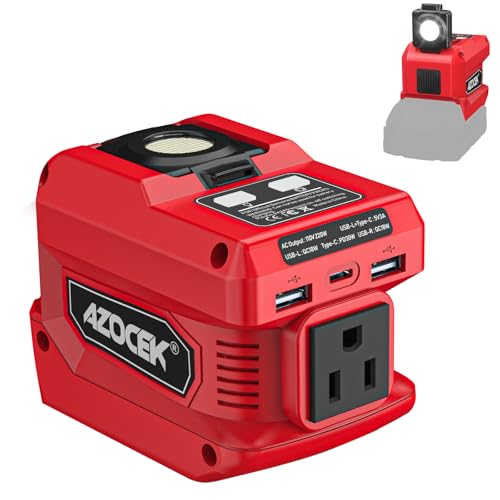
Designed for Milwaukee 18V batteries, this 220W inverter converts 18V DC to 110V-120V AC with the same USB/Type-C charging options as the DeWalt variant. It includes one AC outlet, two USB QC ports, and one PD Type-C port. This model emphasizes portability for outdoor activities and emergency power while leveraging Milwaukees’ 18V system. Battery not included, ensuring compatibility with existing Milwaukee packs.
Lenink 3 AA Battery Replacement Adapter

This device provides a continuous power supply by mimicking three AA batteries. It supports LED lights, small decorations, and other devices relying on AA batteries. It includes protections for short circuits, overcharge, and overcurrent, making it a simple, low-cost way to extend battery life for compatible gadgets when traditional batteries are inconvenient or unavailable.
Ecarke 200W Inverter for DeWALT 20V

Ecarke’s 200W inverter supports DeWalt 20V batteries for portable power. It includes two USB ports (5V 2.1A each) and a standard 110-120V AC outlet, along with a built-in LED light. The design focuses on emergency power for outdoor use or travel, providing a compact solution to keep small devices charged when a wall outlet isn’t available. Battery not included, but compatibility with 20V DeWalt packs is emphasized.
powkey 200W Portable Power Bank

The powkey portable power bank provides 110V pure sine wave AC output up to 200W, plus multiple USB and DC ports. It’s designed for outdoor trips, home office use, and emergency backup. The unit emphasizes rapid recharging and user-friendly monitoring via LED indicators. It’s a standalone power source that does not require a separate battery pack, but is suitable for limited higher-wattage devices within its rating.
YCQDDA USB Battery Pack for 5V Neon Signs

This kit converts plug-in neon signs to battery-powered operation, expanding cordless lighting freedom for indoor or outdoor displays. It includes four battery packs designed to hold AA cells, enabling 3–4.5V output per pack. It’s compatible with a broad range of USB-powered 5V LED devices, such as neon signs and fairy lights, giving portable, easy-to-use battery power for signs and display lighting.
Buying Guide: Key Considerations For Choosing Battery-Powered Conversions
- Battery compatibility and availability: Ensure the inverter or adapter is compatible with your existing battery platform (DeWalt 20V, Milwaukee 18V, etc.) and verify battery not included if required.
- Power output and device load: Match the inverter’s wattage to the devices you plan to power. Exceeding the rated wattage can cause failure or safety hazards.
- Port variety and charging speed: Decide between multiple USB ports, PD Type-C, and AC outlets based on your device mix. PD fast charging can reduce charge times for laptops and tablets.
- Safety features: Look for short-circuit protection, overcurrent protection, overcharge protection, and thermal safeguards to prevent damage during extended use.
- Portability vs. capacity: Higher wattage units tend to be bulkier. Choose a balance between portability and the power needs of your typical use case.
- Battery-free alternatives: Some options, like USB battery packs or AA replacements, require no heavy packs but provide limited runtimes or are platform-specific (neon signs, LED decorations).
- Operational context: Consider outdoor activities, road trips, or emergency home backup. Assess how often you’ll need to recharge and how long devices must run between charges.
- Availability of accessories: Check for included cables, adapters, or mounting hardware, which can affect setup time and convenience.
These considerations help compare the five featured options for converting plug-in devices to battery-powered operation, balancing compatibility, performance, and practical use in real-world settings.