Best Continuous Electric Fence Chargers for Reliable Livestock and Predator Control
When choosing a continuous electric fence charger, look for consistent output, durability, and flexible power options. This guide helps American buyers pick chargers that fit small farms, backyard coops, and larger pastures. The top picks below are selected for reliability, clear indicators, and practical use cases. They suit livestock keepers who need steady protection, poultry keepers who want safe barriers, and hobby farmers seeking low-maintenance energizers. A quick at-a-glance table summarizes the five featured products.
| Product | Best For | Power Type |
|---|---|---|
| VEVOR Electric Fence Charger | Medium to large pastures with diverse wildlife | AC/DC/solar |
| Ortis Electric Fence Energizer | Small farms and gardens needing clear status display | AC |
| Happy Henhouse 110V Plug-in | Chickens, small gardens, quick setup | AC |
| Zareba 10 Mile AC Powered Low Impedance | Livestock containment with weed-prone areas | AC |
| 5.5J PROOVEELLY Electric Fence Charger | Flexible DC/AC backup with higher energy needs | AC/DC |
VEVOR Electric Fence Charger, 10kV 2J

Best for versatile power sources and robust protection. This energizer delivers a high-energy output of 2 joules and 10kV with a 1 pulse per second frequency. Its strong voltage helps form a conditioned reflex in livestock and wildlife, reducing touch incidents over time. It excels when you need reliable operation across grid, battery, or solar power, making it suitable for farms that run on varying power sources or off-grid locations. A caution: plan for adequate grounding and weather exposure, as outdoor stability is needed for peak performance.
Who it’s best for: medium to large plots with mixed livestock and wildlife exposure, and for buyers who want multiple power options without swapping units. This model is selected for its weatherproof design and broad compatibility with different power sources.
Key considerations
- Power flexibility (AC, DC, solar) supports off-grid needs.
- 10kV output enhances deterrence across longer fences.
- IP65 weather resistance suits extreme climates.
Caution: Ensure proper fence grounding and keep away from moisture-prone areas to avoid performance drops during heavy rain or snow.
24 Hour Solar Electric Fence Charger, 10 Miles
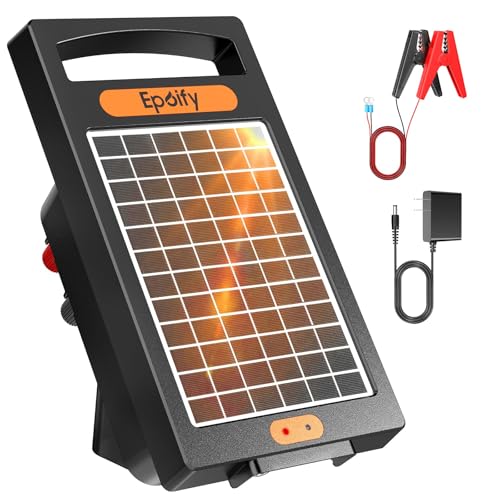
Best for off-grid operations needing day-to-night energy. The Epoify solar charger provides 0.18 joules per pulse with up to 10 miles of coverage in pasture fencing, and it stores energy for overnight protection through a built-in large-capacity battery. It is well-suited for long fencing lines in areas with abundant sunlight and limited access to grid power. A limitation: performance can vary with vegetation and grounding, so maintenance of grounding and vegetation management is recommended.
Who it’s best for: small to medium pastures where daytime sun is reliable and uninterrupted overnight protection matters for predator deterrence and livestock containment.
Why select a solar model
- Continuous operation without daily charging.
- Solid overnight protection in daylight-dependent setups.
- Ideal for remote locations with limited electrical infrastructure.
Caution: Ensure the solar panel is unobstructed by shade and clean from debris to maximize charging efficiency.
Zareba 50 Mile AC-Powered Low Impedance

Best for heavy-duty containment in larger pastures or weed-prone areas. The Zareba EAC50M-Z is designed to energize up to 50 miles in ideal conditions and up to 6 miles in heavy weed conditions. It’s a versatile AC-powered charger suitable for various fence types, including high tensile, polywire, and polytape. A limitation to note: weed growth can significantly reduce the effective range, so regular vegetation management is important to maintain performance.
Who it’s best for: users with long fences, variable weed growth, and the need to cover substantial livestock perimeters with a single energizer.
Ortis Electric Fence Energizer, 12,000V 3 Joules

Best for clear status visibility and reliable animal control. Ortis delivers up to 12,000V and 3 joules of pulse energy, ideal for fences up to 6.2 miles. It uses a backlit LCD display with a status LED that flashes with each pulse, enabling quick fault detection. This model is a strong pick for gardens, coops, and small farms where real-time status awareness helps maintain fence integrity. A note: the unit’s effectiveness depends on soil conditions and proper grounding.
Who it’s best for: operators who prioritize at-a-glance status indicators and straightforward fault awareness for day-to-day use.
5.5J Electric Fence Charger Energizer

Best for flexible DC/AC operation with higher energy needs. The PROOVEELLY unit offers 5.5 joules of energy and up to 10 miles of reach in no-weed conditions, with an LCD display showing real-time voltage and battery status. It supports both AC and DC power, providing resilience for buyers who want a configurable energizer with a built-in alarm. Limitation: performance can drop in heavy vegetation and with poor grounding, as with most higher-energy models.
Who it’s best for: buyers who need a higher-energy charger that can switch between AC and DC power and want an illuminated status readout for quick checks.
Buying Guide: Key Purchase Considerations
- Power source flexibility: Choose AC, DC, solar, or hybrid units based on your electricity access and off-grid needs.
- Output and range: Higher joules and voltage typically extend the effective fence length and deterrence, but weed, grounding, and fence type dramatically affect real-world performance.
- Durability and weatherproofing: Look for IP ratings and temperature operating ranges to ensure reliable operation in your climate.
- Status indicators: LCD displays and pulse LEDs help diagnose issues quickly, reducing downtime.
- Fence compatibility: Confirm the energizer supports your fence type (high tensile, polywire, polytape) and wire gauge.
- Grounding and maintenance: Proper grounding and vegetation control are essential for consistent performance across models.
Practical comparison questions
- Do I have reliable power nearby, or do I need solar or battery backup?
- Is a higher joule rating worth potential extra cost for my pasture size?
- Will I benefit from a built-in LCD/status display for quick troubleshooting?
- How weed-prone is my fencing area, and how often will I need vegetation management?
- What fence types will I install (high tensile vs. lightweight wire) and which charger supports them best?
Frequently Asked Questions
- What is a practical joule rating to look for in a medium farm? – A range around 2–5 joules is common for medium pastures; higher joules help with weedier conditions and larger animals.
- Can solar-powered chargers run all night? – Yes, when paired with a sufficiently sized battery and ample daylight, a solar charger can energize fences throughout the night.
- Do I need a special ground rod for every energizer? – Generally, yes. A proper grounding system improves shock effectiveness and safety.
- Will high-voltage units frighten pets or wildlife permanently? – Pulse-based designs deter without harming animals, but local regulations and safety guidelines should be followed.
- How often should I inspect my fence energizer? – Regular checks are advised, especially after storms, weed growth, or fence maintenance.
- What fence types are compatible with most energizers? – Most energizers work with high tensile wire, polywire, and polytape, but verify compatibility in product specs.