Best Complete RV Solar Kit for Off-Grid Adventures in 2026
Looking for a complete RV solar kit that covers the basics and scales to your needs? This guide highlights five solid options, explaining who each kit is best for and why. The focus is on reliability, ease of installation, and long-term power generation for typical RV setups. Ideal buyers include weekend wanderers, full-time travelers, and DIY enthusiasts who want a balance of performance and simplicity. The following table summarizes each kit’s core strengths for quick comparison.
| Product | Best For | Why It Stands Out |
|---|---|---|
| Renogy Premium 400W Kit | Powerful RV setups | High efficiency panels, integrated MPPT controller, and mounting hardware |
| ECO-WORTHY 200W Starter Kit | New RVers on a budget | All-in-one package with battery and inverter, easy installation |
| ECO-WORTHY 800W Kit with Inverter | Medium-to-large needs | Higher power, UPS function, versatile for various RV loads |
| ECO-WORTHY 200W 12V Kit | Compact footprints | Efficient panels with PWM controller, adaptable for smaller spaces |
| Renogy 200W RV Kit with Adventurer Controller | Compact, reliable setups | Well-regarded brand with durable framing and simple PWM control |
Renogy 400W Premium RV Solar Kit

The Renogy Premium Kit is designed for RVers who want strong daily output and a robust installation package. It includes four 100W panels, a 40A MPPT charge controller with Bluetooth, and pre-wired components plus mounting hardware. This kit targets users who expect consistent daytime generation and easier maintenance through a single, integrated solution. Best for: mid-to-large RVs that need steady power with an improved MPPT controller for efficiency in varied sun conditions.
Best for: RVers who prioritize efficiency and a comprehensive mounting/ wiring kit in one purchase. The integrated MPPT controller helps maximize battery charging while tracking optimal voltage and current as conditions change. The kit’s glass, frame construction, and wind/snow load ratings support outdoor use in diverse climates.
Caution: The system relies on the MPPT controller’s compatibility with your battery chemistry and voltage. Ensure your battery bank matches the controller’s input range to avoid charging issues.
ECO-WORTHY 200W Complete Solar Starter Kit
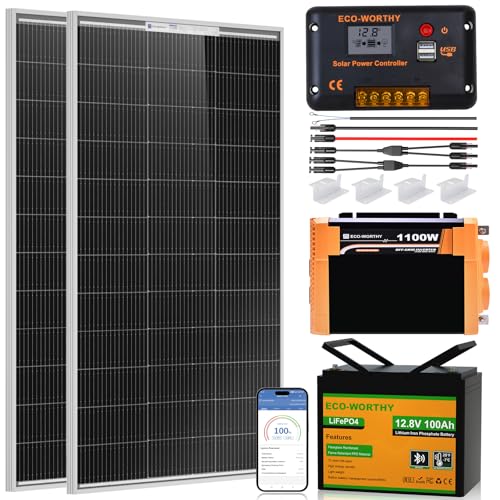
This all-in-one starter kit is ideal for RV newcomers or travelers who want a straightforward setup without purchasing components separately. It includes two 100W panels, a 100Ah lithium battery, a 1100W inverter, and a 30A PWM controller. It’s designed to deliver about 800Wh per day under good sun, with simple 4-step installation. Best for: beginners who value a simple, guided install and a ready-to-go power solution.
Best for: RVers who want a low-friction path to off-grid power with an included battery and inverter. The 30A PWM controller keeps the system uncomplicated, though it may be less efficient in harsh sun than an MPPT setup.
Caution: PWM controllers can be less efficient in partial sun compared with MPPT, so consider future expansion if you expect more power needs or more variable weather patterns.
ECO-WORTHY 800W Off-Grid Kit With 4 Panels

The 800W kit from ECO-WORTHY targets RV travelers who want more power with a simple turnkey solution. It combines four 200W panels, a 3000W UPS inverter charger, and dual 12.8V 280Ah lithium batteries with a 60A MPPT controller and Bluetooth. The kit emphasizes high output and versatility for powering multiple appliances during extended trips. Best for: RVs with higher daily energy needs or for seasonal off-grid living where reliable back-up power is essential.
Best for: Users who want more robust performance and a future-ready battery setup. The UPS feature helps bridge solar with grid power, reducing concerns about power gaps when sun is insufficient.
Caution: The system’s higher capacity means heavier components and more complex setup; ensure your RV’s space and weight capacity can accommodate the full kit.
ECO-WORTHY 200W 12V Kit With PWM Controller

This 200W kit focuses on compact RV setups requiring a small footprint and reliable daily output. The kit uses 12BB monocrystalline panels and a 30A PWM controller, emphasizing straightforward wiring and installation. Best for: RVers with limited roof space or who want a lightweight, modular approach to solar power.
Better for: users who prioritize a balance of efficiency and simplicity in a compact package. The all-metal frame supports durable outdoor use.
Caution: PWM controllers can be less efficient than MPPT options in partial sun, potentially limiting performance in marginal weather.
Renogy 200W RV Kit With Adventurer Controller
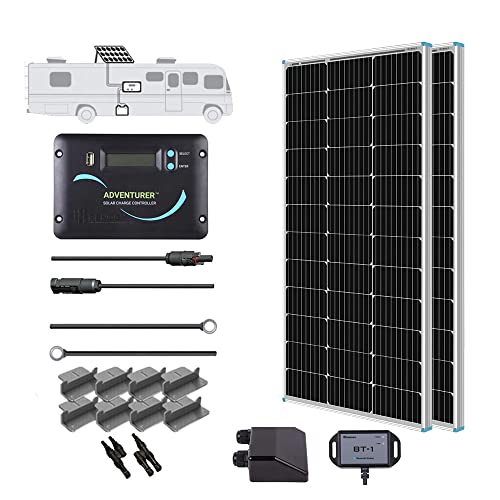
This 200W Renogy kit is a compact, reliable option for RVs seeking moderate daily output with established components. It includes one 200W panel, Adventurer 30A PWM controller, and mounting brackets. Best for: RVers who need a smaller footprint without sacrificing durability or brand reputation. It’s well-suited for boats, trailers, or greenhouses where space is at a premium.
Choose this if you want a straightforward, proven setup from a trusted RV solar brand. It’s a good stepping stone before upgrading to larger kits.
Caution: The PWM controller limits growth; plan for future expansion if power needs rise or if you anticipate adding more panels later on.
Buying Guide: Key Considerations When Choosing a Complete RV Solar Kit
Power needs: Assess daily watt-hour consumption for typical RV appliances. Choose a system that provides a buffer above your peak usage to avoid depleting batteries at night.
Controller type: MPPT controllers capture more energy in variable sun and are more efficient, but tend to cost more than PWM controllers. Consider climate, panel size, and battery chemistry when deciding.
Battery compatibility: Ensure the kit’s battery type (lithium vs. lead-acid) aligns with your needs for depth of discharge, weight, and charging speed. Many kits include batteries or offer upgrade paths.
Expansion potential: If you expect your power needs to grow, choose a kit with room to add more panels or a higher-capacity controller later on.
Installation complexity: All-in-one kits simplify setup, but some configurations still require basic electrical work. For DIYers, ensure the included hardware matches your RV roof space and mounting options.
Weather resilience: Panels with robust frames and glass, plus corrosion resistance, perform better in wind, snow, and salt air. Check load ratings and mounting hardware quality.
Frequently Asked Questions
- What is the difference between MPPT and PWM controllers? MPPT controllers optimize voltage to maximize charging efficiency, especially in variable sunlight, while PWM controllers are simpler and usually cheaper but less efficient in non-ideal conditions.
- Can I add more panels later to these kits? Many kits support expansion, but you may need a larger controller or additional wiring. Check the kit’s expansion options before purchase.
- Is lithium battery good for RV solar, or should I use lead-acid? Lithium batteries offer lighter weight, deeper discharges, and longer life. They are more expensive upfront but often cost-effective over time.
- Do these kits require professional installation? Some can be installed by capable DIYers with basic electrical knowledge. For safety and warranty considerations, professional installation is advisable in complex setups or on certain RV models.
- How many watts do I need for typical RV use? A common starter target is 200–400W for small to mid-sized RVs, with higher outputs for larger setups and loads like air conditioning or microwave use.
- What maintenance is required for RV solar kits? Regularly inspect wiring, mounts, and connections. Clean panels to keep efficiency high, and monitor battery health via the controller’s telemetry or a mobile app when available.