Best Compact Hot Water Heaters for Small Spaces
Answer: Compact hot water heaters are ideal for under-sink kitchens, RVs, food trucks, and small apartments where space is at a premium. This guide highlights five compact models chosen for diverse needs—instant hot water, energy efficiency, and easy installation. Best for: under-sink point-of-use setups, RV or tiny homes, and areas with limited cabinet space. The table below compares core attributes to help buyers pick quickly.
| Product | Best For | Approx. Tank | Key Benefit |
|---|---|---|---|
| BISELONG BI-2.5 | Under-sink, dual-sink needs | 2.5 gal | Rapid temperature recovery |
| AIYEZIDT | Small apartments and RVs | N/A (tankless) | 3–5 seconds hot water |
| ThermoMate ES250 | Budget-friendly under sink | 2.5 gal | Very good insulation |
| BN-LINK | Space-saving point-of-use | 2.7 gal | Fast heating, adjustable temp |
| USATON | RV and compact kitchens | 2.5 gal | LED temperature display |
BISELONG 2.5 Gallon Under Sink Water Heater
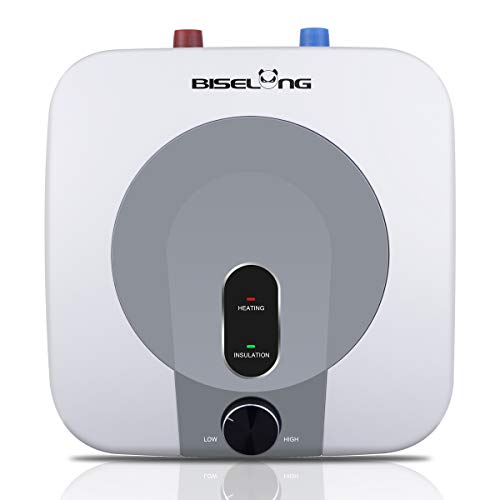
Best for: households needing quick hot water at two sinks without a large tank. This 2.5-gallon unit uses a 1500W L-shaped heating element to speed heat exchange, cutting wait times to 8–15 minutes for two sinks. It employs a 304 stainless steel body with laser-welded seams to resist rust and leaks, and an energy-saving smart inverter that maintains warmth with high thermal efficiency (up to 99%). It also minimizes scale buildup. Caution: installation requires space under the sink and proper clearance for venting and electrical connections.
AIYEZIDT Tankless 110V 3000W On-Demand Water Heater
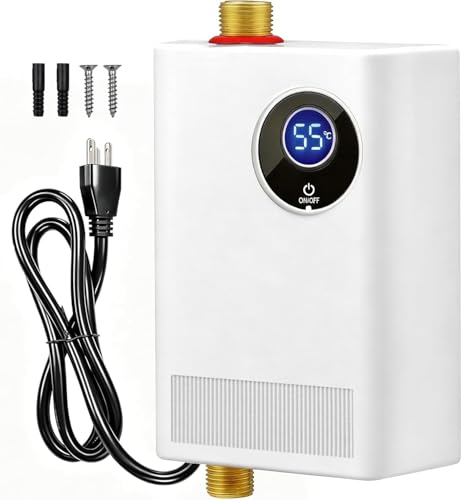
Best for: users who want instant hot water without a tank. This 110V tankless model delivers hot water in 3–5 seconds and heats to a maximum of 131°F. Its compact, wall-mounted design preserves cabinet space and is suitable for kitchens, bathrooms, RVs, and camping. Safety features include IPX4 waterproofing and leakage protection. Caution: as a tankless unit, it should be sized for anticipated water flow; extremely large simultaneous demands may require a higher capacity unit.
ThermoMate ES250 Mini Tank Water Heater

Best for: budget-conscious buyers seeking dependable 2.5-gallon hot water on demand. The ES250 features a 1440W 120V setup, with a 50% boost in insulation thanks to a 30mm thick CFC-free polyurethane layer, helping hot water stay warmer longer. An enamel-glass lining and an Incoloy 800 heating element provide corrosion resistance and efficiency. Caution: like all compact tanks, performance depends on water flow; high-demand usage may require a larger system.
BN-LINK 2.7 Gallon Under Sink Water Heater

Best for: small kitchens or campers needing a quick recovery and adjustable temperature. The BN-LINK unit delivers 1440W at 120V and offers a 6.8 GPH recovery at a 90°F rise. A front rotary knob provides a wide 86°F to 167°F range, with dry combustion and overheat protection. Caution: plastic shell and glass-lined tank improve insulation but may require careful handling to prevent cracking during installation or movement.
USATON 2.5 Gallon Compact Hot Water Heater
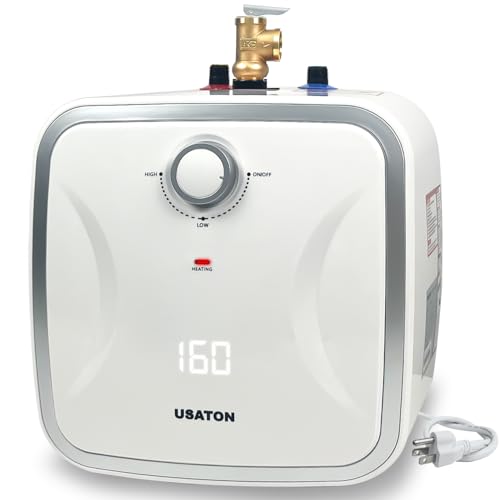
Best for: RVs, campers, or tiny kitchens where LED feedback helps monitor temperature. This 2.5-gallon unit delivers instant hot water with a 316 stainless steel heating element for efficient heating and energy savings. It includes an LED display to show current water temperature and settings. Caution: ensure vertical installation to avoid E2 heating-element issues; verify electrical supply matches the unit’s 110V/120V requirement.
Buying Guide
What size should I choose?
Choose a tank size around 2.5 gallons for single-sink setups or limited spaces. Tankless options provide continuous hot water but require careful sizing for anticipated flow. If you regularly run multiple fixtures at once, consider higher capacity or multiple point-of-use heaters.
What features matter most?
- Recovery speed: faster heat recovery reduces wait times between uses.
- Insulation: better insulation lowers standby heat loss and saves energy.
- Safety: look for IP-rated protections, overheat cutoffs, and anti-dry-fire features.
- Installation flexibility: wall-mount options, compact footprints, and connection types affect placement.
Energy efficiency and running cost
Heaters with smart controls or automatic insulation tend to save energy. Tankless models avoid standby losses but may have higher upfront costs. For small spaces, a compact 2.5–3 gallon tank with good insulation often provides best balance between upfront and ongoing costs.
Installation considerations
- Electrical supply: most units run on 110–120V; confirm amperage availability.
- Ventilation and clearance: ensure adequate space around the unit for heat dissipation and service access.
- Water supply fittings: verify FIP or NPT connections (often 1/2″ or 3/4″).
Maintenance and longevity
Look for glass-lined tanks and corrosion-resistant elements. Regular flushing helps prevent mineral buildup and extends life. Follow manufacturer guidelines for servicing and safe operation.
FAQ
- Q: Do compact heaters heat water instantly?
- A: Tankless models provide on-demand hot water; tank-based compact heaters deliver hot water from a small reserve with rapid recovery.
- Q: Can I install these under a kitchen sink?
- A: Yes, most compact heaters are designed for under-sink or cabinet installation with standard electrical connections.
- Q: Is 2.5 gallons enough for two sinks?
- A: It can be, if both taps aren’t run simultaneously; for steady dual-sink use, consider a higher capacity or separate units.
- Q: What safety features should I look for?
- A: Look for IPX rating, dry-burn protection, overheat protection, and thermal cutoffs in the product details.
- Q: Are these expensive to operate?
- A: Operating costs depend on usage, heating element efficiency, and insulation. Units with better insulation and appropriate capacity reduce energy consumption.