Best Commercial Water Heaters for Large Weekday Demands and High-Usage Scenarios
Answering the needs of facilities and households with high hot-water demand, these commercial-style and high-capacity residential water heaters deliver reliable hot water with scalable options. The top picks include units designed for higher first-hour delivery, energy efficiency, or compact footprints for space-conscious setups. Best suited for: large households, small businesses, cafés, offices, and light commercial spaces requiring steady hot water supply.
Summary table of selected products:
| Product | Brand | Capacity | Best For | Why It Stands Out |
|---|---|---|---|---|
| Rinnai REHP80 | Rinnai | 80 Gallon | Large households; peak demand | Energy Star, high first-hour delivery, Demand-Response |
| Senville 50 Gal Hybrid | Senville | 50 Gallon | Medium to large homes | Hybrid heat pump efficiency, 3.75 UEF |
| Rheem PROE50 M2 RH95 | Rheem | 50 Gallon | Space-constrained homes | Compact footprint, reliable performance |
| VEVOR Commercial 10L Boiler | VEVOR | 10 L / ~2.6 Gal | Cafés, offices, small restaurants | High output for quick cycles, 316 stainless steel |
| GE 30 Gal Electric | GE | 30 Gallon | Small to mid homes | Strong first-hour rating, true 30 gallons |
Rinnai REHP80 Electric Heat Pump Water Heater

Features include Energy Star certification, a high Uniform Energy Factor (UEF) of 4.00, and the ability to deliver up to 91 gallons in the first hour. This makes it well-suited for large families or facilities with heavy simultaneous hot-water use. The unit also supports Demand-Response with utilities to reduce energy usage during peak times. Choose this if you need a high-capacity electric heat-pump system with strong efficiency and utility-bill mitigation. Caution: as a heat-pump unit, performance depends on ambient air temperature and placement for best energy savings.
Best for: large households, multi-bath facilities, and spaces prioritizing energy efficiency with demand management.
Senville 50 Gallon Hybrid Heat Pump Water Heater
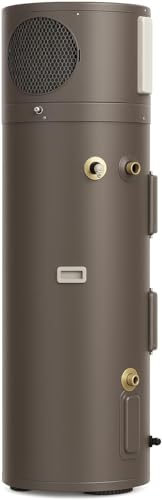
Hybrid heat-pump technology saves energy by extracting heat from the surrounding air, reducing electricity use by up to 70% versus standard electric units. With a 69-gallon first-hour rating and a 3.75 UEF, it provides reliable hot water for medium-to-large households or busy office kitchens. Best for: homeowners seeking substantial energy savings without sacrificing reliability. Caution: hybrid systems may have higher upfront costs and require appropriate space for airflow.
Rheem PROE50 M2 RH95 50-Gallon Electric Water Heater

Best for: homes with 3–5 people or multiple bathrooms where space is limited. This model emphasizes a compact footprint and dependable hot-water delivery. It is positioned as a reliable solution from a top brand in water heating, making it a solid choice for replacement or retrofit in smaller footprints. Caution: 50 gallons may fall short during peak demand if large households run multiple hot-water-heavy tasks simultaneously.
VEVOR 30-Gallon Tank Water Heater

Designed for families of 3–5 people or small commercial spaces, this 30-gallon tank provides a balance between size and output. With fast heating via an extended immersion element and a 20 mm foam insulation layer, it aims to maintain temperature efficiently. Best for: space-constrained homes or small offices needing steady hot water. Caution: not a high-demand unit; may struggle during simultaneous heavy-use scenarios.
VEVOR Electric Water Heater, 18 Gallon Tank
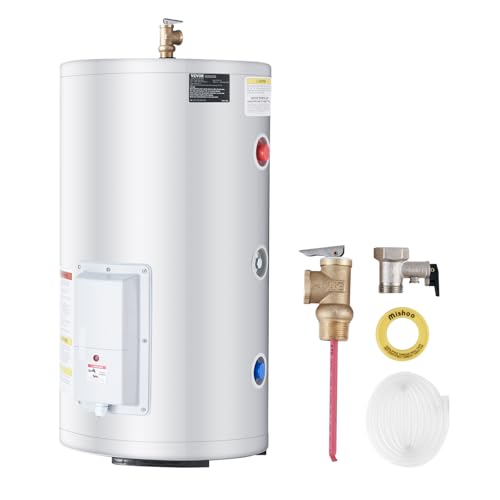
Best for: families needing continuous hot water for daily tasks like showers and laundry without a large tank. It uses a high-power 1600W element, an enamel coating for safety, and an adjustable temperature range. Caution: smaller capacity means tighter supply during concurrent heavy-use tasks.
GE Appliances 30 Gallon Electric Water Heater

Best for: small households or upgrades where a robust 30-gallon unit is preferred. It boasts a strong first-hour rating and a true 30-gallon capacity, making it a reliable mid-range option. Caution: ensure the unit fits your space and meets your local DOE ratings.
Buying Guide
What capacity do I need for high usage? Start with peak-hour demand calculations. For large households or small businesses, aim for units with higher first-hour delivery (FHR) and, if possible, energy-efficient technologies like heat pumps or hybrid designs.
Which technology matches my space and climate? Heat-pump and hybrid systems excel in warm indoor environments with good airflow. They deliver significant energy savings but may require proper installation space and ambient temperatures for optimum efficiency.
What about energy efficiency and operating costs? Look for Energy Star certifications, high UEF ratings, and features such as demand-response compatibility. Lower energy use translates to lower operating costs over time, especially in facilities with high hot-water demand.
Are there safety and installation considerations? Ensure correct clearances, appropriate electrical service, and adherence to local codes. Tank materials (stainless vs. glass-lined) influence longevity and corrosion resistance, while protective features (thermostats, anti-overheating protections) improve safety for frequent use.
Which unit fits small spaces versus large setups? Compact models like 50-gallon or 30-gallon units suit tight areas, while 80-gallon or higher-capacity models suit households or facilities with substantial hot-water demands. For commercial contexts, choose equipment designed for higher output and easier maintenance where possible.
FAQ
- What is “first-hour delivery” and why does it matter? It measures how much hot water is available in the first hour after starting the unit, indicating how well the system handles peak usage.
- Do hybrid and heat-pump heaters save more energy than standard electric? Yes, by extracting ambient heat, they typically reduce electricity consumption compared with standard electric models.
- Is a larger tank always better for a large household? Not always. A larger tank helps with peak demand but requires more space and can heat water more slowly if not paired with sufficient input power.
- Should I choose a tankless option for commercial spaces? Tankless heaters offer endless hot water with consistent temperatures but may require more complex installation and multiple units for high-demand areas.
- What maintenance helps extend a heater’s life? Regularly inspect anode rods, drain and flush to remove sediment, check thermostats, and confirm insulation is intact to reduce standby heat loss.
- How do I decide between 30, 50, or 80 gallons? Consider simultaneous hot-water needs, peak-hour load, space constraints, and energy costs; higher capacity reduces runouts but takes more space and potentially higher upfront cost.