Best Combustion Gas Leak Detectors for Quick, Accurate Home and Auto Diagnostics
When selecting a combustion gas leak detector, choose a model that offers clear alarms, reliable range, and easy handling for your typical use—home, auto, or professional settings. This guide compares top options and shows who each device is best for. The five highlighted products cover residential safety, automotive engine testing, and portable inspection needs, helping you pick the right tool for leak detection accuracy, response time, and ease of use.
| Product | Best For | Core Benefit |
|---|---|---|
| Klein Tools ET120 | HVAC technicians and DIY homeowners | Wide range with adjustable sensitivity |
| TopTes PT199 | Home safety and quick on-site checks | Fast visual and audible alarms with simple operation |
| UView 560000 | Automotive engine diagnostics | Dual-chamber design for accuracy |
| RIDGID 36163 CD-100 | Professional grade leak testing | Versatile with probe and multi-gas indicators |
| TopTes PT210S | Portable home inspections | 4-inch probe and clear LEL readings |
Klein Tools ET120 Gas Leak Detector

The Klein ET120 covers a broad detection range from 50 to 10,000 ppm, enabling both low-level and high-concentration leak detection. It offers adjustable sensitivity with High (50–1000 ppm) and Low (1000–10,000 ppm) settings, which helps tailor accuracy to the environment. Five red LEDs plus an 85 dB audible alert provide escalating notification as gas levels rise. This device is well suited for HVAC work, home inspection, and field service where fast, visible feedback is essential. A practical choice for professionals who need quick, actionable readings and a gooseneck probe for hard-to-reach areas. Caution: rely on the highest sensitivity only when necessary to avoid false positives in cluttered environments.
Gold Label Detailing Combustion Leak Detector Kit
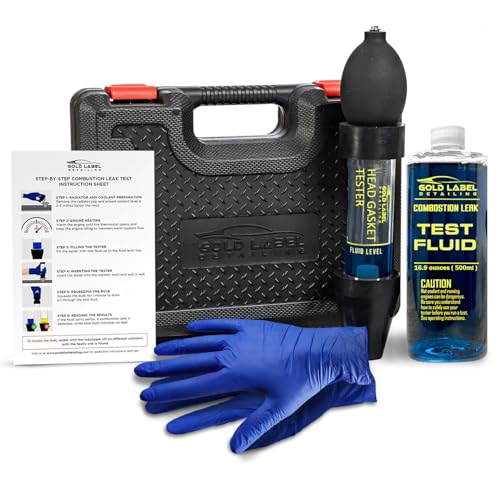
This kit emphasizes automotive engine diagnostics, focusing on internal combustion leaks and head gasket testing. It’s designed for professional auto mechanics and DIY enthusiasts who need a robust detector for rapid engine diagnostics and leak identification. The kit includes a heavy-duty head gasket test capability aimed at speeding up repairs. Best for shop professionals or serious DIYers who want a dedicated, high-quality test kit for engine integrity. Limitation: data emphasizes professional use; for casual home use, a simpler tester might suffice.
TopTes PT199 Natural Gas Leak Detector
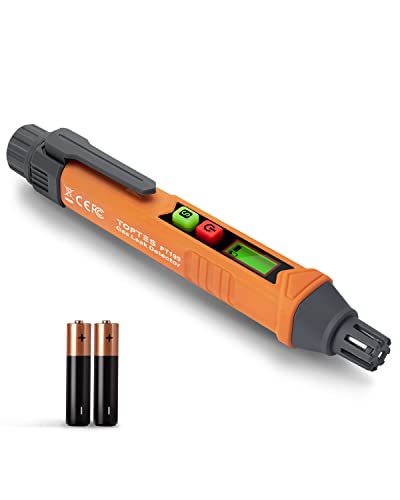
The PT199 is a portable, simple-to-use detector that identifies natural gas, methane, propane, and similar fuels. It features rapid visual and audible alarms, with a red LCD when gas levels are high. It includes two AAA batteries and offers a quick 30-second warm-up. This device is ideal for homeowners and renters who want a straightforward tool for early leak detection and basic household safety. Caution: designed for basic use; for heavy-duty industrial environments, consider models with higher ppm ranges and more robust sensors.
UView 560000 Automotive Combustion Leak Test Kit

The UView dual-chamber design helps filter alkaline particles, reducing false readings and improving accuracy for both gasoline and diesel engines. It’s a fast, economical option for checking head gasket, cylinder head, and engine blocks leaks. Best for automotive technicians who need reliable, rapid results to guide repairs without downtime. Limitation: data notes compatibility with motor types are not exhaustive; verify vehicle compatibility before use.
RIDGID 36163 CD-100 Micro Combustible Gas Detector

The RIDGID CD-100 offers a compact, versatile solution for detecting a broad range of combustible gases with visual, audible, and vibration alarms. It’s designed for quick checks on gas line installations, maintenance, and leak pinpointing. Best for professionals who need a portable detector with multiple alert modes and a compact form factor. Caution: vibration alerts may be less noticeable in noisy environments unless paired with audible alarms.
Buying Guide: How To Choose The Right Combustion Gas Leak Detector
- What range do you need? For home use, a device with a lower ppm range may suffice, while industrial or automotive work benefits from broader ranges like 50–10,000 ppm or more.
- How important are visual and audible alarms? Devices with escalating LEDs and louder beeps help in loud or dark environments. Consider models with both visual and audio cues.
- How portable must it be? Pocket-sized detectors are convenient for quick checks, while with longer hoses or flexible probes, you can reach tight spaces in engines and walls.
- What about sensitivity and false alarms? Some detectors let you adjust sensitivity. In cluttered tool shops, higher sensitivity might cause false positives; choose a mode that matches your work setting.
- Power and warm-up time: Look for detectors with long battery life and short warm-up times. Some come with replaceable batteries, while others include a built-in battery or external supplies.
- Target environment: Home safety, automotive diagnostics, and professional site work each benefit from different sensor designs and durability. Choose according to the primary use-case.
Frequently Asked Questions
- What is a combustion gas leak detector?
A device that senses combustible gases such as methane, propane, or butane and alerts you to leaks with visual and audible alarms. - How do I choose the right range?
Higher ppm ranges are better for broad environments, while lower ranges help detect early leaks. Select based on typical environments you’ll inspect. - Are portable detectors accurate for automotive use?
Yes, many are designed for garages and workshops, but verify the device supports the gases common to your vehicle and test procedures. - Can detectors detect multiple gas types?
Some models detect several gases; check the user manual for supported gases and calibration requirements. - How important is alarm clarity?
Clear, escalating alarms reduce response time in emergencies, especially in noisy or dark spaces. - Do these detectors require calibration?
Many devices offer simple calibration or self-check features; follow the manufacturer’s guidelines for maintenance.