Best Combination Tankless Water Heater Options for Modern Homes
Answering the search: If you’re looking for a compact, efficient way to deliver on-demand hot water at multiple points of use, a combination tankless electric system is a strong fit. This guide highlights five reliable models, explains who they’re best for, and notes practical limitations. Ideal buyers include small apartments, budget-conscious households, and spaces where saving energy and reducing bulky tanks matter.
Overview of top picks:
| Product | Best For | Approximate Power | Typical Use |
|---|---|---|---|
| EcoSmart ECO 11 | Small homes or apartments needing space savings | 13 kW | Single- to two-point use |
| Rheem 11kW 240V | User seeking simple controls and reliable performance | 11 kW | 2.68 GPM at peak |
| Rheem 18kW 240V | Higher demand or multi-point use | 18 kW | Up to 4.4 GPM |
| ORBEK 14kW (2x 7kW) 240V | Two to three fixtures with cost efficiency | 14 kW | About 3.38 GPM |
| CAMPLUX 6kW | Under-sink point-of-use in compact spaces | 6 kW | Two seconds to hot water at modest flow |
Note: Exact flow rates vary with inlet water temperature and installation conditions. The table above provides a quick guide to power levels and typical use cases to help you compare options at a glance.
EcoSmart ECO 11 Electric Tankless Water Heater

Features: Endlessly on-demand hot water; continuous monitoring of water temperature with controlled flow rates; 54 A amperage draw; 90% smaller than traditional tank heaters; 99% thermal energy efficient; can be wall-mounted or placed at the point of use. This model is best for small homes or apartments where space savings and energy efficiency are priority. Caution: Maximum performance depends on the electrical panel capacity and plumbing layout.
Rheem 11kW 240V Tankless Electric Water Heater
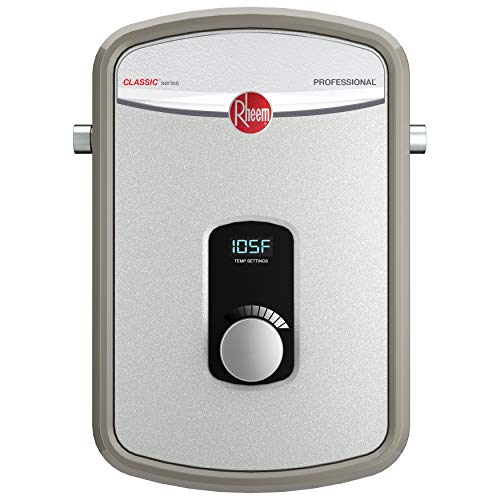
Features: ON/OFF dial with adjustable digital temperature display; self-modulating power control; 11kW model with flow rate up to 2.68 GPM. Best for single-branch homes or apartments needing dependable hot water at one or two fixtures. Caution: May require electrical upgrades to support higher power loads in some homes.
Rheem 18kW 240V Tankless Electric Water Heater
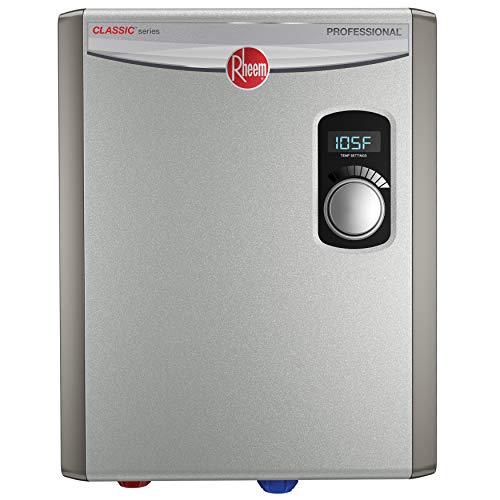
Features: External digital thermostatic control with LED display; advanced self-modulation; durable copper immersion two heating elements; flow rate up to 4.4 GPM. Best for households with higher hot water demand or multi-fixture use. Caution: Higher electrical requirements than smaller models; ensure the panel can handle 150+ amps total circuit capacity.
ORBEK 14kW Tankless Electric Water Heater

Features: Instant hot water up to 3.38 GPM; requires 240V/60A two-pole breaker; energy-saving technology; designed for 2-3 fixtures. Best for mid-range hot water needs with energy efficiency focus. Caution: Requires a proper electrical setup and professional installation to meet safety standards.
CAMPLUX Tankless Water Heater Electric 6kW

Features: 6kW at 240V; under-sink point-of-use design; self-modulating technology; temperature display; small footprint. Best for compact spaces like apartments, small bathrooms, or under-kitchen-sink installations. Caution: Lower power may limit simultaneous hot water at multiple fixtures.
Buying Guide: Key Considerations For Choosing A Combination Tankless System
What size tankless heater do I need?
Vent your space and determine maximum daily hot water demand. Higher GPM ratings support more fixtures running simultaneously, but require more electrical capacity and perhaps multiple units.
What electrical requirements should I verify?
Check panel capacity and wiring. Many units require 150 amps total for multi-unit installs. If your electrical system cannot support the load, you may need to upgrade the service or choose a lower-wattage model.
Is space-saving a priority?
Many models advertise compact dimensions and wall-mounting options. If space is at a premium, consider ECO Smart or CAMPLUX styles designed for tight spaces.
What about efficiency and operating costs?
Self-modulating technology helps reduce energy usage by adjusting power to match hot water demand. Look for units with high energy efficiency ratings and minimal standby heat loss.
Install considerations and safety
Professional installation is recommended for electrical and plumbing connections. Verify that the unit’s inlet water temperature and local climate align with stated performance figures.
Frequently Asked Questions
- What is a combination tankless water heater? It’s an electric on-demand system designed to heat water without a storage tank, often installed at or near the point of use to supply hot water quickly to fixtures.
- Do these units require a big electrical panel? Some models need high amperage, especially 18 kW or higher units. Confirm your panel capacity or consult an electrician for upgrades if you plan to run multiple units or high-demand scenarios.
- Can I install these myself? Installation involves both electrical and plumbing work. Professional installation is recommended to ensure safety and compliance with local codes.
- Will a tankless heater save energy? Yes, because they heat water on demand rather than maintaining a tank of hot water. Self-modulating models further improve efficiency by adjusting heat output to usage.
- Can one unit serve two bathrooms at the same time? It depends on the unit’s GPM rating and incoming water temperature. Higher-capacity models (like 4.4 GPM) are more capable of supporting two fixtures simultaneously.
- What maintenance is required? Periodic inspection of inlet filters, mineral buildup management, and ensuring connections are leak-free help maintain performance.