Best Circuit Breaker Mechanical Interlock Kits for Safe Home Power Transfer
When an electrical outage occurs, a reliable generator connection becomes essential. Mechanical interlock kits ensure the main breaker and generator breaker cannot be on at the same time, preventing back-feed and protecting both equipment and occupants. This article reviews top interlock options suitable for common panel brands and amperages, helping you compare compatibility, spacing, and installation needs.
| Product | Brand | Panel Compatibility | Spacing (inches) | Key Benefit |
|---|---|---|---|---|
| Natupal SD200A Interlock Kit | Natupal | Square D QO/Homeline 150–200 A | 1 3/8 | Safe generator connection and easy access |
| QYZZRS Generator Interlock | QYZZRS | Siemens, ITE, Gould, Murray 150–200 A | 1 1/4 | Broad Siemens/ITE compatibility |
| HUBRV Interlock Kit | HUBRV | Square D 150–200 A | 1 1/4 | Comprehensive safety features |
| Natupal ECSBPK02 Kit | Natupal | Siemens/Murray between main and standby | Noted spacing varies | Versatile for multiple panel lines |
| Gubeter Interlock Kit | Gubeter | ITE/Siemens/Gould/Murray 150–200 A | 1 1/4 | Clear installation guidance |
Natupal SD200A Interlock Kit for Square D QO/Homeline
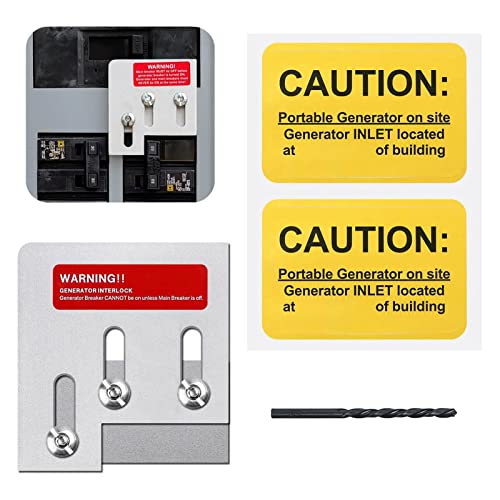
The Natupal SD200A Interlock Kit is designed to integrate with Square D QO or Homeline panels rated at 150 or 200 amps. It requires 1 3/8 inch spacing between the main and generator breakers to ensure safe, coordinated operation. The kit aims to prevent back-feed and to simplify generator connection during outages, with installation that suits professional installers and experienced homeowners. Typical use cases include ensuring reliable power distribution to essential circuits while maintaining panel integrity.
QYZZRS Generator Interlock for Siemens, ITE, Gould, Murray

The QYZZRS interlock kit supports Siemens, ITE, Gould, Murray brands for 150 or 200 amp panels, with a 1 1/4 inch spacing between main and generator breakers. It emphasizes compatibility across several major panel families and highlights straightforward installation as a benefit. Note: user should verify exact model compatibility and spacing before purchasing for a given panel model.
HUBRV Generator Interlock Kit for Square D Panels

HUBRV’s interlock kit is tailored for Square D 150 and 200 amp panels, with a mechanical interlock to prevent back-feeding. The kit includes mounting hardware, a drilling template, and step-by-step instructions to support professional installation. It focuses on a secure fit and reliable operation, reducing the risk of incorrect wiring that could lead to safety concerns during generator use.
SIEMENS Mechanical Interlock Kit for BQ Breakers

Designed for Siemens BQ breakers, this interlock kit represents a more general approach within the Siemens line. The product is marketed with the note “Made in Mexico,” which can matter for procurement or warranty considerations. It provides a basic mechanical interlock function to ensure safe coordination between main and generator breakers, suitable for installers already working within the Siemens ecosystem.
Natupal Interlock Kit for Siemens and Murray

Natupal’s interlock kit for Siemens and Murray panels supports the interlock between the main breaker and generator power. It highlights compatibility with several breaker types (QP to QP, QP to QPP, MP-T to MP-T, MP-T to MPP-T) and claims an easy installation approach that aims to ensure the main is OFF when the generator is ON. This kit targets households that mix brands in a multi-panel setup and seek a straightforward interlock solution.
Natupal Interlock Kit for 150/200 A Between Main and Generator

This Natupal interlock kit supports CH/Eaton/Murray panels, enabling a safe connection between the main breaker powered by utility power and the generator. It specifies a spacing of 1 1/4 inch between main and generator breakers, along with cautions about simultaneous operation. The kit emphasizes safety and reliable distribution of generator power to critical circuits within the home during outages.
Gubeter Interlock Kit for 150–200 Amp Panels

The Gubeter interlock kit covers ITE, Siemens, Gould, and Murray panels in the 150–200 amp range with a 1 1/4 inch spacing. It stresses compatibility with multiple major panel families and provides clear installation guidance to help ensure proper alignment and operation. As with other interlocks, it prevents two breakers from being ON simultaneously to avoid back-feed hazards.
Buying Guide: Key Considerations For Choosing A Mechanical Interlock Kit
- Panel compatibility: Verify exact model lines (Square D QO/Homeline, Siemens, ITE, Gould, Murray, etc.) and amperage (150–200 A) before purchase. A mismatch can render the kit unusable or unsafe.
- Spacing requirements: Interlock kits specify spacing between main and generator breakers (commonly 1 1/4″ to 1 3/8″). Measure your panel precisely to avoid installation conflicts.
- Installation complexity: Some kits come with templates, mounting hardware, and drilling instructions. Consider whether you prefer a kit with turnkey installation guidance or a kit requiring professional electrical work.
- Back-feed protection: All listed kits aim to prevent back-feeding electricity to the utility line. Ensure the model you choose explicitly supports safe interlock functionality for your setup.
- Brand ecosystem: If you already own a panel from Siemens, Square D, or another brand, selecting a kit designed for that brand can simplify installation and post-purchase support.
- Warranty and support: Check the manufacturer’s warranty terms and whether the kit is part of a broader safety solution for standby power. Some kits may require professional installation to maintain warranty coverage.
- Maintenance and accessibility: Consider how easy it is to access the interlock mechanism for future maintenance, testing, or generator operation checks.
Choosing the right circuit breaker mechanical interlock kit requires balancing panel compatibility, spacing, and installation effort against your backup power needs. By evaluating the listed options, you can identify a kit that safely coordinates main and generator power while minimizing the risk of back-feed or improper operation during outages.