Best Ceramic Metal Halide Grow Lights for Indoor Gardens and Vegging
Discover a curated selection of ceramic metal halide (CMH) grow lights designed to boost yields, improve canopy health, and deliver full-spectrum light similar to natural sun. This guide highlights five reliable options ideal for American indoor growers, whether you’re vegging leafy greens or flowering ornamentals. Each product focuses on efficient spectrum, durable construction, and compatibility with common fixtures to help you compare quickly.
| Product | Brand | Watts | Notable Spectrum/Feature |
|---|---|---|---|
| GRUOTVSZAK CMH 315W 3000K / 4200K | GRUOTVSZAK | 315W | 625 μmol/s (3000K) / 590 μmol/s (4200K) full spectrum |
| FLILED Horticulture CMH (4000K) | FLILED | — | US NRC licensed bulb; sun-like spectrum for vegetative growth |
| CMH 315W Lighting System | Generic | 315W | Energy-efficient CMH growing system |
| Sunburst CMH SBCMH31542K | Hydrofarm | 315W | All-in-one reflector with 4200K lamp |
| iPower 630W Double Lamp CMH Kit | iPower | 630W | Double lamp; covers larger veg/flower areas |
GRUOTVSZAK CMH 315W 3000K / 4200K Full Spectrum Bulb (2 Pack)

This CMH bulb pack offers two color temperatures—3000K for flowering and 4200K for vegetative growth—delivering high PAR output with a claimed 590 μmol/s at 4200K and 625 μmol/s at 3000K. It uses a standard PGZX18 base and double jacketed design for safety. The bulbs are designed to fit in compatible CMH fixtures, with emphasis on full-spectrum performance and safety when paired with suitable ballast and fixtures. Suitable for both high and low-frequency ballast setups; low-frequency operation is recommended for certain fixtures.
FLILED Horticulture Ceramic Metal Halide
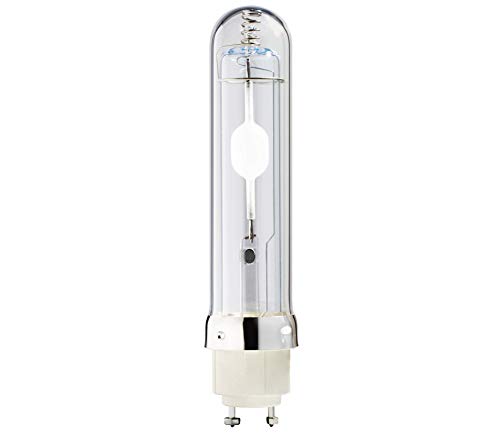
FLILED CMH bulbs are presented as safe and NRC-licensed due to the Krypton-85 containment and protective outer sleeve. The 4000K spectrum is designed to mimic noonday sun, supporting robust vegetative growth with strong stems and leaves and a reduced growing cycle. The bulbs are positioned as long-lasting, with slower lumen depreciation than traditional HPS or MH lamps, maintaining a high portion of initial output past eight thousand hours of operation. This option emphasizes safety, sun-like spectrum, and plant health during vegetative stages.
315W Ceramic Metal Halide Growing System with CMH 315W Lamp
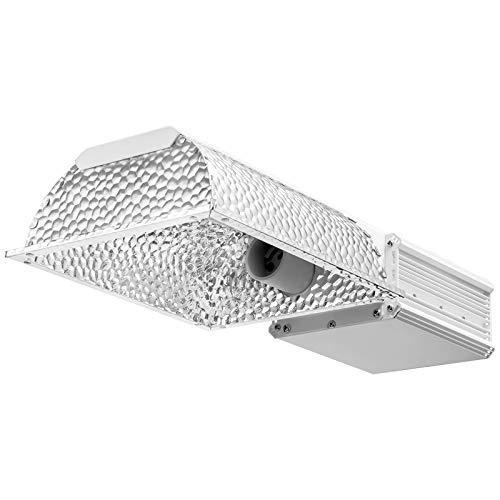
This CMH growing system highlights energy efficiency relative to traditional HID setups, making it suitable for greenhouse-to-indoor applications. While the listing focuses on system performance rather than providing explicit PAR figures, the CMH lamps are known for balanced spectrum and efficient light delivery across vegetative stages, aligning with practices that emphasize steady growth and electricity savings in indoor environments.
Sunburst CMh Compact Reflector System (315W, 4200K)

Sunburst CMh combines an all-in-one compact reflector with a 315W CMH lamp at 4200K. The integrated design aims to simplify setup while delivering a full-spectrum light that supports vegetative growth and early flowering. Its compatibility with both 120V and 240V power supplies adds versatility for varied domestic electrical configurations.
iPower 630W Double Lamp Ceramic Metal Halide Kit

The iPower CMH kit features a dual-lamp configuration designed for larger grow areas. It includes a ballast and aluminum hood, with guidance that these fixtures run cooler than some HID setups. The kit’s scope covers vegetative growth to flowering in roughly a 4×4 foot area during veg and up to about 6 square feet during bloom, making it suitable for medium to larger indoor gardens. The note mentions a free heavy-duty 240V power cord, with a caveat about needing a 120V cord if operating on that voltage.
Buying Guide: Key Considerations For CMH Grow Lights
- Spectrum and color temperature: CMH bulbs come in various color temperatures (e.g., 3000K, 4000K, 4200K). 3000K is often preferred for flowering, while 4000K-4200K can support vegetative growth. Some bulbs offer dual-temperature options in packs for flexibility across growth stages.
- PPF and efficiency: Photoperiod flux (PPF) indicates how much light is produced for plant growth. Higher PPF can improve yields but should be matched with appropriate coverage and fixture design. Check the stated PPF when available and ensure your reflector and ballast support your intended area.
- Ballast compatibility: CMH systems rely on appropriate ballasts and HID-compatible fixtures. Verify ballast frequency compatibility (high vs. low) and the physical base type (PGZX18 or equivalent) to ensure a proper fit.
- Safety and build quality: Look for double-jacketed tubes or glass sleeves, protective housings, and NRC licensing information for safety. An outer sleeve can help contain breakage and protect users and plants in case of tube failure.
- Fixture integration: Some CMH kits are all-in-one reflectors; others require separate hoods or ballasts. Assess whether you prefer an integrated unit for ease of setup or a modular approach for future upgrades.
- Heat management: CMH lamps produce less heat than some HID options but still generate noticeable warmth. Consider room ventilation and whether air cooling or other cooling methods are necessary for your space.
- Longevity and maintenance: CMH bulbs typically maintain a substantial portion of lumen output for several thousand hours, but performance can still degrade over time. Plan for replacement schedules to maintain consistent light quality.
- Size and footprint: Match lamp wattage and reflector size to your grow tent or room dimensions. Larger systems cover bigger areas but require adequate space and electrical capacity.
- Cost-of-operation: While CMH systems can be efficient, calculate electricity use based on wattage, fixture efficiency, and your local electricity rates. Consider the total cost of ownership over the grow cycle.
- Availability and replacement bulbs: Confirm that replacement bulbs are readily available and compatible with your ballast and fixtures to avoid downtime.