Best Cell Phone Signal Boosters for Basements to Improve Coverage
The basement can be a signal dead zone, causing dropped calls and slow data. This guide highlights five reliable cell phone signal boosters that work well in basements and multi-room homes, helping you stay connected where signals are weak. Each option supports multiple carriers across the U.S. and offers user-friendly features like LCD displays or app support to optimize performance.
| Product | Brand | Coverage (Approx.) | Key Benefit |
|---|---|---|---|
| Cell Phone Booster for Home, Up to 6000 Sq.Ft | YJXcell | Up to 6000 sq ft | High gain, broad band compatibility |
| Cell Phone Booster for Home Office | HiBoost | Up to 2500 sq ft | Automatic gain adjustment, multi-user support |
| Cell Phone Signal Booster for Home Office Basement RV | Phonetone | Up to 3000 sq ft | Intuitive control with built-in antenna |
| Hiboost Cell Phone Signal Booster for Home and Office | HiBoost | Up to 4000 sq ft | 5G compatible, multi-carrier support |
| WeBoost Home MultiRoom | weBoost | Up to 5000 sq ft | Made in the U.S., simple multi-room boost |
YJXcell Cell Phone Booster For Basement Up To 6000 Sq Ft

The YJXcell booster is designed to improve signal strength across large indoor areas, including basements and multiple rooms. It claims coverage up to 6000 square feet, making it suitable for homes with thick basement walls or metal structures. The device supports 5G and 4G LTE data, enhancing voice calls, texts, and data for all major U.S. carriers. With a maximum gain up to 70 dB and an output power of 17 dBm, it aims to deliver noticeable improvements even where exterior signal is weak. The system emphasizes compatibility with many North American networks and notes that 5G performance will depend on local carrier deployment in DSS bands.
Reference features include: 70 dB maximum gain, 17 dBm maximum outpower, 5G capable, and a variable indoor coverage tied to outdoor signal availability. Users should verify outdoor signal at the antenna location, as effectiveness near extremely weak external signals may be limited. This model is suitable for homes, small offices, and basements seeking better overall connectivity.
HiBoost Cell Phone Booster For Home Office Up To 2500 Sq Ft

The HiBoost Home Office booster targets smaller to mid-sized spaces, making it well-suited for basements or compact multi-room layouts. It features automatic gain adjustment (AGC) and a user-facing display or app support to monitor signal strength and optimize outdoor antenna placement. The system advertises up to 62 dB of gain and is designed to improve 1- to 3-room areas efficiently, with capacity for multiple users simultaneously. The setup emphasizes ease of use and ongoing control for fluctuating basement signal environments.
Key considerations include: 62 dB gain cap, multiple-user support, AGC for automatic gain tuning, and compatibility with major U.S. carriers. If your basement has particularly stubborn dead zones, pairing with a strong outdoor signal at the mounting location will maximize improvements. The solution provides a balance of performance and user-friendly management for home offices in basements or subterranean spaces.
Phonetone Cell Phone Signal Booster For Basement And Home Office

The Phonetone unit is described as suitable for home offices and basements, offering broad carrier compatibility and multi-band support for 2G, 3G, 4G, and 5G signals. It highlights a built-in indoor antenna configuration designed for easy placement on a desk, avoiding the need for wall drilling. The model emphasizes universal carrier compatibility across major U.S. networks, making it a practical choice for households with multiple carriers. The included LCD-style or visual indicators help users gauge performance and adjust gain as needed for optimal basement coverage.
Features include: universal carrier compatibility, intuitive visual control via a built-in display, and a compact integrated design suitable for desks in basements or small offices. Users should ensure there is some outside signal to boost; the booster amplifies what it can receive, so outdoor signal presence remains essential for basement improvements.
HiBoost Home MultiRoom, 4000 Sq Ft
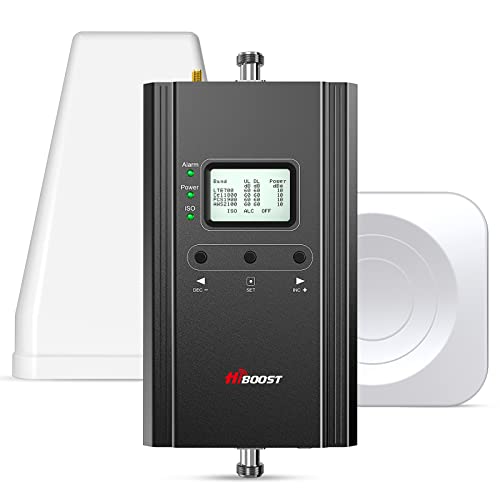
The HiBoost Home MultiRoom model is aimed at larger basements and multi-room homes, claiming coverage up to 4,000 square feet. It’s designed for multi-user environments and broad carrier support across Verizon, AT&T, T-Mobile, and more, with U.S. manufacturing and FCC approval. The product emphasizes 5G and 4G LTE compatibility within existing bands, avoiding unsupported new technologies that require different infrastructure. For basement use, the system can help reduce dead zones in several rooms, including living spaces and office corners, while staying within a straightforward setup flow.
Important considerations include: 5G compatibility, broad carrier support, FCC approval, and the expectation of improved data speeds and voice quality throughout a multi-room basement area. This option is well-suited for households that require dependable performance across several devices and activities in a basement environment.
weBoost Home MultiRoom Signal Booster

The weBoost Home MultiRoom is a veteran option known for its U.S.-made design and broad carrier compatibility. It targets up to 5,000 square feet, which can cover multiple basement levels or combined living spaces. The system emphasizes eliminating dead zones and delivering faster data speeds, improved call quality, and better streaming. It is marketed as a straightforward solution that many households already have in place, with emphasis on reliability and ease of use. Users can expect strong performance in basements and lower floors where signals struggle to penetrate.
Key factors include: a large coverage area, compatibility with all major U.S. carriers, and a design focus on reducing dropped calls and buffering. The solution is attractive for homeowners seeking a robust, all-in-one system that can handle multiple devices simultaneously in a basement setting.
Buying Guide: Choosing The Right Basement Cell Phone Booster
- Basement outdoor signal: The effectiveness of any booster depends on the available outside signal. If the exterior antenna location cannot pick up a signal, indoor performance may be limited. Look for a model with strong outdoor antenna options and high gain in the indoor unit to maximize what you can receive.
- Coverage vs. space: For large basements or multi-room homes, prioritize boosters rated for higher square footage (e.g., 4,000–6,000 sq ft). For compact basements, smaller footprints with AGC or smart LCD displays can be more practical.
- Carrier compatibility: Verify that the booster supports all major U.S. carriers (Verizon, AT&T, T-Mobile, U.S. Cellular, etc.). If you have multiple carriers in the household, choose a multi-carrier model with good bandwidth handling across bands (2/4/5/12/13/17/25, etc.).
- 5G support: Many boosters advertise 5G compatibility, but actual 5G performance depends on carrier deployment in existing 4G bands. If 5G is essential, confirm area availability in 4G bands and ensure the device lists the relevant band support.
- Ease of installation: Look for kits with pre-matched components, clear setup guides, and indicators for outdoor and indoor reception. Some units include app support or LCD displays to assist placement and performance tuning.
- Safety and compliance: Choose FCC-approved models to ensure safe operation and adherence to regulations. Check for certifications and return policies if performance does not meet needs in a basement.
- Future-proofing: Basements may see changing signal environments. A booster with adjustable gain and multi-user support can adapt to evolving conditions without frequent replacements.
In summary, selecting the best basement booster involves balancing outdoor signal availability, indoor coverage area, compatible carriers, and ease of use. For homes with large subterranean spaces, models like YJXcell or weBoost offer substantial reach, while HiBoost and Phonetone provide versatile options for smaller basements or home offices. Always verify current carrier bands and test placement to maximize basement connectivity.