Best CE ROHS Solar Lights for Outdoor Ambience and Security
Answers to common buyer questions about CE and ROHS compliant solar lights start here. This guide highlights top options for American yards, patios, and walkways. It explains which lights are best for security, pathway illumination, and decorative accents. A quick summary table helps you compare key details at a glance. The featured picks prioritize safety certifications, weather resistance, and energy efficiency to suit different outdoor needs.
| Product | Best For | Key Benefit |
|---|---|---|
| Stright 60FT Solar String Lights | Decorative patios and fences | Long run, multiple lighting modes |
| Linkind StarRay Solar Lights | Spotlight accents | Flexible panels, high brightness |
| NYMPHY 56 LED 4-Pack | Garden beds and borders | High durability, long run time |
| INCX 12 Pack 4.6 Inch Lights | Pathways and driveways | Smart sensor, durable |
| HGGH 60 LED 4-Pack | Landscape and entryways | Strong brightness, all-weather |
Stright 60FT Solar String Lights Outdoor

Best for long decorative runs along a fence, patio edge, or pergola. The product uses a high-efficiency solar panel and a sizeable battery that can power the lights for 24 hours plus on a full charge. It offers 8 lighting modes and a remote, making it versatile for different moods and occasions. The bulbs are shatterproof and weatherproof, suitable for year-round use. Caution: performance can vary with shorter daylight during winter, which may reduce run time.
Linkind StarRay Solar Lights Outdoor

Best for bright, targeted illumination of pathways and gardens. These lights feature a larger, flexible solar panel for faster charging and a 650-lumen output with a 90-degree beam angle. The two installation methods—ground stakes and wall brackets—support versatile placement. Best for properties needing strong daytime-to-nighttime transitions and directional lighting. Limitation: higher brightness can shorten night duration in low-sun days.
NYMPHY Solar Lights Outdoor Waterproof 4 Pack
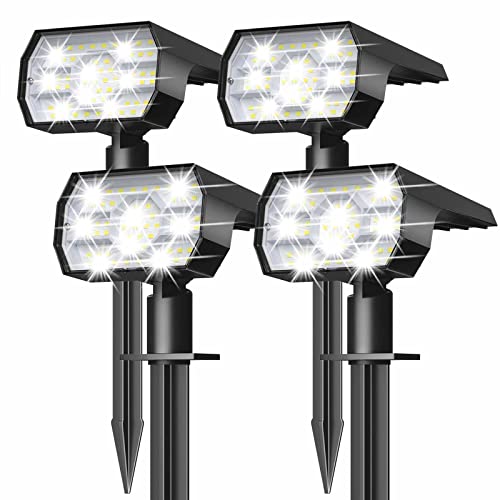
Best for durable all-season accent lighting. With 56 LEDs per unit and IP68 waterproof construction, these lights are designed to withstand harsh weather while delivering a bright, cool white glow. They provide 6–20 hours of illumination depending on sunlight exposure, making them reliable for nightly use during longer days. Caution: higher brightness can be more prone to power drain on overcast days.
INCX 4.6 Inch Solar Lights Outdoor (12 Pack)

Best for garden borders and subtle walkways. These lights feature eight LEDs per unit, stainless steel and durable plastic housing, and IP65 waterproofing. They include a smart light sensor so lights turn on at dusk and off at dawn. Caution: be mindful of placement in hot sun to maximize battery life, as extreme heat can affect performance over time.
HGGH Solar Lights Outdoor 60 LED (4 Pack)

Best for bright landscape lighting along driveways or garden beds. This 4-pack uses 60 industrial-grade LEDs to deliver strong illumination for 9–24 hours after 6–8 hours of sun. It carries an IP67 rating for heavy rain and snow resistance. Caution: higher brightness can attract more attention, which may be unnecessary for subtle lighting goals.
Buying Guide
What should I look for in CE and ROHS certified solar lights? Look for clear labeling of CE and ROHS compliance, IP ratings for weather resistance, battery type and capacity, and lumen output. Higher lumens mean brighter light, but may affect run time. Check solar panel efficiency and charging time to match your location’s sun exposure.
How do I choose the right brightness and beam angle?
- Small yards or walkways: 200–400 lumens per light with a 60–90 degree beam works well.
- Paths and driveways: 400–800 lumens per light with wider beams improve visibility.
- Garden accents: 100–300 lumens per light for a softer glow.
How important is weather resistance?
In American climates, IP65 or higher is recommended for outdoor use. IP67 or IP68 offers better protection against submersion or heavy rain. Consider materials like stainless steel or ABS+PC housings for durability.
What installation considerations matter?
- Placement: ensure direct sun for at least 6–8 hours to charge efficiently.
- Sun exposure: avoid shading by trees or structures during peak sun hours.
- Wiring and mounting: most models use stakes or wall brackets; verify mounting hardware is included.
Are there trade-offs I should expect?
Brighter lights often use more energy and may shorten nighttime run time on cloudy days. Larger solar panels charge faster but can be bulkier. Remote controls add convenience but require occasional battery changes in the remote itself.
Maintenance tips
- Clean solar panels periodically to remove dust or debris.
- Check seals and gaskets after extreme weather.
- Replace batteries when performance noticeably declines.
FAQ
- What does CE ROHS mean for solar lights? CE marks indicate conformity with European safety standards, while ROHS indicates restricted hazardous substances. These certifications help ensure product safety and environmental compliance.
- Do solar lights work in winter? They can, but shorter daylight and poor sun can reduce run time. Use lights with larger solar panels and higher battery capacities for better winter performance.
- Can solar lights be used indoors? They are designed for outdoor use; using them indoors generally requires nearby sunlight or a strong artificial light source to charge.
- How long do solar lights typically last? Battery life and panel efficiency determine duration. Many units provide several hours of light after a full day of charging, with stronger systems offering longer runs.
- Are all these lights weatherproof? Most models here carry IP ratings (IP65–IP68 in some) to withstand rain, dust, and temperature changes. Verify the rating on the specific model you choose.
- Do I need to replace the solar battery? Over time, batteries lose capacity. Expect battery replacement after several seasons for some models.