Best Car Battery Converter to Electricity
Answer: A car inverter converts your vehicle’s 12V battery into usable AC power, best for road trips, camping, and mobile work stations. This guide focuses on reliable in-vehicle power inverters that suit different needs—from light-duty USB charging to laptop-ready outlets. Ideal buyers include road-trippers, families, travelers with portable electronics, and anyone needing a compact, portable power source in a vehicle.
Summary of chosen products:
- Pro Chaser 400W Power Inverters for Vehicles — DC 12v to 110v, USB-A PD, dual AC outlets, long cord.
- Pro Chaser 400W Power Inverters with USB-A, PD 65W USB-C — versatile ports for laptops and devices.
- BESTEK 500W Power Inverter — dual AC outlets, USB quick charging, built-in protection.
- Cantonape 1000W Car Power Inverter — LCD display, 2 AC outlets, Type-C, high continuous power.
- Vansoet 200W Car Power Inverter — PD 30W USB-C, multiple USB ports, compact and portable.
Pro Chaser 400W Vehicle Inverter With Dual USB and AC Power
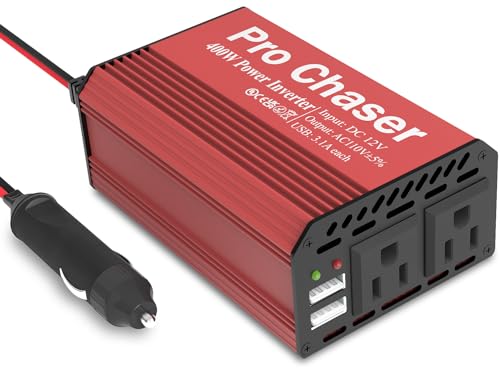
Best for multi-device charging on trips. This inverter provides 400W continuous DC to AC power with an 800W peak. It includes dual 110V AC sockets and two USB ports, making it suitable for laptops, cameras, and small appliances. The 30-inch cord increases placement flexibility, especially in larger vehicles or when back-seat access is needed. Ideal for road trips where both laptops and phones must stay powered.
Best for: Road trips, families, and mobile workers who need reliable AC power and fast USB charging. Caution: High-wattage devices near the 400W range may trigger the inverter’s protection if the load spikes suddenly.
Pro Chaser 400W Inverter With USB-C PD and USB-A

This variant adds USB-C PD 65W and a USB-A port, broadening charging options for laptops, tablets, and phones. It maintains dual 110V outlets for larger loads like laptops and DVD players. The 30-inch cord and compact footprint support flexibility for backseat charging or trunk placement.
Best for: Users needing USB-C PD for modern laptops and devices in a vehicle. Caution: PD charging speeds depend on device compatibility and cable quality.
BESTEK 500W Power Inverter With Dual USB and Protection
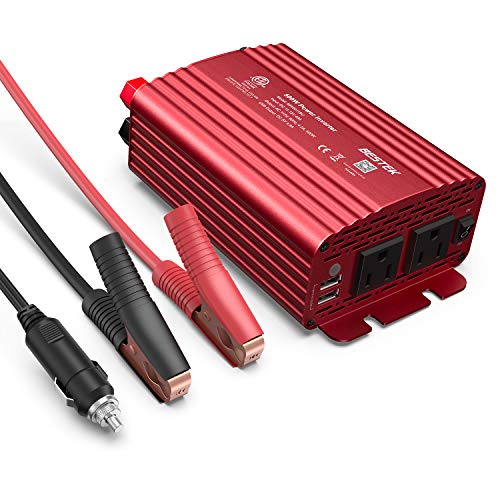
With 500W continuous power and 1000W peak, this inverter provides two AC outlets and two USB ports for quick charging. It’s a practical choice for camping or long drives where charging laptops, tablets, and small appliances is common. Built-in protection helps guard against overheating, under/over voltage, and short circuits.
Best for: Those needing a robust, protection-focused inverter for longer trips or camping. Caution: Heavy loads near the 500W limit may engage protection during startup surges.
Cantonape 1000W Car Power Inverter With LCD Display

This inverter delivers 1000W continuous power with 2000W peak, suitable for heavier loads like large laptops, monitors, or multiple devices simultaneously. It includes an intelligent LCD that shows input/output voltage and load, plus 6 protection features to safeguard equipment. It’s well-suited for RVs, trucks, or any setup requiring substantial in-vehicle power.
Best for: Vehicle setups that regularly run larger electronics or need a clear status readout. Caution: Higher wattage means increased cooling needs and potential footprint concerns in small cars.
Vansoet 200W Car Power Inverter With PD USB-C

Compact and efficient, this 200W inverter includes USB-C PD up to 30W and 2 USB-A ports plus two AC outlets. It suits road trips or daily commuting where minimal space is available but USB-C fast charging is desired. The inverter uses adaptive cooling and a small form factor for easy stowage in cup holders or glove compartments.
Best for: Travelers needing portable power for phones and small devices with fast USB-C charging. Caution: Lower continuous wattage may limit use with higher-wattage laptops.
Buying Guide: Key Considerations For In-vehicle Power Inverters
- Power rating: Choose continuous wattage matching your typical device loads. If you run laptops or multiple devices, opt for 500W+ for headroom.
- Ports and outlets: Look for a mix of AC outlets and USB ports (including USB-C) to support current devices.
- Vehicle compatibility: Ensure your cigarette-lighter socket or battery connection can supply the needed current without causing fuse trips.
- Protection features: Prioritize overload, short-circuit, overheat, and low-voltage protections to safeguard devices and the vehicle.
- Portability: For frequent travelers, consider compact units with long cords for flexible placement.
- Display and monitoring: LCD readouts help track voltage, load, and fault codes for safer operation.
- Thermal management: In high-load scenarios, units with efficient cooling reduce noise and improve longevity.
Frequently Asked Questions
- What is the difference between continuous and peak watts?
– Continuous watts indicate steady power output, while peak watts reflect the momentary surge the inverter can handle. - Can I run a laptop and a TV at the same time from a car inverter?
– Yes, if the combined load stays below the inverter’s continuous wattage rating and the vehicle’s electrical system can handle it. - Do inverters require special installation?
– Most inverters plug into the 12V outlet, but higher-power models may benefit from a direct battery connection or fuse protection. Follow manufacturer guidelines. - Will an inverter drain my car battery quickly?
– Yes, especially at higher loads. Use one only when the engine is running or with a properly rated, wired installation to avoid battery discharge. - Is pure sine wave better than modified sine wave?
– Pure sine wave inverters are generally better for sensitive electronics; most car inverters provide modified sine wave sufficient for common devices. - What safety features should I look for?
– Overload protection, short-circuit protection, overvoltage/undervoltage protection, and automatic shutoff on fault conditions are important.