Best Car 12V to 110V Power Inverter: Top in-Vehicle Power Solutions
When you’re on the road, keeping devices charged is essential. This guide highlights five reliable 12V DC to 110V AC inverters that are well-suited for cars, trucks, and RVs. Each option supports common devices like laptops, tablets, smartphones, and small appliances, with varying wattage, USB ports, and portability. Read on to compare capabilities, safety features, and convenient design elements to choose the right inverter for your travels.
| Product | Brand | Continuous Power (W) | USB Ports / Other | Notable Feature |
|---|---|---|---|---|
| BESTEK Power Inverter DC 12V to AC 110V | BESTEK | 300 | 2 USB 4.8A total, 2 AC outlets | Aluminum housing; Tesla compatibility updater |
| Pro Chaser 400W Power Inverter | Pro Chaser | 400 | 2 USB ports (6.2A total), 2 AC outlets | Compact, 30-inch cord; strong for laptops and devices |
| FOVAL 150W Car Power Inverter | FOVAL | 150 | 2 USB ports, 1 AC outlet | Ultra portable with aluminum shell |
| PiSFAU 200W Car Power Inverter | PiSFAU | 200 | 4 USB ports, 2 AC outlets | Quiet, high-efficiency cooling |
| ALSO GO 1000W Power Inverter | ALSO GO | 1000 | 3 AC outlets, 4 USB ports | LCD display for real-time readings |
Below are five selections chosen for their balance of power, portability, and features. Use the quick reference table above to compare at a glance, then dive into detailed sections for each model.
BESTEK 300W Inverter: Durable Car Power Hub
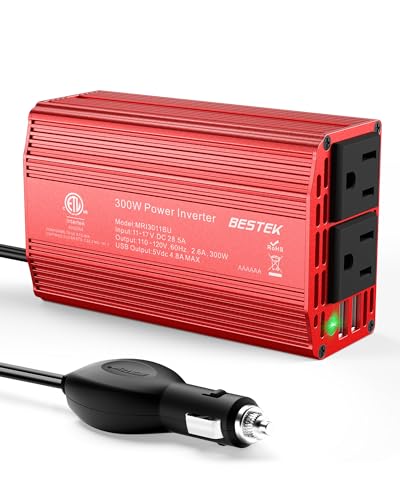
The BESTEK inverter delivers 300 watts of continuous DC to AC power with a peak surge that supports larger devices briefly. It features two 110V outlets and two USB ports with a combined 4.8A charging capacity, making it suitable for laptops, tablets, and phones on road trips. The aluminum housing provides durability, and the compact form fits neatly in a vehicle’s console. Its compatibility enhancement allows use in many vehicle types, including potential Tesla adjustments. The design emphasizes quick, reliable charging and a steady power supply for multiple devices simultaneously.
Pro Chaser 400W Inverter: Dual Outlets For Travel
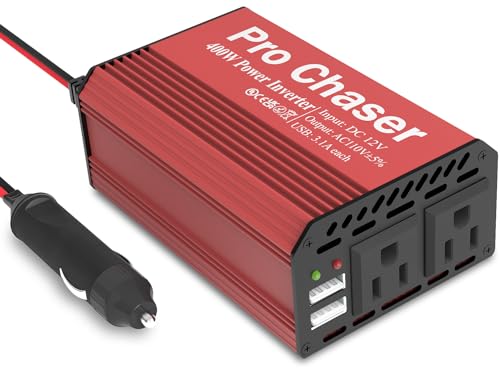
Pro Chaser’s 400W inverter provides a steady 400W continuous output with a peak of 800W. It includes two 110V AC outlets and two USB ports (3.1A each), enabling simultaneous charging of phones, tablets, cameras, and laptops. A 30-inch cord adds reach for back-seat use or cargo-area setups, making it a practical option for road trips, camping, and family travel where multiple devices must stay powered. The device is designed to handle mid-range loads like laptops and DVD players, balancing portability with solid performance.
FOVAL 150W Car Power Inverter: Compact & Capable
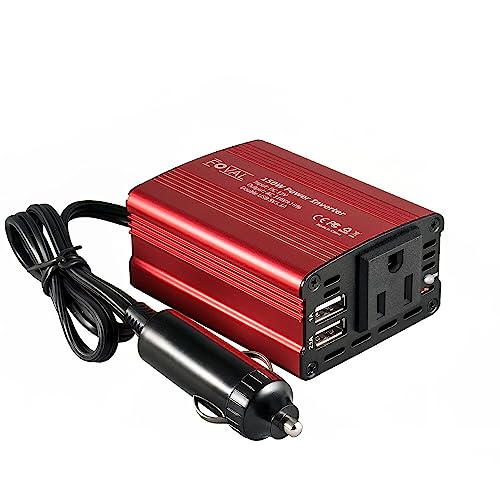
FOVAL’s compact 150W inverter provides essential power for smaller devices. It offers two USB ports and one AC outlet, ideal for charging smartphones, tablets, and light electronics during commutes or short trips. Its compact size and aluminum shell make it highly portable, easing the burden of space in vehicles. While not appropriate for heavy-duty appliances, it serves well for essential electronics and smaller gadgets, ensuring you remain connected on the road without bulk.
PiSFAU 200W Inverter: Multiple USB Ports

The PiSFAU 200W inverter combines two AC outlets with four USB ports, including a USB-C option, offering versatile charging for laptops, phones, tablets, and accessories. It emphasizes quiet operation and efficient heat management, helping to maintain performance during longer trips. The design prioritizes portability while still delivering adequate power for laptops and other devices, making it suitable for family travel and moderate workloads in vehicles.
ALSO GO 1000W Inverter: LCD Display & High Capacity

The ALSO GO 1000W inverter is a high-capacity option with three AC outlets and multiple USB ports, powered by a robust 1000W continuous rating. An LCD display provides real-time input, output, battery, and load status, offering visibility during operation. This model suits heavier loads such as larger laptops, power tools, or small appliances, and is especially useful for long road trips, work sites, or living in vehicles where higher power availability is valuable. The unit emphasizes reliability and monitoring to prevent overloads.
Buying Guide: Key Purchase Considerations
- Power rating: Choose continuous wattage based on your devices. If you regularly run laptops or small appliances, aim for at least 300–400W continuous, with higher peaks for brief surges.
- Output type: Most inverters use modified sine wave; pure sine wave is gentler on sensitive electronics but typically costs more. For laptops, TVs, CPAP machines, and audio gear, a higher-quality inverter with clean power is preferable.
- Number and type of outlets: Consider how many AC outlets you need and whether USB-C PD or Quick Charge ports are essential for fast charging.
- Cable length and portability: Cord length affects reach from the cigarette lighter. Look for 24–30 inch cords for rear-seat use and a compact footprint for limited space.
- Cooling and fan noise: Inverters generate heat. Models with efficient cooling and quiet fans help maintain performance during long drives.
- Safety features: Look for overload protection, short-circuit protection, over-temperature shutdown, and low-voltage disconnect to prevent battery damage.
- Durability and build: Aluminum housings and solid connectors improve longevity for mobile use and varying vehicle conditions.
- Device compatibility: Check device wattage and port compatibility (USB-C PD, USB-A, multiple AC outlets) to ensure your common devices are supported.
- Monitoring options: Some units include LCD displays showing input/output voltage and load, which helps prevent overload and informs usage decisions.
- Vehicle compatibility: If you have a high-load setup or a specific vehicle type (e.g., Tesla, RV), confirm that the inverter meets your vehicle’s electrical requirements and space constraints.