Best Camper Van Solar System Kits for Off-Grid RV Power
If you’re equipping a camper van for off-grid living, these solar system kits offer ready-to-use power solutions. They’re ideal for different buyers: weekend RV travelers, full-time van lifers, or adventurers chasing dependable electricity on remote trips. The following selections prioritize complete setups, reliable components, and installability, helping you compare options at a glance.
Summary of selected products:
| Product | Best For | Key Benefit | Approx. Daily Output |
|---|---|---|---|
| ECO-WORTHY 200W Complete Solar Starter Kit | Novice RV Owners | All-in-one kit with battery and inverter | ~800 Wh |
| ECO-WORTHY 200W Panel Kit with Controller | Small-Dwellers | Compact, versatile panel array | ~800 Wh |
| Renogy 400W Premium Kit | Higher Power Demands | Higher daily output with MPPT | ~2–2.5 kWh |
| Renogy 200W Starter Kit | Budget-Friendly Upgrade | Compact, efficient for limited spaces | ~1,000 Wh |
| ECO-WORTHY Ultra 1200W Off-Grid System | Full-Time Off-Grid RVs | High capacity with tracker option | ~5.5 kWh |
ECO-WORTHY 200W Complete Solar Starter Kit for RV
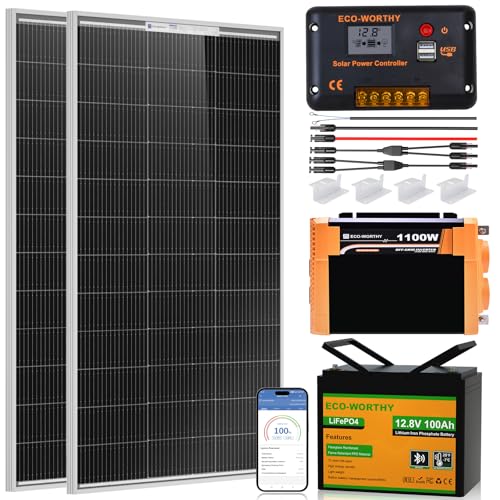
This all-in-one kit provides a straightforward off-grid solar solution for RV use. It includes two 100W solar panels, a 100Ah lithium battery, an 1100W inverter, a 30A PWM charge controller, and necessary cables. Best for weekend travelers who want a ready-to-use system with minimal setup. A note: the kit emphasizes a four-step installation, which is friendly to beginners but still requires following safety guidelines.
Who it’s best for: RV newcomers who want a single-package setup that covers generation, storage, and load distribution. Why chosen: it minimizes accessory shopping and emphasizes compatibility for an easy start.
Caution: The PWM controller is simpler than an MPPT controller, which can affect efficiency in variable light conditions.
ECO-WORTHY 200 Watts Panel Kit with Controller

This 200W panel kit emphasizes versatile daily output with a high-efficiency monocrystalline panel and a 30A PWM charge controller. It suits RVs, caravans, and other off-grid applications where mounting area is moderate but power needs are steady. It’s designed for a wide range of outdoor environments with durable framing and IP65-rated junction protection.
Who it’s best for: campers seeking a scalable, compact expansion from a starter kit. Why chosen: the package balances cost and performance, making it a good mid-range option for modest loads.
Caution: PWM control is generally less efficient than MPPT in shaded or variable light.
Renogy 400W Premium Kit

This premium kit bundles four 100W panels, a 40A MPPT controller, plus mounting hardware and connectors. It emphasizes higher daily output and efficient power conversion. It’s well-suited for campers with higher energy needs, like cooling appliances, TVs, or microwave use. The MPPT controller offers stronger performance in less-than-ideal sunlight and colder temperatures.
Who it’s best for: van dwellers who run higher loads or want faster battery charging. Why chosen: the combination of higher efficiency and robust hardware provides a clear advantage for extended trips.
Caution: Higher upfront cost and more space required for mounting compared to smaller kits.
Renogy 200W Starter Kit
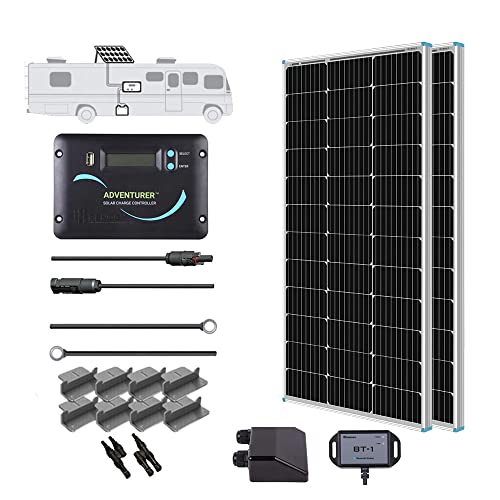
This compact kit pairs two 100W panels with a 30A PWM charge controller. It targets space-conscious RVers who want a reliable, easy installation with scalable potential. The 22% cell efficiency supports steady power generation, and the kit includes mounting hardware for straightforward setup.
Who it’s best for: campers upgrading from a smaller or no-system setup. Why chosen: it offers a balanced cost-to-performance ratio with room to grow as needs change.
[Ultra] ECO-WORTHY 1200W Off-Grid System
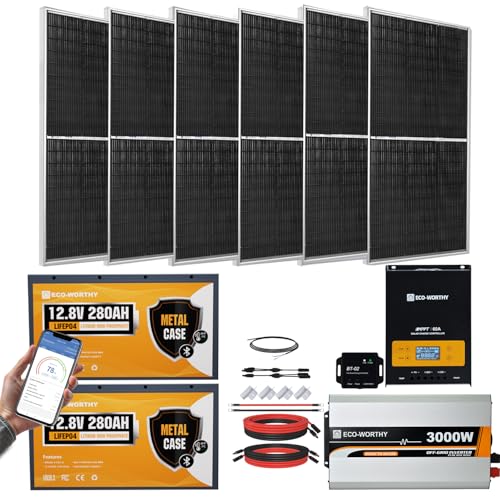
This high-capacity system is designed for full-time off-grid RV use. It features six 195W panels, a 60A MPPT controller, a 3000W inverter, and dual 12.8V 280Ah lithium batteries with a BMS. The two-axis tracker option boosts power generation by more than 40% in sunny conditions, supporting heavy-duty appliances and longer trips.
Who it’s best for: van lifers needing reliable, high-output electricity for extended periods. Why chosen: the combination of large storage, powerful inverters, and multi-source charging makes it a true off-grid powerhouse.
Buying Guide: Key Purchase Considerations
- Energy needs: Assess daily watt-hour consumption and pick a kit that comfortably covers it, with headroom for peak loads.
- System type: Choose PWM for simple setups or MPPT for higher efficiency in variable light and long-term usage.
- Storage capacity: LiFePO4/Li-ion batteries offer longer lifespans and better deep cycling; consider total storage (Ah) at 12V or higher if needed.
- Expansion potential: If you plan to add appliances, select a kit with extra capacity, mounting options, and modular expandability.
- Durability: Look for weatherproof frames, corrosion resistance, and protective enclosures for off-road conditions.
- Installation footprint: Measure roof space and consider weight limits. Heavier systems may require reinforced mounting.
- Inverter size: Ensure the inverter can handle peak startup currents for devices like refrigerators or air conditioners.
Choosing Between Kit Styles
- All-in-one kits: Great for beginners who want a complete, ready-to-install package with minimal shopping.
- Panel-plus-controller kits: Good for expanding an existing system or if you want more flexible component choices.
- Premium high-output kits: Best for full-time van dwellers with demanding power needs and larger installation spaces.
Installation Tips
- Mount panels with proper tilt or tracking (if included) to maximize sun exposure.
- Wire runs should be minimized and organized to reduce losses; label cables for easy troubleshooting.
- Follow battery safety guidelines: avoid short circuits, and use appropriate fusing close to the battery bank.
- Ventilate enclosed spaces when charging Li-ion or LiFePO4 batteries to manage heat.
- Perform periodic checks on connectors and seals to prevent corrosion and water ingress.
FAQ
What size solar kit is best for a small RV with basic needs?
A 200W–400W panel kit with a 30A PWM or MPPT controller and a LiFePO4 battery often covers lighting, fans, and small electronics.
Do I need an inverter in every kit?
Most complete kits include an inverter if you plan to run AC appliances. If you only use DC devices, you can skip or reduce inverter size.
Is MPPT worth the extra cost?
Yes for variable light conditions or larger systems, as MPPT controllers optimize charging efficiency and speed.
Can I expand a starter kit later?
Many kits are modular. You can add more panels, batteries, or a larger controller as power needs grow.
What’s the typical daily output from a 200W panel kit?
Daily output depends on sunlight and location but commonly ranges around 800 Wh under good conditions.
What maintenance is required for solar panels on a camper?
Keep panels clean, inspect wiring and seals, and ensure mounting hardware stays tight after travel or vibration.