Best Buzz in Entry System for Access Control
Choosing a reliable buzz-in entry system is essential for secure, efficient building access. This article compares five notable options, highlighting key features, installation considerations, and how they fit common business environments—from small offices to retail spaces. Each product has distinct strengths in sound, sensing, and control capabilities to suit different security goals and wiring preferences.
Summary of chosen products
| Product | Brand | Core Use | Power & Connection | Special Notes |
|---|---|---|---|---|
| UHPPOTE 75dB Mechanical Buzzer | UHPPOTE | Entry buzzer for buzz-in, alarm-style alert | 12VDC, leads included | Pack of 5; strong 75dB sound |
| Safeguard – Wired Door Buzzer | Safeguard Supply | Business door entry chime with motion sensor | Plug-in transformer power | USA-made; no batteries |
| Visionis VIS-BZ-100 Piezo Alert | Visionis | Compact buzzer for access control | 24VDC typical | Low current; 90dB SPL at 30 cm |
| MENGQI-CONTROL TCP/IP One Door System | MENGQI-CONTROL | One-door access with card/PIN | 110V power supply | Memory for up to 20,000 users |
| MENGQI-CONTROL Four Doors System | MENGQI-CONTROL | Multi-door access with RFID/PIN | 110V power supply | Large-scale management features |
UHPPOTE Mechanical Buzzer Set for Buzz-In Systems

The UHPPOTE buzzer is designed for access-control buzz-in systems requiring a loud, clearly audible alert. The unit operates at 12VDC and delivers a 75 dB sound level, enabling reliable notification for staff and visitors. Each buzzer is supplied with 100 mm/4″ leads, making wiring straightforward for standard electric door entry installations. Ideal for small to medium office lobbies or entry vestibules where a robust audible cue is essential to prompt action or door release signals.
Key compatibility and installation notes: these buzzers are typically wired into an access control panel or door strike circuit. The 12VDC input makes them compatible with common door access hardware. The included leads reduce the need for extra wiring adapters, streamlining setup. When planning, consider ambient noise levels and distance from the control panel to ensure the 75 dB output remains effective across the entry area.
Safeguard Wired Door Buzzer With Motion Sensing
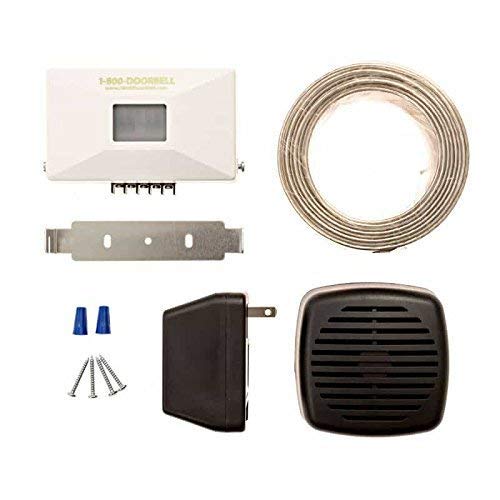
This wired door buzzer emphasizes reliability for business environments that prefer continuous operation without batteries or wireless signals. The system uses a plug-in transformer and a passive motion sensor to trigger a door chime when entry occurs. It eliminates battery maintenance and reduces interference concerns common with wireless devices. It is well-suited for convenience stores, offices, and retail spaces that want a simple, hard-wired entry alert.
The installation is designed to be user-friendly, with straightforward wiring between the PIR sensor and the door chime speaker. The device is positioned as a USA-made, precision-built solution for enterprises seeking a sturdy, low-maintenance entry alert. Applications include storefronts, lobbies, break rooms, and back-office entrances where a visible door event notification is required without relying on battery-operated components.
Visionis Piezo Alert Buzzer for Access Control

The Visionis VIS-BZ-100 is a compact piezo buzzer designed for access-control installations requiring low power consumption and small footprint. It features simple installation with two 3 mm screw holes and includes reverse polarity protection for added durability. Operating around 24VDC (typical) with a current draw near 20 mA, it delivers a 90 dB SPL at a practical 30 cm, ensuring clear audible signaling for door entry events. Its small diameter fits tight spaces behind control panels or entry kiosks.
Design considerations include mounting location and amplifier compatibility. The device’s low current draw helps minimize power requirements for larger systems, making it a practical choice for retrofit projects or new installations where space and energy efficiency are priorities. It is suitable for small businesses and multi-tenant facilities seeking a reliable, unobtrusive alert component.
MENGQI-CONTROL TCP/IP One Door Access System

This single-door access control kit offers card or PIN-based entry with TCP/IP connectivity. It supports memory to store up to 20,000 users and up to 100,000 logs, making it suitable for mid-sized facilities that require audit trails. The system can auto-open/close at preset times and allows configurable access rules to determine who can enter at specific times. An exit button is included for straightforward egress, and the unit integrates with a standard 110V power supply, easing installation in new or existing networks.
Considerations for this platform include network reliability, data management, and integration with existing security software. The ability to download and review entry histories supports compliance and security investigations. It is well-suited for offices, healthcare reception areas, and small retail locations where centralized control and recordkeeping are valued without complex multi-door management.
MENGQI-CONTROL Four Doors Access System

The four-door system expands access control to multiple entry points, including cards, key fobs, and PINs for each user. It supports memory for up to 20,000 users and 100,000 logs, with the ability to generate reports through professional management software. The system offers flexible timing controls, enabling auto open/close across any day and time, and provides detailed access authorization by door and time window. The electric magnetic lock has a high holding force, enhancing door security for larger facilities such as offices or schools.
When evaluating multi-door systems, assess scalability, network requirements, and software compatibility with your security ecosystem. This option suits larger organizations, campus buildings, or multi-tenant facilities that need centralized credential management, robust audit capabilities, and dynamic scheduling across several entry points.
Buying Guide: Key Considerations For Buzz-In Entry Systems
Purpose and environment: Match the system to your space. Small offices may benefit from single-door solutions with simple wired buzzers, while retail or multi-tenant buildings often require multi-door, networked access control with audit trails.
Power and wiring: Evaluate power sources (12V DC vs 24V DC vs 110V AC) and wiring complexity. Wired solutions tend to be more stable in high-traffic environments, while wireless options can simplify retrofits.
Audible signaling: Consider sound levels, tone variety, and enclosure placement. Higher dB ratings improve reach in noisy lobbies but must be balanced with occupant comfort.
Access control features: Look for memory capacity (number of users and logs), auto open/close schedules, and time-based access rules. TCP/IP or networked systems enable remote management and centralized logging.
Durability and mounting: Check for weather resistance if outdoor or semi-outdoor deployment is required. Small form-factor buzzers fit tighter installation spaces behind kiosks or control panels.
Compatibility and integration: Ensure compatibility with existing door strikes, readers, and software. Some systems offer native integration with professional security platforms, while others provide basic standalone operation.
Maintenance and support: Consider manufacturer reliability, availability of spare parts, and US-based manufacturing or local service options. Long-term support is valuable for business-critical entry systems.
Security posture: For higher security, prioritize multi-door systems with detailed access logs, strong authentication (cards, PINs, biometrics if applicable), and robust hold-force in door locks. For low- to mid-risk environments, simpler wired buzzer and chime configurations may suffice while delivering clear entry cues.
Pricing and budgeting: While prices vary, plan for installation costs, cabling, and potential electrician labor for wired systems. Compare total cost of ownership across systems with similar features to determine best value.