Best Breaker Style Surge Protectors for Whole-Panel Protection
When safeguarding a home’s electrical system from power surges, a breaker-style surge protector installed at or near the panel offers strong, centralized protection. This guide highlights five top options that are best for whole-panel or near-panel installations, explaining who each product is best for and why. Ideal buyers include homeowners upgrading a main panel, those adding protection to new builds, and users seeking a cleaner, centralized surge solution rather than individual outlet protectors.
| Product | ||||
|---|---|---|---|---|
| Eaton BRNSURGE Type BR | Breaker-style Surge Protective Device | 18 kA per phase | Single-phase panels needing BR protection | Requires compatible BR panel spaces |
| Eaton BRPSURGE | Breaker-style Type 2 SPD | 28 kA? (3rd party data) | Whole-system protection for 120/240 VAC | LED status indicator |
| Siemens QSPD2A035B | BoltShield Indoor SPD | 35 kA per phase | Siemens load centers | Visual status indicators |
| Square D HOM2175SB | HOM SurgeBreaker | 25 kA | Square D Homeline panels | LED indicator |
| ABB THQLSURGE2 | Type 1 SPD | 25 kA per phase | Whole-house or main panel protection | Plug-on installation, LED indicators |
Eaton BRNSURGE Type BR Whole-Panel SPD
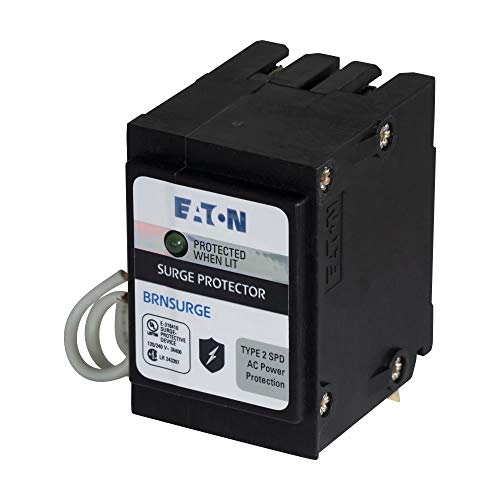
The Eaton BRNSURGE is a Type BR SPD designed for use with two branch circuit spaces and offers 18 kA surge protection. Best for homeowners upgrading an existing BR-panel or adding protection to a single-phase panel that supports BR devices. It provides straightforward, plug-in style installation for localized surge defense. A potential limitation is compatibility: ensure your panel accepts BR-type devices and has available spaces before purchasing.
Eaton BRPSURGE Breaker Surge Device

The Eaton BRPSURGE is a Type 2 SPD designed to protect the entire downstream electrical system at the panel level. It uses a 2-pole, 1-phase configuration and includes an LED indicator for operational status. This option is best for users seeking robust, centralized protection across a whole home or office, especially when upgrading to modern Type 2 protection. A limitation is that compatibility with older panel models may require professional installation checks.
Siemens QSPD2A035B 35 kA BoltShield SPD

The Siemens QSPD2A035B offers 35 kA per phase protection and is designed to fit into existing Siemens load centers. Its standout feature is clear green/red mechanical indicators to show protection status, providing quick visual confirmation without relying on LEDs. This model is preferred for Siemens-based systems where easy status checks matter. It may be best avoided for non-Siemens panels unless a compatible model is found.
Square D HOM2175SB Homeline SurgeBreaker

The Schneider Electric HOM2175SB SurgeBreaker is compatible exclusively with Square D Homeline load centers and provides equal protection across circuits and receptacles. It includes an LED indicator for status. This option is best for homes already using Square D Homeline panels, ensuring seamless integration. It’s less suitable for non-Homeline panels, where compatibility could be an issue.
Buying Guide: Key Considerations for Breaker-Style Surge Protectors
What should you check before buying a breaker-style SPD? Consider panel compatibility, protection rating, installation method, and status indicators. The right choice depends on your panel brand, desired surge capacity, and whether you prefer a plug-on, retrofit, or OEM-branded protection device.
How to choose by panel type and compatibility
Choose an SPD that explicitly lists compatibility with your panel brand (BR, QP, HOM, etc.). For Siemens, Siemens QSPD models integrate with their load centers; Square D HOM models work best with Homeline panels. ABB’s Type 1 SPD is designed for broader whole-house protection with flexible installation, while Eaton offers BR and BR/TYPE 2 options for different panel configurations.
What surge protection rating matters
Look for the per-phase surge rating and the number of spaces the device uses. Higher ratings generally indicate stronger protection against brief, high-energy surges. If you want centralized protection across the entire system, a Type 2 or Type 1 SPD installed at the main panel is typically more effective than a plug‑in device at a outlet level.
Indicator types and maintenance
LED indicators provide ongoing status, but some devices use mechanical visual indicators. Consider how easy it is to verify protection and plan for periodic inspection as part of home maintenance. Some models offer visual indicators without requiring electrical tests.
Professional installation considerations
Breaker-style SPDs often require proper panel mounting and secure wiring. If you are not experienced with electrical work, hire a licensed electrician. Panel compatibility, mounting, and adherence to local codes are essential for safe, compliant installation.
Limitations and cautions
Not all SPDs fit every panel. Confirm space availability and correct type before purchasing. Some devices may require additional hardware or a service upgrade to accommodate higher surge ratings. Always follow manufacturer installation instructions and electrical codes.
Who should consider a breaker-style SPD
Homeowners seeking centralized surge protection at or near the main panel, especially when upgrading an older electrical system, should consider breaker-style SPDs. These protect all downstream circuits, reducing risk across appliances and electronics. They are particularly suitable for new builds, renovations, or areas with frequent weather-related surges.
Quick comparison snapshot
- Best for Siemens users: Siemens QSPD2A035B with clear status indicators.
- Best for Square D Homeline panels: Square D HOM2175SB with LED status.
- Best all-around plant-wide option: ABB THQLSURGE2 for Type 1 protection.
- Best for BR panels: Eaton BRNSURGE for BR installations.
- Best for overall Eaton ecosystem: Eaton BRPSURGE for comprehensive protection.
FAQ
- What is a breaker-style surge protector?
It is a surge protection device installed at or near the circuit breaker panel, designed to shield the entire electrical system downstream from surges.
- Do I need a professional to install one?
Installation often requires panel access and knowledge of electrical codes; a licensed electrician is advised for safety and compliance.
- Will a Type 1 SPD protect all my devices?
Type 1 devices protect at the service entrance and provide broad protection; some setups also use Type 2 or additional devices for enhanced coverage.
- Can I mix brands in my panel?
Compatibility varies by panel model; mixing brands is generally discouraged unless specifically supported by the panel manufacturer.
- How do I verify protection status?
Use the device indicators (LED or mechanical) and refer to your product manual for status meanings and maintenance intervals.