Best Breaker Panel Generator Interlock Kits for Safe Backup Power
When safeguarding a home against power outages, a generator interlock kit helps you safely backfeed power to selected circuits without backfeeding the utility grid. The right interlock ensures main and generator breakers cannot be engaged at the same time, protecting appliances, electrical panels, and installers. This guide reviews five top interlock kits compatible with common panel brands and models, highlighting compatibility, spacing requirements, installation notes, and safety benefits. The listed items prioritize reliability, clear labeling, and straightforward installation for American homes.
| Brand | Model Compatibility | Spacing (inches) | Key Benefit |
|---|---|---|---|
| Natupal | Square D QO/Homeline 150/200 A | 1 3/8 | Clear interlock to safely backfeed |
| EXCELFU | Eaton Cutler Hammer BR/CH (150/200 A) | 1 1/4 – 1 7/16 | Safe, reliable backfeed and outage readiness |
| XMK | Siemens/Murray 150/200 A | 7/8 – 1 1/4 | Prevents simultaneous mains/generator power |
| QYZZRS | Eaton GE/General Electric panels (various 100–200 A) | 1¼ – 2½ | Versatile safety interlock for generators |
| Natupal | Square D QO/Homeline 150/200 A | 1 3/8 | New version with updated components |
Natupal Interlock Kit for Square D QO or Homeline
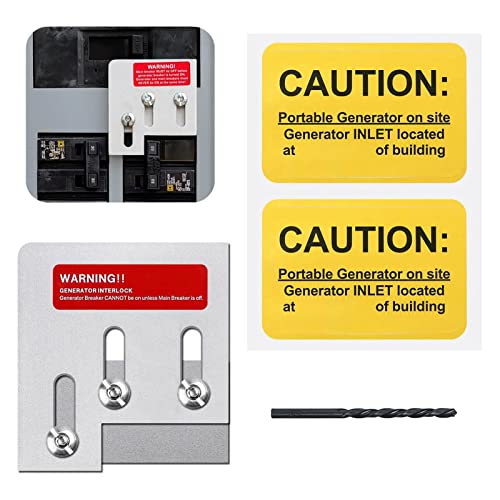
The Natupal interlock kit is designed for Square D QO or Homeline panels with 150 or 200 amp ratings. It requires 1 3/8 inches of spacing between the main and generator breakers. This kit aims to prevent accidental backfeeding by aligning the main and generator breakers so they cannot be engaged at the same time. Its installation aligns with standard interlock practices and supports safe generator integration during outages. The kit is positioned as a practical solution for homeowners seeking a reliable backup power setup with minimal risk to appliances and the electrical system.
Compatibility notes emphasize standard QO/Homeline configurations commonly found in American homes. The interlock kit is marketed as a safety measure to ensure power delivery to essential circuits during outages, while avoiding the hazards of improper backfeed. For best results, follow the included installation notes and verify exact main/generator breaker spacing on your panel model before installing.
Key considerations
- Ensure panel model matches QO or Homeline lineups on the product page.
- Measure spacing accurately to match the 1 3/8″ requirement.
- Follow screws and alignment guidelines to avoid misalignment during testing.
EXCELFU Interlock Kit for Eaton BR/CH Panels

The EXCELFU interlock kit supports Eaton Cutler Hammer BR and CH series, including 150 and 200 amp panels. It specifies a spacing range of 1 1/4 to 1 7/16 inches between the main breaker and the branch/generator breaker, ensuring safe backfeed during outages. The kit is described as a cost-effective safety solution for powering essential home circuits while maintaining a simple install process. It highlights compatibility with plug-in neutral configurations in certain BR and CH panels, which can influence how the neutral is connected during installation.
Installation and safety details emphasize preventing simultaneous mains and generator power. The kit is positioned as versatile for outage readiness, supporting portable generators while preserving the integrity of the home electrical system. Prospective buyers should confirm their exact panel model variant and maintain proper clearance around the panel during work.
Key considerations
- Check panel compatibility with BR or CH series models.
- Confirm spacer measurement falls within 1 1/4″ to 1 7/16″ range.
- Plan for safe generator connection and routine testing prior to outages.
XMK Interlock Kit for Siemens/Murray Panels

The XMK interlock kit is designed for Siemens or Murray panels rated at 150 or 200 amps. It recommends a spacing of 7/8 to 1 1/4 inches between the main and branch breakers. The kit is described as a safe, reliable option to backfeed a generator to household circuits while preventing simultaneous power to mains and generator. It emphasizes preventing accidental energizing of both sources and enabling safe operation of essential appliances during a power outage. The kit’s installation steps stress proper alignment and verification to avoid installation errors.
This option is suitable for homeowners using Siemens/Murray panels with the appropriate spacing, and it highlights general safety principles: ensure the interlock physically blocks both breakers when engaged and that the generator is started only after proper interlock engagement. Always verify wiring diagrams and model-specific instructions before installation.
Key considerations
- Verify panel brand and model compatibility (Siemens/Murray 150/200 A).
- Measure spacing to confirm 7/8″–1 1/4″ range.
- Plan a test sequence to ensure safe disengagement of mains when generator is active.
QYZZRS Interlock Kit for Square D or GE Panels

The QYZZRS interlock kit covers Square D QO/Homeline as well as GE 150/200 amp panels. It notes a spacing of 1 3/8 inches between the main and generator breakers, aligning with standard interlock configurations for these brands. The kit includes installation screws and guidance to align components accurately, along with procedural labeling for startup and safety reminders. The stated purpose is to safely direct generator power to home circuits while ensuring utilities and appliances are protected from backfeed hazards.
Users should follow the included installation notes and conduct a careful test before actual generator use. The kit is presented as a practical solution for households seeking dependable power during outages, with emphasis on a straightforward installation workflow and robust safety checks.
Key considerations
- Confirm the panel is Square D QO/Homeline or GE 150/200 A as specified.
- Ensure 1 3/8″ spacing is achievable on the panel model.
- Adhere to installation sequence and safety labeling for proper operation.
Natupal Updated Interlock Kit for Square D QO/Homeline

This Natupal kit is described as an updated version for Square D QO/Homeline 150/200 amp panels, maintaining the 1 3/8 inch spacing between main and generator breakers. It emphasizes a professional, reliable interlock design to direct generator power safely to home circuits. The kit is marketed as enabling access to essential appliances during outages, with updated components intended to improve installation reliability and durability over earlier versions.
Practical notes highlight standard safety concerns, including secure attachment of the interlock and proper alignment before testing. Prospective buyers should cross-check the panel’s exact model and verify that the spacing and compatibility match the kit’s specifications to ensure a smooth installation process.
EXCELFU Interlock Kit for GE 150/200 A Panels

This EXCELFU interlock kit targets GE 150 and 200 amp panels, offering a safe method to backfeed during outages. It emphasizes spacing of 1 1/4 inch between the main and branch breakers and stresses a safe, reliable configuration that prevents simultaneous power from the mains and the generator. The kit includes components and instructions designed to facilitate installation and testing, with a focus on keeping home appliances powered while minimizing backfeed risks.
Installation guidance highlights testing the setup to confirm correct operation and safe disengagement of the mains when the generator is active. Buyers should verify panel compatibility, spacing, and neutral handling on their specific GE panel model, along with following all safety precautions during installation and startup.
Buying Guide: Key Purchase Considerations
- Panel compatibility: Confirm the kit supports your exact panel brand, series (QO, Homeline, BR, CH, Siemens/Murray, GE), and amperage (150/200 A common in these products).
- Spacing accuracy: Interlock spacing is crucial to prevent simultaneous mains and generator operation. Measure your panel and compare with kit specifications (ranging from 7/8″ to 1 3/8″).
- Installation notes: Some kits include screws, test steps, drill bits, and labels. Follow the manufacturer’s installation sequence carefully to avoid misalignment or lost safety features.
- Safety labeling and testing: Look for kits that provide startup procedures labels and clear safety reminders to guide first-time users through testing.
- Neutral and grounding considerations: Verify whether the kit requires a neutral connection or specific grounding configurations, as some panels have different neutral handling needs.
- Durability and updates: Updated versions may offer improved components and longer service life; compare version notes to determine which aligns with your panel model and upgrade plans.
- Cost vs. benefits: While prices are not listed here, weigh the upfront cost against long-term safety, reliability, and ease of operation during outages.
- Professional vs. DIY installation: Some users may prefer professional installation for complex panel configurations, while others with home electrical experience may install simpler kits following the provided guidelines.
- Warranty and support: Check warranty terms and vendor support, especially for safety-critical equipment used during outages.