Best Bolt-in Circuit Breakers for Safe, Reliable Panel Protection
Answering the need for sturdy, bolt-in circuit breakers—these units bolt directly to a panel’s bus bars for secure, vibration-resistant connections. This guide targets homeowners and business owners seeking durable, easy-to-install protection for electrical circuits. The top picks below emphasize UL listings, clear mounting options, and suitable amperage for common residential and light commercial layouts. A concise buyer’s table follows to help compare key specs at a glance.
| Product | Amperage / Poles | Voltage | Mounting | |
|---|---|---|---|---|
| Siemens B120 20-Amp Single Pole | 20A / 1-pole | 120V | Bolt-in | UL Listed |
| Siemens B220 Bolt-in Circuit Breaker | 20A / 2-pole | 120/240V | Bolt-in | 10KAIC interrupt rating |
| Siemens B120H 20-Amp | 20A / 1-pole | 120V | Bolt-in | 22KAIC, UL Listed |
| Siemens B215 15-Amp | 15A / 2-pole | 120V | Bolt-in | 10KAIC, insta-wire |
| Siemens B250 50-Amp | 50A / 2-pole | 120/240V | Bolt-in | Panel board mounting |
Siemens B120 20-Amp Single Pole Bolt-in Breaker

Best for: Simple, small-load circuits in residential panels. The B120 is a straightforward 1-pole unit suitable for typical lighting or outlet circuits. It’s a compact bolt-in design that helps ensure a stable connection and quick replacement in standard U.S. panels.
Why selected: It is UL Listed and designed for panel board mounting, offering a reliable, code-compliant option for everyday residential protection. The single-pole configuration keeps it easy to install for standard 120V circuits.
Limitation: Limited to 20 amps and single-pole applications; consider a higher or multi-pole model for multi-wire branch circuits or higher loads.
Siemens B220 Bolt-in Circuit Breaker, 2-Pole, 20-Amp

Best for: General-purpose 20-amp circuits that require 2-pole protection, such as multi-wire branch circuits or 120/240V equipment feeds. The 2-pole design provides both hot legs with common-trip protection.
Why selected: The 10KAIC interrupt rating supports typical residential and light commercial protections, and the bolt-in mounting promotes secure bus-bar connections in compatible panels.
Limitation: Ensure your panel is compatible with this model’s profile and mounting style to avoid fit issues during retrofit.
SIEMENS B120H 20-Amp Single Pole Bolt-in Breaker

Best for: Upgrading or replacing a single-pole protection device in 120V circuits, especially where higher interrupt capacity is desirable.
Why selected: It carries a 22KAIC interrupt rating, offering enhanced protection against faults. The bolt-in mounting ensures solid contact with panel bus bars.
Limitation: Like other single-pole breakers, it’s limited to 120V circuits; plan for 240V circuits with a two-pole unit if needed.
Siemens B215 Bolt-in Circuit Breaker, 2-Pole, 15-Amp
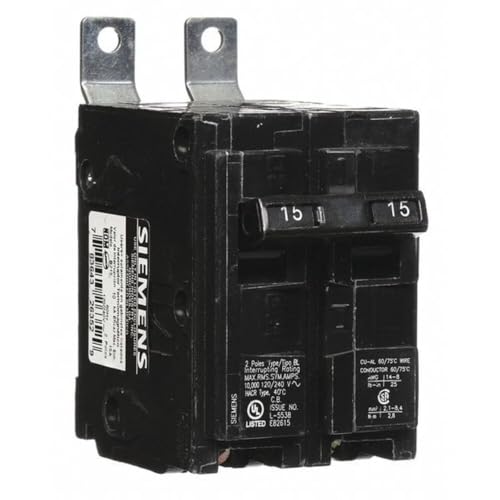
Best for: Balanced 120/240V load centers with lower-demand circuits such as lighting groups or electronics panels needing 15A protection.
Why selected: The B215 offers a combination of 15A rating, 2-pole configuration, and features like instawire, which can simplify installation in compatible panels and save time during wiring.
Limitation: Moderate current rating; for high-draw devices, consider a higher amp or additional breakers to distribute load appropriately.
Siemens B250 50-Amp Double Pole Bolt-in Breaker

Best for: Higher-load feeders and main circuits within larger panels or service equipment, where 50A protection is required for substantial subpanels or feeder lines.
Why selected: The 50A, 2-pole bolt-in design provides robust protection with convenient mounting, suitable for demanding residential service panels or light commercial installations.
Limitation: Higher current rating means fewer suitable applications; ensure feeder and panel ratings match the 50A specification to avoid over-sizing.
Siemens B230 Panelboard/Bolt-On Mount Type BL (2-Pole, 30A)

Best for: Medium-load 30A circuits in panelboards where bolt-on mounting is preferred and the panel supports this model family.
Why selected: The B230 line offers compatibility with specific panelboard configurations, and the “Made in Mexico” note sometimes aligns with supply-chain expectations for certain projects.
Limitation: Confirm panel compatibility; some panels require specific bussing or mounting dimensions that vary by model and series.
Buying Guide: Bolt-In Circuit Breaker Essentials
What is a bolt-in breaker and when should I use one?
A bolt-in breaker attaches directly to the panel’s bus bars using bolts, providing a secure, vibration-resistant connection. Use bolt-in units when your panel is designed to accept this mounting style and you need reliable protection for fixed loads in a home or small commercial setting.
Key factors to consider
- Interruption rating (KAIC): Higher values offer more protection during faults. Match to your panel’s fault current level.
- Poles and amperage: Choose single-pole for 120V circuits and two-pole for 120/240V loads or multi-wire branch circuits. Ensure the amperage matches the circuit rating.
- UL listing and panel compatibility: Verify UL certification and confirm the breaker model is listed for use in your panel family and bus type.
- Installation feasibility: Bolt-in breakers require proper mounting space and accessible bus bars; ensure clearance and panel space.
- Future needs: If planning panel upgrades or additional circuits, consider higher-capacity or multi-pole options to consolidate replacements.
Which brand or model should I choose?
Siemens bolt-in breakers are common in many residential panels and offer broad model coverage (1-pole and 2-pole options with varying amperages). When evaluating non-Siemens models (ABB/GE/Schneider Electric), ensure they are compatible with your panel’s mounting type and bus design to avoid fit issues and ensure proper protection.
Common installation cautions
- Turn off main power before handling any panel components.
- Wear appropriate PPE and follow local electrical codes.
- Do not mix breakers of different brands in a single panel unless explicitly listed as compatible.
Frequently asked questions
- What is the difference between single-pole and two-pole breakers? Answer: Single-pole protects 120V circuits with one hot leg; two-pole protects 120/240V circuits with two hot legs and provides common-trip protection.
- Can I mix brands in my panel? Answer: Only if the panel manufacturer lists the other brands as compatible; otherwise, use the same brand family to ensure proper fit and ratings.
- What does KAIC mean? Answer: Kilampere Interrupting Capacity – the maximum short-circuit current the breaker can safely interrupt.
- How do I know which amperage I need? Answer: Match the breaker’s amperage to the circuit’s ampacity as labeled on the circuit and its wiring size.
- Are bolt-in breakers more secure than plug-in? Answer: Yes, bolt-in breakers typically offer more secure bus-bar connections and are less prone to loosening from vibration.
- Do I need a professional to install bolt-in breakers? Answer: For safety and code compliance, consult a licensed electrician if you’re unsure about panel compatibility or circuit loads.