Best Boat Battery Charger Plug Options for Shore Power
Answering the common buyer question: which boat battery charger plug setup offers reliable shore power and weatherproof reliability? This guide highlights top 5 options designed for boats, trailers, and RVs that need safe, easy access to 125V AC power. Each product fits common marine electrical configurations, with varying cord lengths and mounting styles. Ideal buyers include boat owners, weekend sailors, and outdoor enthusiasts who want a durable, plug-and-play inlet for charging batteries or powering onboard systems.
Summary table of selected products
| Product | Best For | Key Benefit | Cord/Power |
|---|---|---|---|
| NOCO GCP1 15A AC Port Plug | All-around marine use | Heavy-duty wiring, max conductivity | 16″ cord |
| NOCO GCP2 15A AC Port Plug | Dual extension needs | Dual 18″ cords for flexibility | Dual 18″ cords |
| Marinco 150BBI Marine On-Board Charger Inlet | Fiberglass/aluminum hull mounting | Low-profile, easy mounting | 15A, 125V |
| JacEnergy RV Shore Power Inlet Charger Plug | Rugged outdoor use | Integrated 16″ extension, weatherproof | 16″ extension |
| PlugSaf Shore Power Inlet | Cargo trailers and rugged environments | ETL/cETL listed, weatherproof cap | 18″ extension |
JacEnergy RV Shore Power Inlet Charger Plug

JacEnergy offers a 125-volt power inlet socket with an integrated 16-inch outdoor extension cord. The unit is designed for outdoor use with a pressure-fit rubberized cover to protect against the elements, making it suitable for boats, RVs, and trailers. The enclosure accepts a simple 2-inch drilling hole and is flush-mounted with three screws for a clean install. This option is best for buyers who want a rugged inlet with straightforward mounting and a long extension cord ready for marina or campground hookups.
Who this is best for: boaters needing a weatherproof, flush-mount inlet with an extended cord for flexible shore power access. Why selected: robust outdoor-rated design and easy installation. Caution: ensure the rubber cover remains intact to maintain water resistance in harsh conditions.
NOCO GCP1 15A AC Port Plug

NOCO GCP1 provides a 15-amp, 125-volt inlet with an integrated 16-inch outdoor extension cord. Its rugged, waterproof power inlet receptacle includes a pressure-fit rubberized cover for outdoor protection. The design emphasizes maximum conductivity with full-sized AC port prongs and heavy-duty 14 AWG copper wiring. Best for: boat owners needing a single, reliable inlet with a strong focus on conductivity and outdoor protection. Caution: consider your mounting space to ensure the flush installation aligns with hull or deck profiles.
NOCO GCP2 15A AC Port Plug
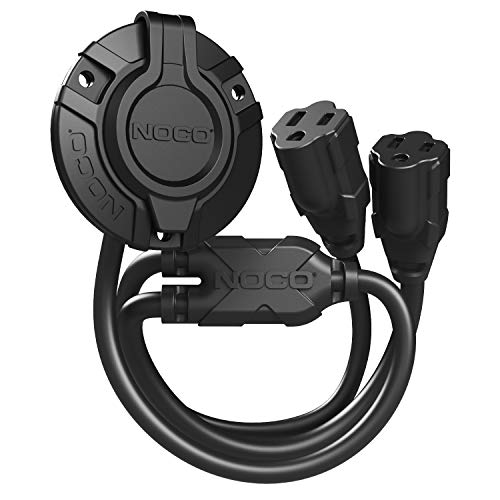
NOCO GCP2 adds a dual 18-inch integrated outdoor extension cord, doubling the reach for shore power connections. The inlet remains waterproof with the same rugged construction and a rubberized weather cover. It maintains peak performance with 15-amp capacity and 14 AWG copper wiring for strong power flow. Best for: boats needing flexible cord routing to multiple shore power sources or longer reach to a dock pedestal. Caution: ensure both cords are stored correctly when not in use to prevent entanglement or wear.
Marinco 150BBI Marine On-Board Charger Inlet

Marinco 150BBI is a dedicated 15A, 125V inlet designed for marine environments. It features a low-profile cap and easy mounting on fiberglass or aluminum hulls. The compact design suits vessels seeking a minimal footprint while maintaining reliable shore power access. Best for: boaters who prioritize a low-profile, hull-mounted inlet. Caution: verify mounting space and hull material compatibility for a secure installation.
Minn Kota MKR-21 AC Power Port

Minn Kota MKR-21 offers a thru-hull charging configuration that supports quick access to AC extension cords for shore power. It emphasizes no-cut installation and includes a watertight cover to protect the plug from corrosion when not in use on water. Best for: saltwater or freshwater boats where through-hull access and plug durability are priorities. Caution: ensure compatibility with the charger systems already installed on the boat and confirm through-hull routing feasibility.
Minn Kota MKR-23 AC Power Port

Another Minn Kota model focusing on thru-hull charging with a clean, no-cut installation. It uses a watertight cover and gasket to protect against corrosion when not in use. Best for: boaters who already use Minn Kota chargers and want a consistent, marine-grade inlet solution. Caution: verify the exact mounting depth and deck profile to avoid clearance issues with hull hardware.
PlugSaf Shore Power Inlet Plug

PlugSaf offers a 15 Amp, 125V inlet with an 18-inch outdoor extension cord and a weatherproof cap. The setup includes an ETL/cETL listing, corrosion-resistant copper wiring, and a recessed-mount design. Best for: cargo trailers or vessels needing a rugged, industry-listed inlet with straightforward installation. Caution: the extended cord may require additional storage space on smaller boats or trailers.
NOCO GCP2 15A AC Port Plug (Extended)
NOCO GCP2, already highlighted in detail, is included here to emphasize its flexibility with dual 18-inch cords when a longer reach is needed. It maintains the same waterproofing and high-conductivity attributes as the GCP1, making it a strong choice for boats requiring longer routing or multiple connection points. Best for: larger boats or setups needing extra cord length. Caution: ensure the connection points and cords are routed to avoid chafing or snag hazards during vessel motion.
Buying Guide: Key Considerations for Boat Battery Charger Plugs
- Cord length and routing: Longer cords offer greater flexibility but require proper storage and protection. Consider where the dock pedestal or shore power source is located relative to the battery charger inlet.
- Waterproofing and weather resistance: Outdoor-rated inlets with rubberized covers reduce moisture ingress. For saltwater environments, higher corrosion resistance is essential.
- Mounting style: Flush-mounted, low-profile, or thru-hull options affect installation complexity and hull integrity. Ensure compatibility with hull material and thickness.
- Electrical compatibility: 15A, 125V is standard for many marine chargers, but verify the inlet’s amperage and wiring gauge (e.g., 14 AWG) to match your charger or battery system.
- Safety certifications: ETL or cETL listings indicate compliance with safety standards. This is particularly important for trailer and trailer-mounted setups exposed to weather.
- Best-use scenarios: Some models excel for through-hull installations, others for trailer-mounted inlets or dockside power pedestals. Choose according to your vessel type and use case.
FAQ
- What is a shore power inlet used for on a boat? It provides a secure, outdoor-rated entry point for 125V AC power to charge batteries or run onboard systems.
- Can I install a shore power inlet myself? Yes, if you follow the manufacturer’s mounting instructions and use proper seals, drilling, and wiring practices. Consider professional help for through-hull or hull-mounted placements.
- What cord length should I choose? Longer cords offer flexibility for dock access or trailer setups, but ensure you can safely store and route them to avoid damage.
- Is a weatherproof cap necessary? Yes, a weatherproof cap protects against snow, ice, rain, and debris, preserving connection integrity in marine environments.
- Are these inlets compatible with battery chargers? Most 15A, 125V inlets are designed to supply power for battery chargers and onboard electronics, but confirm compatibility with your specific charger model.
- Do I need through-hull compatibility? If your setup uses through-hull charging, verify that the inlet design supports such routing and that the installation does not interfere with hull integrity.