Best Blue Sea Bus Bar Kits for Marine Electrical Systems
Blue Sea Systems offers durable bus bars and power distribution solutions designed for marine and RV electrical systems. This guide highlights five well-suited Blue Sea bus bar kits, outlining key specifications, installation considerations, and how each option fits different power needs. Use the buying guide below to compare materials, capacity, and mounting options to ensure reliable conductor organization and safe, efficient wiring on boats or mobile setups.
| Product | Series / Type | Max Voltage | Continuous Rating | Key Feature |
|---|---|---|---|---|
| Blue Sea Systems 2127 | MaxiBus BusBar | 300V AC / 48V DC | 250A | 4 studs, high-current capacity |
| Blue Sea Systems 2300 | Common BusBar | 300V AC / 48V DC | 130A AC / 150A DC | 10 screws, includes cover |
| Blue Sea Systems 2104 | PowerBar | — | 600A | Four 3/8″ studs, reinforced base |
| Blue Sea Systems 1990 | POWERBAR1000 | — | 1000A | Eight 3/8″ studs, two elevations |
| Blue Sea Systems 2722 | DualBus Plus | — | 150A | Two buses, 1/4″ & 5/16″ options |
Blue Sea MaxiBus 250A 4-Stud BusBar
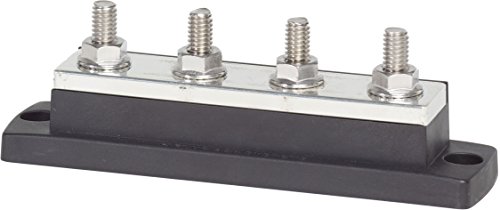
The MaxiBus bus bar delivers a high-current distribution solution with four terminal studs for straightforward parallel conductors. Its 250A continuous rating and a maximum voltage of 300V AC / 48V DC suit demanding 12-volt systems on larger vessels or mobile setups. The part number 2127 emphasizes robust copper connections and a sturdy build, with six 5/16″-18 terminal studs capable of handling multiple feeders and feeders with low resistance paths. A reliable choice for main power distribution and bus consolidation in mid-range electrical systems.
Blue Sea 2300 Common BusBar with Cover

The 2300 Common BusBar offers a compact, organized solution for distributing power in smaller systems. With a 300V max, it supports 48V DC operations and provides a 130A AC or 150A DC continuous rating. Ten screws (8-32 size) and a closeable cover promote neat routing, reduce exposure to terminals, and simplify maintenance. This unit is well-suited for classic sailboats or RVs where space is at a premium but a dedicated distribution point is still essential.
Blue Sea 2104 PowerBar with Four 3/8″ Studs

The 2104 PowerBar emphasizes high current capacity with four 3/8″ terminal studs and a reinforced polycarbonate base. Copper conductors on tin-plated copper maximize conductivity, supporting heavy loads across the bus. The base includes four mounting holes for secure installation with standard screws. This model suits larger electrical systems or equipment racks where high current flexibility and robust thermal performance are needed.
Blue Sea 2722 DualBus Plus 150A

The DualBus Plus 2722 features two bus bars with 150A capacity per unit, offering flexibility for separate circuits or dual supply feeds. This design supports a mix of terminal studs and screw terminals, permitting both 1/4″ and 5/16″ connectors as needed. By separating power channels, it helps reduce crosstalk and simplifies wiring layouts in complex electrical systems on boats or RVs. The compact profile facilitates installation in limited compartments while maintaining solid performance.
Blue Sea 2723 DualBus 150A With 4 x 5/16″ Stud
The 2723 DualBus provides a 150A capacity with a configuration featuring four 5/16″ studs and two screw terminals per bus. This layout supports high-current distribution alongside flexible mounting options. It is suitable for moderate to large electrical systems requiring straightforward bus separation and dependable connectivity. The included dimensions and build materials support durable installation in marine environments, with attention to corrosion resistance and mechanical stability.
Buying Guide: Key Considerations for Blue Sea Bus Bars
Choosing the right Blue Sea bus bar involves evaluating current capacity, voltage ratings, terminal types, and mounting options. High-current models like the 2104 PowerBar or 1990 POWERBAR1000 are ideal for systems with heavy loads or parallel feeders, while the 2300 and 2722 offer compact, organized solutions for mid-range applications. When selecting a unit, consider:
- Current Requirements: Match continuous rating to average and peak loads to avoid overheating.
- Bus Bar Layout: Decide between single or dual bus configurations based on circuit organization and future expansion.
- Terminal Compatibility: Check stud sizes (3/8″, 1/4″, 5/16″) and screw terminals to accommodate existing conductors.
- Voltage Rating: Ensure max voltage aligns with system voltage (DC or AC) and safety margins.
- Mechanical Fit: Assess mounting hole patterns and base construction for secure installation in tight spaces.
- Materials and Finish: Look for corrosion-resistant bases and copper conductors for dependable conductivity.
- Maintenance: Choose covers or enclosures when terminals are exposed to moisture or debris.
For complex installations, consider combining dual-bus configurations with a main MaxiBus or PowerBar to organize feeders by function (e.g., propulsion, house loads, navigation). Always follow manufacturer instructions for mounting orientation, wiring torque, and protective clearances to maintain electrical safety and performance.