Best Belt Tension Frequency Meters for Industrial Belts and Timers
When selecting a belt tension frequency meter, the goal is accurate, repeatable measurements across common belt types. These devices help prevent premature wear, maximize efficiency, and reduce downtime. The top picks below are suitable for maintenance technicians, belt technicians, and plant engineers who need fast, non-contact measurements and clear data storage. The table compares key capabilities to help you choose quickly.
| Product | Best For | Frequency Range | Data Storage | Notes |
|---|---|---|---|---|
| YUANRI Sonic Belt Tension Meter | General-purpose industrial belts | 10 Hz – 5000 Hz | 999 data records | Adjustable mass, width, span |
| PLAYOCCAR Sonic Belt Tension Tester | Toothed, V-belts, and multiple belt types | 10 Hz – 5000 Hz | Not specified | Auto-dimming; energy-saving |
| Gates Unitta U-550 (YUNMOKH) | Multi-Ribbed V- and synchronous belts | 10 Hz – 5000 Hz | Not specified | Fast 0.2s measurement |
| HOJILA BTT-2880S | Budget-friendly, adjustable probe | ≤680 Hz | Stores up to 20 set readings | Lightweight, compact |
| QPKING Ultrasonic Belt Tension Tester | V-belts, timing belts, conveyors | 10 Hz – 5000 Hz | Stores 999 sets | Smart auto-shutdown; large TFT |
This list prioritizes accuracy, data handling, and versatility. Each model is described with who benefits most, plus practical caveats to help you decide.
YUANRI Sonic Belt Tension Meter
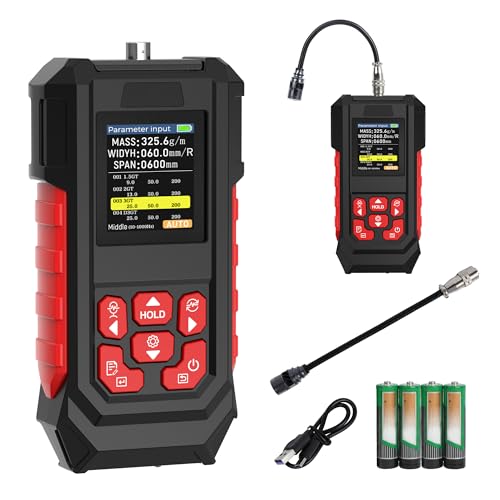
- Best for: Industrial technicians needing full parameter control. The meter adjusts Mass per unit length, Width, and Span to tailor measurements to specific belts.
- Why selected: It offers a wide data range, pre-loaded datasets for quick matching, and a high-precision probe for repeatable results.
- Limitation: Accurate testing requires correct input of mass, width, and span; incorrect data may skew results.
- Notes: Compatible with common belt families including V-belts, cloth-wrapped belts, and synchronous belts.
PLAYOCCAR Sonic Belt Tension Tester

- Best for: Teams needing compatibility with toothed, V-belts, and other belt types for accurate tension readings.
- Why selected: Emphasizes accuracy via acoustic sensing and compares favorably to traditional force-deflection methods.
- Limitation: Data storage specifics are not stated; plan to track measurements with your own logging if needed.
- Notes: Includes energy-saving features like auto-dimming and auto-shutdown to extend field use.
Gates Unitta U-550 Sonic Belt Tension Meter (U-508 Update)

- Best for: Multi-ribbed and synchronous belt applications where quick results are valuable.
- Why selected: Provides fast measurement times (0.2 seconds) and covers a broad frequency range up to 5000 Hz.
- Limitation: Details on memory capacity are not specified; users may need to rely on external logging for extensive data.
- Notes: Suitable for standard industrial belts; offers dual display for different units in some models.
HOJILA BTT-2880S Sonic Belt Tension Meter
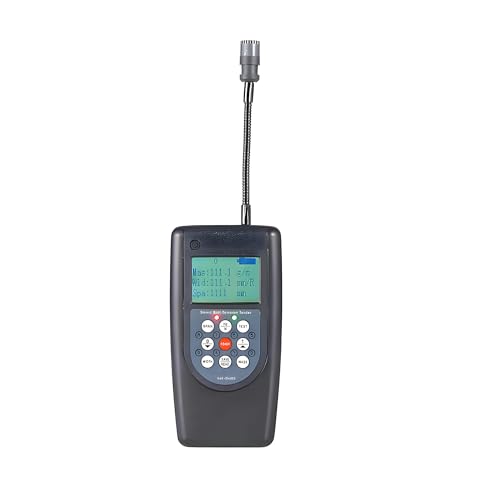
- Best for: Budget-conscious buyers who still need a reliable tension meter with adjustable probe.
- Why selected: Stores up to 20 set frequency readings, providing simple batch comparisons on-the-go.
- Limitation: Maximum frequency is 680 Hz, which may be limiting for high-frequency belt types.
- Notes: Lightweight and portable for field service work.
SULMILE BTT-2880S Sonic Belt Tension Meter
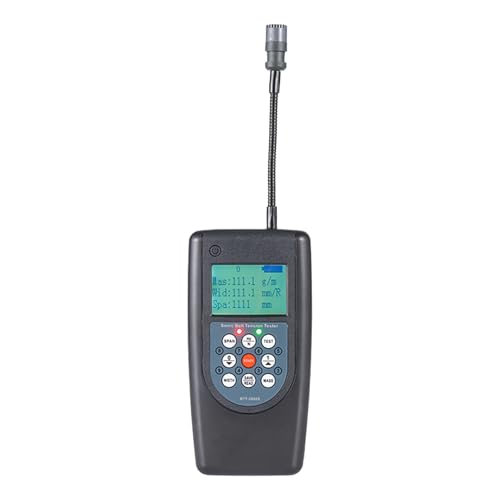
- Best for: Practical, field-ready device with a straightforward adjustable probe and 20-parameter memory.
- Why selected: The device stores up to 20 belt parameters for quick retrieval during maintenance rounds.
- Limitation: Frequency ceiling at 680 Hz may be insufficient for some high-speed belts.
- Notes: Specifics on materials and additional features are limited in the listed data.
CNNADA BTT-2880S Sonic Belt Tension Meter
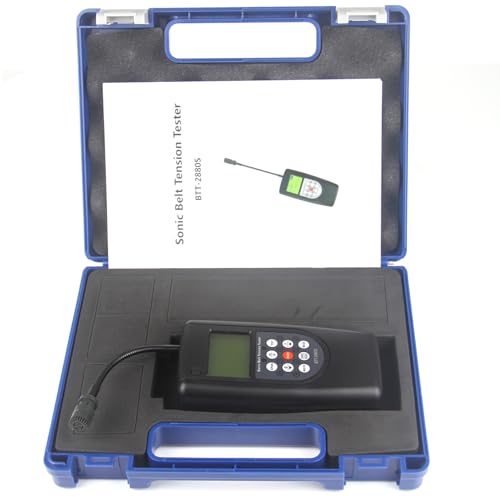
- Best for: Budget-oriented users requiring adjustable probes and simple parameter storage.
- Why selected: Similar capabilities to other 2880S models with ease of use and storage for 20 belt parameters.
- Limitation: Maximum frequency is 680 Hz; not ideal for very high-speed belts.
- Notes: Data presentation focuses on straightforward tension values and parameter storage.
U-508 Sonic Belt Tension Meter Gauge

- Best for: Operators seeking reliable tension measurements with a broad frequency scope up to 5000 Hz.
- Why selected: Emphasizes how tension data influences performance and maintenance planning, with acoustic measurement.
- Limitation: No explicit memory capacity is listed; plan to document results in your system.
- Notes: Targets various belt types, including V-belts and timing belts, for dependable data.
QPKING Ultrasonic Belt Tension Tester
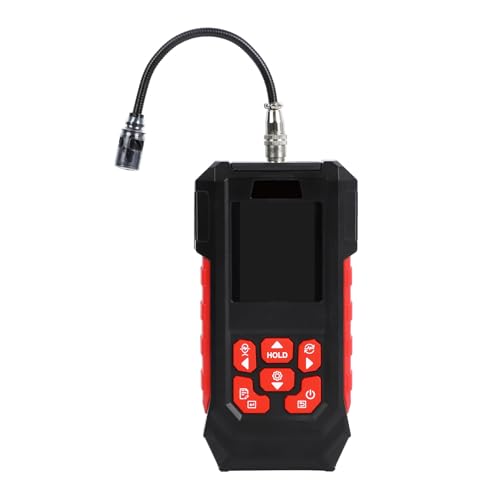
- Best for: Professionals who need 999 data set storage and a large, readable TFT display for in-field use.
- Why selected: Ultrasonic sensor supports a wide 10–5000 Hz range, with strong logging capabilities for diagnostics over time.
- Limitation: Requires AAA power; battery availability can impact field use if not carried.
- Notes: Features smart auto-shutdown and ergonomic design for one-handed operation.
Buying Guide
What features matter most when choosing a belt tension meter?
- Frequency range: Most belts operate across 10–5000 Hz. If you work with high-speed or precision belts, prioritize models with the full 10–5000 Hz range.
- Data storage: For maintenance programs, onboard memory (such as 999 sets) enables trend logging and machine-specific baselines without separate software.
- Memory and datasets: Quick data retrieval is valuable. Look for devices with pre-loaded belt datasets and the ability to customize mass, width, and span.
- Probe adjustability: A configurable probe helps accommodate different belt types and setups, improving accuracy and repeatability.
- Power and battery life: Auto-dimming and auto-shutdown extend field use, but ensure spare batteries are available for longer maintenance windows.
- Display clarity: A TFT LCD with backlight improves readability in dim or bright industrial environments.
- Compatibility: Ensure the device supports common belt categories such as V-belts, multi-ribbed belts, toothed belts, and conveyor belts used in your facility.
Practical Considerations
- Calibration: Regular calibration procedures help maintain measurement accuracy over time.
- Data integration: Consider whether the device’s data can be exported to your CMMS or maintenance logs.
- Portability: Field technicians benefit from compact form factors and one-handed operation.
Frequently Asked Questions
- What belt types can belt tension meters measure?
Most meters handle V-belts, timing belts, multi-ribbed belts, and synchronous belts. Check the model for exact compatibility. - Do these meters require contact with the belt?
- How many measurements should I take per belt?
- Is data storage necessary for maintenance programs?
- What is a typical testing time per belt?
No. These devices use acoustic/ultrasonic methods to measure tension non-invasively.
Take multiple readings at standard points, then average to reduce variability.
Yes. Onboard storage (e.g., 999 sets) aids trend analysis and preventive maintenance planning.
Many models provide results within a fraction of a second to a few seconds per test, depending on data entry needs.