Best Belt Driven Fan Motors for HVAC Upgrades
The belt-driven fan motor market offers a range of durable, reliable replacements for 48-frame, 115V systems. This guide highlights five top options that balance compatibility, performance, and value for typical American-home HVAC setups. Each product page includes key specs, reversible rotation options, and installation notes to help you compare choices objectively. Below is a quick summary table of the featured motors to aid your initial assessment.
| Product | Frame | Horsepower | RPM | Rotation | Notes |
|---|---|---|---|---|---|
| LEUNGOO GF2025 | 48 | 1/4 | 1725 | Reversible | Widely compatible with common Packard and GE replacements |
| CHIOWO GF2025 | 48 | 1/4 | 1725 | Reversible | Ball bearings; resilient cradle base |
| GW 1/4 HP | 48 | 1/4 | 1725 | Single phase | SF 1.35; 6.35A; ODP |
| Dayton 5K977 | 56Z | 1/4 | 1725 | Not specified | UL recognized, CSA certified |
| CHIOWO DL1056 | 48 | 1/2 | 1075 | 3-speed | Direct drive; compatible with AO Smith and GE OEMs |
LEUNGOO GF2025 Belt Drive Motor
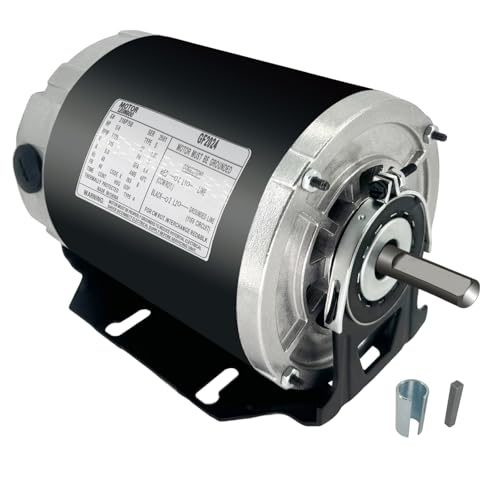
This 1/4 HP, 1725 RPM belt-driven blower motor is designed for 48-frame assemblies and 115V operation. It offers a 1/2 inch shaft diameter and supports reversible rotation, enabling installation flexibility in various HVAC configurations. The model lists compatibility with common replacements like Packard 45014 and multiple Emerson/GE equivalents, making it a convenient option for retrofits. With a 5.0A current rating and a robust 48-frame body, it is suitable for standard residential furnace blower applications where a belt drive is preferred for quieter operation and vibration dampening.
CHIOWO GF2025 Electric Fan Motor

Another 48-frame, 1/4 HP option, this CHIOWO model provides 1725 RPM at 115V with a 1/2″ x 1 1/2″ resilient cradle base shaft. It features a 3″ shaft height and reversible rotation, making it compatible with a variety of furnace blower setups. The motor emphasizes ball bearings for smooth operation and long life, which supports reduced noise and maintenance in typical home HVAC systems that use belt drive fans for easier belt replacement and alignment.
US Motors Belted Fan & Blower

This 1/2 HP, single-phase motor is designed for belt-driven blower applications. While not as common in smaller residential furnaces compared to 1/4 HP models, it provides robust performance for larger or demanding blowers where additional horsepower is beneficial. The product notes emphasize its origin in Mexico, with typical belt-drive compatibility and standard mounting features expected in US HVAC installations. Consider this option when a higher blower capacity is required in a belt-driven system.
GW 1/4 HP Belt Drive Motor

This 48-frame, 1/4 HP motor uses a single-phase 115V supply with a stated 1725 RPM and SF 1.35, drawing about 6.35A. It features a resilient cradle base and a flat shaft of 0.5 inches, with a 1.5 inch length shaft and a 0.453 inch diameter. The motor is designed for straightforward retrofit into typical residential furnaces, offering reliable performance with standard belt-drive configurations and a robust enclosure suitable for ducted air handling systems.
CHIOWO DL1056 Direct Drive Blower

The CHIOWO DL1056 is a direct-drive blower motor rated at 1/2 HP, 115 V, and 8.0 A. It offers 1075 RPM with three speeds and a 5-5/8 inch diameter, 48 frame, 1/2 inch shaft. The product supports compatibility with A.O. Smith, Fasco, GE and other OEM motors, providing a versatile solution for direct-drive furnace blower replacements. Reversible rotation and a 370-volt capacitor requirement are noted, which informs electrical setup and capacitor sizing for installation.
Buying Guide
Choosing the right belt-driven fan motor involves evaluating several key factors to ensure compatibility, efficiency, and longevity. Consider the following perspectives and purchase considerations:
- Frame size and mounting: Most residential belt-driven motors use a 48-frame or 56Z frame. Confirm mounting hole spacing and shaft diameter (commonly 1/2 inch or 5/8 inch) to match your blower assembly.
- Horsepower and RPM: 1/4 HP motors at 1725 RPM are common for standard furnaces, balancing airflow with efficiency. Higher horsepower (like 1/2 HP) may be necessary for larger blowers or higher static pressure systems.
- Electrical specs: Verify voltage (usually 115V in US homes) and current draw (amps) to ensure your wiring, fusing, and capacitor sizing are appropriate. Some models require a capacitor (e.g., 10–15 μF) for proper operation.
- Rotation direction: Reversible belts allow installation flexibility in either clockwise or counterclockwise systems. Ensure you select a motor compatible with your current airflow direction.
- Bearings and durability: Ball bearings generally offer longer life and smoother operation than sleeve bearings, reducing noise and maintenance in quiet HVAC applications.
- Replacement compatibility: Many motors list compatibility with common OEM replacements (Packard, Emerson, GE, Ao Smith, etc.). If you are replacing an existing unit, match the compatible part numbers for a smoother retrofit.
- Installation and serviceability: Look for models with readily available replacement parts, clear shaft sizing, and straightforward belt alignment procedures to minimize downtime.
- Heat and enclosure: If your blower operates in open or drip-proof environments, ensure the enclosure and insulation rating align with your application to prevent moisture-related issues.
- Warranty and support: Consider brands with solid warranty terms and accessible customer support for installation guidance or troubleshooting.
Across these options, the best fit will depend on your specific furnace model, blower wheel size, and airflow requirements. For typical residential upgrades, 1/4 HP, 48-frame belt-driven motors with reversible rotation and standard 115V input offer a reliable balance of compatibility and performance. If your system handles higher airflow or requires greater startup torque, a 1/2 HP model or a direct-drive alternative may be more appropriate. Always consult your furnace’s installation manual and, if needed, a licensed HVAC technician to verify compatibility and electrical safety before replacement.