Best Battery to AC Inverter Options for Power on the Go
Looking for a reliable battery-to-AC inverter to power devices from 12V batteries or solar setups? This guide covers top picks that balance power, portability, and safety. It’s ideal for campers, emergency kits, RV owners, and mobile workers who need clean, stable AC power from a DC source. Below you’ll see five strong options, with quick-fit buyer notes and a concise buying guide to help you choose.
Summary Table
| Product | Best For | Key Benefit | Approx. Power |
|---|---|---|---|
| BELTTT 2000W Pure Sine Wave Inverter | High-demand setups | High continuous and surge power | 2000W / 4000W surge |
| OLTEANP 500W Inverter | Road trips & mobile offices | Integrated LCD, USB-C | 500W |
| Pro Chaser 400W Inverter | Compact travel | Dual USB, portable | 400W / 800W surge |
| Azocek 220W Inverter | DeWalt 20V battery users | Dewalt battery compatibility | 220W |
| Cantonape 3000W Inverter | Large loads & multi-device | Multiple outlets & LCD | 3000W / 6000W surge |
BELTTT 2000W Pure Sine Wave Inverter

The BELTTT 2000W inverter converts 12V DC to 110V/120V AC with a continuous rating of 2000W and a peak surge up to 4000W. It uses a pure sine wave output, which is compatible with sensitive electronics and home entertainment gear. An intelligent LCD displays input/output voltages, battery status, and load conditions for quick troubleshooting. Best for: campers, RVers, and off-grid setups that require robust peak performance and clean power. Limitation: heavier and higher power units may require secure mounting and proper ventilation to manage heat.
OLTEANP 500W Inverter With LCD

The OLTEANP model provides 500W continuous DC-to-AC power with 110V/120V output and a built-in LCD display. It includes two AC outlets, a 36W USB-C port, and a 5V/3A USB port. This unit is well-suited for road trips, mobile offices, and charging laptops or small appliances on the go. Best for: travelers who need reliable small-device charging from a vehicle battery. Caution: ensure the total load stays well below 500W to avoid overheating during extended runs.
Pro Chaser 400W Inverter

The Pro Chaser inverter delivers 400W continuous power with an 800W peak and features dual 110V outlets plus two USB ports. It’s compact with a long cord for flexible placement, making it ideal for quick on-the-go charging of laptops, tablets, and small appliances during travel. Best for: families or solo travelers needing multiple charging options in a small package. Limitation: lower continuous power than larger models, so avoid running high-wattage devices together.
Azocek 220W Inverter For Dewalt 20V

The Azocek unit is designed to work with DeWalt 20V batteries, delivering 220W DC-to-AC with a 110V/120V output and USB charging options, plus a small 400-lumen LED work light. Best for: outdoor enthusiasts already using DeWalt battery ecosystems who need portable lighting and power. Limitation: battery not included; performance scales with the selected 20V battery capacity. Use this for smaller devices rather than heavy equipment.
BESTEK 500W Power Inverter
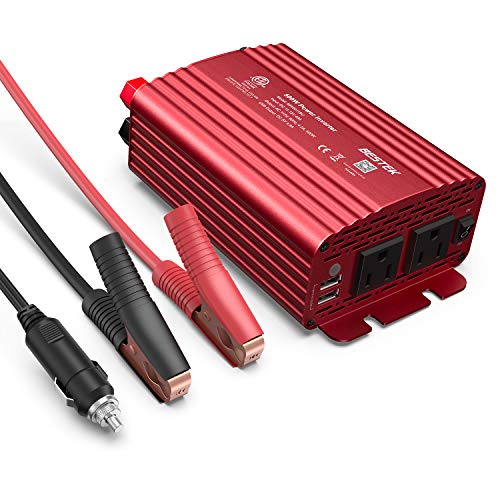
The BESTEK inverter offers 500W continuous power with 1000W surge, two AC outlets, and two USB ports, plus multi-protection against overheating and voltage fluctuations. It’s a solid choice for camping, road trips, or driving where larger devices like laptops can be used intermittently. Best for: users who want dependable dual-outlet power with straightforward protection. Caution: keep loads balanced across outlets to maximize efficiency and avoid overheating.
Cantonape 3000W Inverter With LCD

The Cantonape model provides a high-output 3000W continuous power with 6000W peak, four AC outlets, and four USB ports. The intelligent LCD shows input/output voltage and battery status, with a remote control for easy operation. Best for: power-intensive setups like large RVs, solar systems, or workshops that require multiple devices simultaneously. Limitation: higher power means greater size and weight; ensure adequate mounting and ventilation.
Buying Guide
- Power needs: Match continuous wattage to your typical load. If you frequently run laptops, TVs, or small appliances, a 500W–1000W unit may suffice. For larger tools or multiple devices, consider 3000W–5000W models with appropriate surge ratings.
- Battery compatibility: Check whether the inverter uses 12V DC sources, battery clamps, or is designed for specific battery ecosystems (such as DeWalt 20V). Ensure your battery setup can deliver the required current safely.
- Waveform: Pure sine wave inverters provide steady, grid-like power suitable for sensitive electronics. Modified sine wave units can work for basic devices but may cause noise or inefficiency in some equipment.
- Protection features: Look for over/under voltage, overload, short-circuit, and thermal protection. Automatic cooling is helpful for longer runs.
- Portability vs. capacity: Higher-wattage inverters tend to be heavier. Decide between compact, lightweight options and higher-capacity units that may require mounting or trunk space.
- Display and usability: LCDs that show real-time input, output, and load help with monitoring. A remote control can simplify operation in a vehicle or cabinet setup.
FAQ
- What is a pure sine wave inverter?
A pure sine wave inverter produces a smooth, grid-like AC waveform that supports sensitive electronics without flicker or noise.
- Do I need a large inverter for a small setup?
No. If you mostly power chargers and small devices, a 200–500W inverter is often enough. Reserve higher wattage for laptops or appliances.
- Can I connect an inverter directly to a car battery?
Yes, but follow safety guidelines, use proper fusing, and avoid running the engine while charging if your system isn’t designed for it.
- Is surge power important?
Yes. Some devices require a higher surge to start (like motors or compressors). Ensure the peak rating exceeds your startup needs.
- What should I consider for in-vehicle use?
Look for built-in protections, quiet cooling, and a compact footprint that fits your vehicle’s space and wiring plan.