Best Battery Packs for Solar Systems: Top Picks for Reliable Off-Grid Power
Finding the right battery pack for a solar system depends on capacity needs, compatibility with your inverter, climate, and maintenance expectations. This guide highlights five reliable options with strong safety credentials, scalable configurations, and user-friendly monitoring features. Each pick integrates with common solar setups to support off-grid living, RVs, boats, and home backup needs. Read on for concise specifications, practical use cases, and a buying guide to help you compare options side by side.
Summary Table of Selected Products
- ECO-WORTHY 200 Watt 12V Complete Solar Panel Starter Kit for RV Off Grid with Battery and Inverter
- GRNOE 2-Pack 12V 100Ah LiFePO4 Battery with BMS
- ECO-WORTHY Home Power Station Backup Power with LiFePO4 Batteries
- ECO-WORTHY Home Off-Grid Solar Power System: 10KW Hybrid Kit
- ECO-WORTHY 48V 600Ah Server Rack Battery LiFePO4
ECO-WORTHY 200W Complete Solar Starter Kit
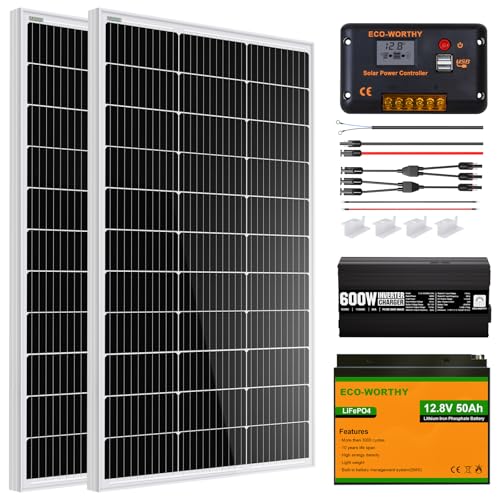
The ECO-WORTHY starter kit combines essential components for a compact off-grid setup. It includes 200W solar panels, a 30A charge controller, a 50Ah LiFePO4 battery, and a 600W inverter, offering a turnkey solution designed for beginners and portable applications like RVs, campers, boats, and cabins. Daily output depends on sun exposure, with an approximate 800Wh under four peak sun hours, providing a practical baseline for light appliances and charging needs. The aluminum-framed, tempered-glass panels offer weather resistance and long life, while the LiFePO4 battery delivers extended cycle life and safety features. This kit aims to balance ease of use with dependable performance for small-scale solar users.
Key considerations: compatibility with common inverters, weatherproof panel construction, and a balanced inverter/battery combination to support daily use without frequent maintenance. The integrated components minimize connection complexity for new solar users while still enabling expansion with additional modules and storage as needs grow.
GRNOE 2-Pack 12V 100Ah LiFePO4 Batteries

The GRNOE batteries deliver reliable LiFePO4 storage with built-in protection and modular sizing. Each 12V 100Ah unit measures 12.9 x 6.7 x 8.6 inches and weighs about 22.5 pounds, offering significant energy density and a long lifecycle that surpasses traditional lead-acid batteries. A compact footprint makes these ideal for RVs, boats, and small off-grid builds. The included BMS provides protection against overcurrent, overcharge, deep discharge, and short circuits, while a low-temperature cut-off supports cold-weather operation. Note that shipments may arrive in two boxes due to weight, and charging should target a voltage around 14.6V for full performance.
Key considerations: cold-weather performance, BMS protection, and shipment logistics. These batteries are designed for longevity and compatibility with systems that can manage higher charging voltages and a parallel battery configuration for increased capacity.
ECO-WORTHY Home Power Station Backup Power

This home power station integrates a high-capacity LiFePO4 battery system with a robust MPPT off-grid inverter. It supports 120V outlets and an impressive 5000W continuous output, suitable for running heavy appliances during outages. The system is designed for scalability, with parallel options to reach higher AC capacity and larger energy storage. Communication features include CAN/RS485, Bluetooth, and Wi-Fi monitoring, enabling remote status checks and system optimization. The design emphasizes safety with a UL-compliant battery assembly and a comprehensive protection framework, making it a strong choice for home backup and emergency readiness.
Key considerations: expandability for higher loads, monitoring capabilities, and ensuring compatibility with existing solar panels or inverters. The integrated approach reduces wiring complexity while offering a path to larger storage as needs evolve.
ECO-WORTHY Home Off-Grid Solar Power System Kit

This complete hybrid kit is designed for off-grid living with a 10 kW rated inverter and four LiFePO4 batteries, pairing with a 4920W solar array. The 410W mono solar panels are optimized for shading tolerance and durability, and the system supports plug-and-play connection to simplify installation. The 48V LiFePO4 battery bank emphasizes safety and energy density, allowing scalable storage by adding more units. The setup aims to deliver dependable independence from the grid, ideal for cabins, remote homes, or recreational properties where reliable solar power is essential.
Key considerations: total system voltage and compatibility with existing grid-tied or off-grid configurations, plus the need for expansion potential as electricity demands grow or seasons change.
ECO-WORTHY 48V 600Ah Server Rack Battery LiFePO4

This 48V, 600Ah LiFePO4 server rack battery is built for space-efficient storage and enterprise-grade safety. With UL1973 and UL9540A certifications, it features a robust 100A BMS, an integrated 125A circuit breaker, and support for closed-loop CAN/RS485 communication. Bluetooth and Wi-Fi enable remote monitoring via a mobile app, while the vertical rack design simplifies installation in server racks. The battery bank can be paralleled with up to 32 units for a total capacity of 163.8 kWh, offering scalable storage for larger off-grid systems, home backups, or commercial applications.
Key considerations: safety certifications, remote monitoring features, and how many units can be paralleled to meet anticipated energy storage needs over time. This option emphasizes high reliability and modular expansion for larger solar installations.
Buying Guide: Key Purchase Considerations for Solar Battery Packs
Capacity and energy needs: Estimate daily consumption and desired autonomy. For RVs or cabins, a few hundred amp-hours at 12V–24V might suffice; for home backup, higher voltage systems with 48V storage often deliver better efficiency and scalability. Consider peak discharge requirements to ensure the battery can handle startup surges from appliances and inverters.
Battery chemistry and lifecycle: LiFePO4 offers longer cycle life, better thermal stability, and safer chemistry than traditional lead-acid. A longer calendar and cycle life translates to lower maintenance and fewer replacements over time, important for off-grid reliability.
Inverter compatibility and sizing: Ensure the inverter’s continuous and surge ratings align with your loads. Some kits provide integrated inverters, while others assume a separate inverter. Check input/output voltages, frequency, and whether the system supports parallel operation for higher capacity.
Monitoring and control: Batteries with CAN/RS485, Bluetooth, or Wi‑Fi monitoring simplify maintenance and performance tracking. Remote alerts and app-based dashboards help you optimize charging strategies, especially in off-grid or emergency scenarios.
Safety and certifications: Look for UL1973 and UL9540A (or equivalent) certifications for domestic safety and electrical compliance. A robust BMS protects against overcharge, over-discharge, short circuits, and temperature extremes, extending battery life and reducing risk.
Physical footprint and installability: Consider cabinet or rack compatibility, weight handling, and space constraints. Rack-mounted designs save space in tech closets or utility rooms and can be scaled by adding more units if the system supports parallel connections.
Environmental conditions: Temperature range and weather resistance influence performance and longevity. LiFePO4 chemistry performs well across a range of temperatures, but extreme cold or heat can affect efficiency and capacity.
Budget and total cost of ownership: While higher upfront costs are common with LiFePO4 systems, longer lifespans and lower maintenance costs can yield favorable total cost of ownership over time. Consider expansion plans and whether the system supports future upgrades.