Best Battery Operated Power Station Options for Backup Power
Whether you need dependable off-grid power for camping, emergencies, or RV trips, a battery operated power station provides portable, quiet, and versatile energy. This guide highlights five top options, focusing on who each device is best for and why it stands out. Use this overview to compare capacity, ports, charging speed, and portability so you can pick the right model for your needs.
| Product | Capacity | Best For |
|---|---|---|
| MARBERO 88Wh | 88Wh | Lightweight outdoor trips and quick daily charging |
| DARAN 89.6Wh | 89.6Wh | Compact, fast-charging on the go |
| HOWEASY 88Wh | 88Wh | Small footprint with multiple outputs |
| Jackery Explorer 1000 v2 | 1070Wh | Extended off-grid living and high-demand appliances |
| EnginStar 296Wh | 296Wh | CPAP use and multi-device charging |
MARBERO 88Wh Portable Power Station
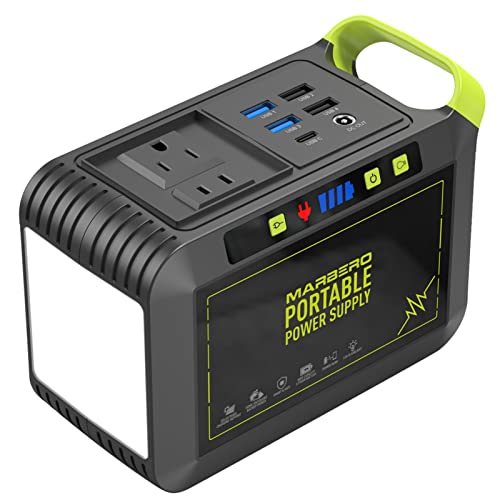
The MARBERO unit is designed for ultralight, on-the-go use. It offers eight output ports and a compact form, making it a practical choice for weekend campers or mobile workers who need essential devices powered without heavy gear. Its built-in BMS supports stable operation, and the included car DC output can assist in driving small appliances in emergencies. Best for travelers who prioritize portability and a broad port mix in a lightweight package.
- Best for backpacking-style trips and short outdoor adventures
- Better for users who want to run smaller devices simultaneously
- Choose this if you value a very slim profile and easy handling
Limitations: Its lower energy capacity means longer outages or high-wattage appliances could require more frequent recharging or a secondary power source.
DARAN 89.6Wh LiFePO4 Power Station

The DARAN model uses a LiFePO4 battery, offering robust cycle life and stability. With a 100W output capability and multiple ports, it suits short trips and daily backup use. It charges quickly to 80% in about 1.5 hours, making it practical for rapid recharging between activities. Best for users who want fast recharging in a compact unit and reliable battery chemistry.
- Best for quick recharges and reliable DC/USB outputs
- Better for travelers who value fast charging in a pocketable device
- Choose this if you need multiple ports and an intuitive LED display
Limitation: Solar panel compatibility is noted as optional; solar charging requires additional equipment not included in the package.
HOWEASY Portable Power Station 88Wh

HOWEASY offers a compact 88Wh unit with 8 outputs and three recharge methods. It supports AC, USB-C PD, car charging, and solar input (panel not included), making it versatile for grid-free camping or home emergencies. Best for adventurers who need a compact, versatile power hub that can be recharged via multiple routes.
- Best for three charging modes and steady output
- Better for users wanting a hidden-handle design for easy transport
- Choose this if you need dual charging while powering devices
Limitation: Peak power is limited; avoid using high-wattage appliances simultaneously at full load.
Jackery Explorer 1000 v2 Portable Power Station

The Jackery Explorer 1000 v2 stands out for high capacity and robust safety features. With 1,070Wh and 1,500W AC output, it can run larger appliances and attentive power management. Its one-hour fast charging via emergency mode, plus Lifepo4 array-style durability, makes it a strong candidate for longer off-grid stays. Best for serious off-grid living or frequent power outages.
- Best for high-wattage needs and longer outages
- Better for those who want a long-lasting battery with rapid charging
- Choose this if you need reliable solar compatibility and a larger solar generator
Limitation: Heavier and larger than compact models; portability is reduced for frequent trekking.
EnginStar 296Wh Portable Power Station

EnginStar combines a mid-range capacity with a diverse port set, including a 110V pure sine wave AC outlet and multiple USB and DC ports. Its large output capability supports charging cpap machines, laptops, and cameras. Best for campers who need dependable multi-device charging with a focus on safety features and a solid battery management system.
- Best for CPAP and small electronics during outages
- Better for multi-device charging without sacrificing safety
- Choose this if you want a balanced mix of power and portability
Limitation: Battery capacity is lower than the largest models, so longer outages require more frequent recharging strategies.
Buying Guide: Key Considerations For Battery Powered Power Stations
- Capacity and wattage: Match the unit’s wattage rating to the devices you plan to run. High-wurst appliances require larger capacity and stable outputs.
- Output ports: Ensure the mix includes AC outlets for appliances, USB-C for fast charging, and DC outputs for devices like fans or cameras.
- Battery chemistry and cycle life: LiFePO4 tends to offer longer cycle life and stability; consider how many charge cycles you expect.
- Charging options: Look for multiple charging modes (AC, USB-C PD, car, solar). Solar compatibility is a plus for off-grid use.
- Portability: Size and weight affect portability for hiking or road trips. A built-in handle and compact dimensions help with transport.
- Safety features: BMS protections, short-circuit protection, temperature control, and overcharge protection are important for long-term reliability.
- Expansion vs. redundancy: If you anticipate needing more power, consider a model with higher capacity or the ability to daisy-chain with a solar panel system.
- Maintenance and care: Some units benefit from initial conditioning (two full cycles) and periodic reconditioning to maintain battery health.
Frequently Asked Questions
- What is the difference between Li-ion and LiFePO4 batteries in power stations?
LiFePO4 generally offers longer cycle life and better thermal stability, making it a preferred choice for extended off-grid use; Li-ion can provide higher energy density but may have shorter lifespans in routine cycling. - Can a portable power station run a household appliance?
Generally, small to mid-size appliances up to the unit’s wattage rating can be powered. Check the surge wattage and continuous wattage ratings for each device. - Are solar panels included with these units?
Most models list solar panels as optional accessories. Ensure you have the compatible panel and connector type if you plan to charge with solar. - How many charge cycles can I expect from these power stations?
Cycle life varies by battery chemistry and usage, typically ranging from hundreds to thousands of cycles. LiFePO4 models often offer higher cycle counts. - What is “peak” power versus continuous power?
Continuous power is the steady output a unit can sustain, while peak power is the maximum momentary output the device can handle for short bursts, useful for short high-draw appliances.