Best Battery Heaters With Thermostats for Cold-Weather Starts
Instant, reliable warmth for cold mornings begins with a battery heater that includes thermostatic control. This guide showcases five options designed to keep car batteries ready in freezing conditions and to prevent start-up struggles. The picks are best for drivers who want automatic temperature regulation, compact installation, and durable silicone or silicone-like construction. The top choices include three silicone heating pads for batteries and two space heaters with built‑in thermostats for broader space heating needs. Use the table to compare key points at a glance.
| Product | |||
|---|---|---|---|
| Nkiy Quen 8.2″ x 5.5″ Silicone Battery Heater Pad | Battery heater pad | Vehicles in severe cold; direct battery warming | Yes |
| Facon 8-1/2″ x 5-1/2″ Silicone Battery Heater Pad | Battery heater pad | Simple, under-battery warming with auto shut-off | Yes |
| Maichis 8-1/2″ x 7-7/8″ Silicone Battery Heater Pad | Battery heater pad | Thermostatically controlled battery warming | Yes |
| AUBKN Space Heater | Portable space heater | Indoor heating with thermostat and remote | Yes |
| VOCRS 1500W PTC Ceramic Space Heater | Portable space heater | Small to medium rooms; thermostat and timer | Yes |
Nkiy Quen Silicone Battery Heater Pad With Thermostatic Control
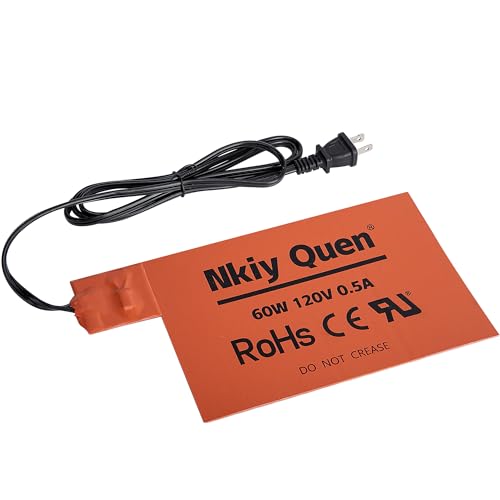
The Nkiy Quen battery heater pad uses built-in precision heating wires that emit uniform heat directly to the battery bottom. It is designed to improve battery activity in cold environments and helps maintain a stable cold start current. The built-in thermostat automatically cuts power around 122°F to prevent overheating, with a note that temperature can vary slightly across the pad during operation. Best for: drivers seeking direct under-battery warming with automatic temperature control. Caution: immediate surface warming may occur before full stabilization; plan for 15–20 minutes of continuous heating for most accurate readings.
Facon Silicone Battery Heater Pad With Thermostatic Control
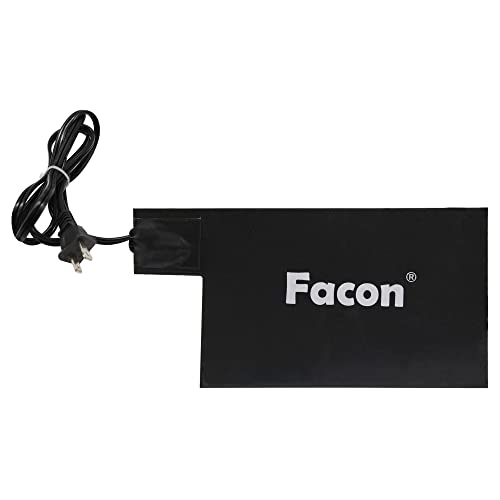
The Facon pad provides under-battery warming via a compact silicone pad. It keeps the battery ready for freezing weather by maintaining cold-cranking amps. A 72-inch plug-in cord powers the unit from a standard 120V outlet, with auto shut-off once the pad reaches around 68°F. It is slim, durable, and resistant to oil and battery acid. Best for: quick, plug-and-go battery warming in garages or driveways. Caution: heating target will vary; monitor to avoid prolonged finish on one area.
Maichis Silicone Battery Heater Pad With Thermostatic Control

The Maichis pad is thermostatically controlled, turning on at 32°F and off at 122°F to prevent overheating. Made of durable silicone, it is designed for automotive battery heating applications and operates at 120V, 60 watts for efficient energy use. Best for: users who want precise temperature regulation with a simple under-battery installation. Caution: slight temperature variation may occur due to thermal distribution across the pad.
AUBKN Space Heater With Thermostat and Remote

This compact indoor heater includes three temperature settings, a built-in thermostat, and a remote control for adjusting temperature and timing from a distance. It features a 12-hour timer and safety protections, including overheat and tipping safeguards. Best for: small rooms or desks where controlled warmth is desired without manual adjustments. Caution: intended for indoor use; place on a stable surface and keep away from moisture or flammable materials.
VOCRS 1500W PTC Ceramic Space Heater

The VOCRS heater uses a 1500W PTC ceramic system for rapid heating with a compact footprint. It offers multiple modes and a timer, making it suitable for bedrooms or offices in need of quick warmth. Best for: users seeking fast heat with programmable timing in small to medium spaces. Caution: noise level and airflow are noticeable at higher settings; consider placement away from sensitive electronics or sleep areas.
Buying Guide
What should you look for when picking a battery heater with thermostat?
- Target area: For battery pads, choose a size that fully covers the bottom of the battery tray. Larger pads provide more even heating but may require a bigger space underneath.
- Thermostat behavior: A reliable thermostat prevents overheating. Look for automatic cutoff and a stated high-temperature threshold (e.g., 122°F or 50°C).
- Power source and cord length: Ensure compatibility with your outlet availability. A longer cord is convenient when the power source isn’t near the engine bay or battery tray.
- Durability and materials: Silicone pads resist oil, battery acid, and wear; this extends life in automotive environments.
- Installation: Slim profiles and pre-drilled fitment often translate to easier placement without tools.
- Energy use: For pads, expect lower wattage; for space heaters, consider whether you need portable warmth beyond the vehicle context.
Frequently Asked Questions
- What is the main function of a battery heater pad with a thermostat? It warms the battery to improve cold-start performance and uses a thermostat to prevent overheating.
- Are silicone battery heater pads safe for automotive use? Yes, when used as directed, they are designed to be thin, durable, and resistant to automotive oils and fluids.
- Can a space heater act as a battery warmer? A space heater is not intended for battery warming, but it can provide general warm environment in a garage or workshop where the vehicle is stored. Use appropriate safety precautions.
- How long should a battery pad run to achieve stable warmth? Manufacturers often note 15–20 minutes for improved temperature stability and performance in cold conditions.
- Do these products require professional installation? Most battery pads boast simple, tool-free placement; space heaters require basic setup and safe usage according to instructions.
- Will the thermostat cause the pad to shut off early in mild weather? The thermostat is designed to prevent overheating; ambient temperatures may alter cycle length, but safety cutoffs remain in effect.