Best Battery Ground Fault Locator Buyer’s Guide
Answer: A battery ground fault locator helps you quickly locate faults in buried or shielded electrical circuits using battery-powered transmitters and receivers. This guide highlights five top options for professionals and DIYers, explaining who each is best for and why. Whether you work on outdoor mains, telecom sites, or solar DC systems, these tools simplify fault tracing without needing mains power. Below is a quick summary of the chosen products to compare at a glance.
| Product | Best For | Key Benefit | Notes |
|---|---|---|---|
| Fluke GFL-1500 | Solar and DC systems | Trace active ground faults with a clear LCD trace | Includes transmitter, receiver, and clamp |
| Armada GFL3000 Ground Fault Locator | Buried wires and field crews | Detects cuts and nicks with dual sensitivity | Audible beeper aids in noisy sites |
| TEMPO PE2003-G Pulser | Precision fault ID on buried conductors | Identifies small breaks with efficient testing | Long leads with heavy-duty clips |
| TEMPO 551 Advanced Locator | Professional underground utility work | Dual frequencies and IntelliTrack for noisy environments | Depths up to 20 ft |
| Amprobe AF-600 A-Frame Locator | Buried utilities with directional guidance | Compass guidance and distance-sensitive left/right cues | Strong for directional tracing |
Fluke GFL-1500 — Solar Ground Fault Locator (1500V)

The Fluke GFL-1500 is designed for locating active ground faults in DC systems, including solar installations. It comes as a complete kit with a transmitter, receiver, and clamp, and it uses a traceable signal to identify fault locations. The graphic LCD with front-light enhances visibility in outdoor or dim workspaces. This tool is best for electricians working on solar or DC networks that require precise fault tracing without a complex setup.
Who it’s best for: field technicians handling solar arrays or DC distribution networks who need a straightforward, traceable signal path. Why chosen: proven readability, a dedicated transmitter/receiver combo, and a clear visual display help pinpoint faults quickly. Caution: ensure compatible wiring practices and safety procedures when tracing high-voltage DC paths.
GFL3000 Ground Fault Locator — Armada Technologies

The GFL3000 locates ground faults and cuts in buried wires, offering dual sensitivity for Hi/Lo volt ranges and an audible On beeper. Its portability makes it suitable for field crews who need quick fault identification in outdoor environments. Best for: technicians working with buried infrastructure and needing audible confirmation alongside a visual readout. Limitation: sensitivity settings may require careful adjustment to distinguish overlapping signals in dense cable runs.
TEMPO PE2003-G Pulser Ground Fault Locator

The TEMPO PE2003-G Pulser is built for precise fault identification on buried wires. It highlights even small breaks in insulation and supports efficiency by detecting multiple faults along a single conductor, helping users decide if replacement is needed. Best for: contractors who must optimize repair scheduling and reduce unnecessary digging. Caution: users should be comfortable with advanced testing and interpreting multiplex fault signals in longer cables.
TEMPO 551 Advanced Underground Locator

The TEMPO 551 is a professional-grade underground utility locator with dual frequencies and IntelliTrack noise rejection. It can locate lines across substantial distances—over 1 mile with depths up to 20 feet—while offering peak and null receiver modes to fine-tune results. Best for: busy job sites where electromagnetic noise is common. Limitation: higher cost and more complex operation than entry-level models.
Amprobe AF-600 A-Frame Ground Fault Locator
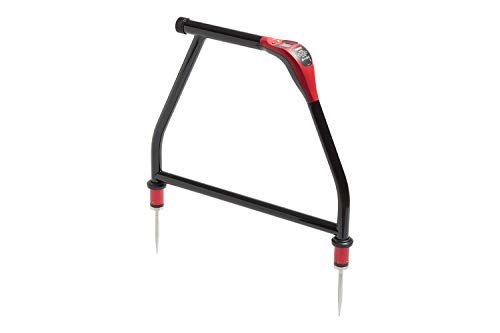
The Amprobe AF-600 A-Frame Locator offers cable, wire, and ground fault tracing with compass direction indicators to point toward the fault. Its distance-sensitive guidance helps guide users along the buried path for precise fault correction. Best for: technicians who need directional cues in field tracing. Caution: ensure the device is used with proper calibration and real-world baseline checks to avoid misinterpretation in complex layouts.
Buying Guide: Key Purchase Considerations
- What environment will you work in? Outdoor, noisy urban, or high-EMI sites benefit from models with IntelliTrack or dual-frequency capabilities.
- What type of fault are you tracing? Buried wires, insulation breaks, or active DC faults require specific transmitter/receiver configurations and lead quality.
- What is your preferred workflow? Models with audible alerts, clear LCDs, or directional guidance suit different user styles.
- What is the maximum tracing distance and depth you need? Consider depth ratings and range to select a tool that matches your typical job scale.
- Budget and complexity. Entry-level tools are simpler and cheaper, while professional-grade locators deliver more features but require training.
Frequently Asked Questions
- What is a ground fault locator used for? It locates faults in buried or shielded electrical paths by transmitting a signal and tracking its return.
- Do these tools require mains power? Most battery-powered locators operate independently of the power grid, which is ideal for fieldwork.
- Can I use a ground fault locator for telecom cables? Some models support multiple cable types; check the product specifications for compatibility.
- What should I consider when choosing a model for solar DC systems? Look for DC compatibility, clear displays, and reliable signal tracing in low-visibility environments.
- Is training necessary to use professional locators? Higher-end devices often benefit from operator training to interpret signals accurately.
- How do I assess suitability for buried utilities? Consider depth capability, noise rejection, multiple frequency options, and how easily you can interpret feedback from the receiver.