Best Battery for RV Camper: Top Power Solutions for Off-Grid Trips
Choosing the right RV battery is essential for dependable power while camping, boon to solar setups, and extended off-grid stays. This guide reviews five leading batteries that suit American RVers, from sealed AGM options to high-capacity LiFePO4 packs. You’ll find performance notes, compatibility tips, and practical buying cues to help you pick a model that matches your travel rhythm and energy needs.
| Product | Type | Approx. Capacity | Why It Stands Out |
|---|---|---|---|
| Weize Deep Cycle AGM 12V 100Ah | AGM | 100Ah | Maintenance-free; low self-discharge; robust for RV use |
| Renogy Deep Cycle AGM 12V 100Ah | AGM | 100Ah | Trusted reliability; safe, sealed design; good for series/parallel configs |
| ECO-WORTHY 3584Wh 12V 280Ah LiFePO4 | LiFePO4 | 280Ah | Built-in BMS, Bluetooth monitoring, high energy density |
| TEMGO 12V 300Ah LiFePO4 | LiFePO4 | 300Ah | Large capacity with low-temp protection and Bluetooth app |
| NOCO Snap-Top BG24 Battery Box | Battery Box Accessory | — | Rugged, easy installation, protects battery storage in RV bays |
Weize Deep Cycle AGM 12V 100Ah Battery
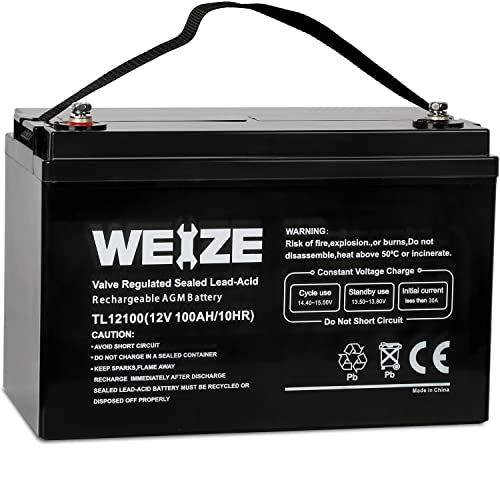
The Weize AGM 12V 100Ah battery is a sealed lead-acid design optimized for RVs, boats, and off-grid systems. Its maintenance-free construction reduces the need for periodic acid checks and watering, while the AGM technology minimizes electrolyte leakage. The battery measures 12.99 x 6.73 x 8.43 inches, aligning with typical RV battery compartments. A relatively low self-discharge rate helps store power between trips, improving readiness for weekend getaways. Operational temperature ranges make it usable across many camping climates, from cool mountain nights to hotter desert days.
For RV setups, its 100Ah capacity can support basic conveniences—LED lighting, a small fridge, and water pump—without draining too quickly. This model harmonizes well with solar panels and auxiliary inverters, offering a dependable workhorse for moderate energy needs. While not a lithium option, the AGM chemistry provides a robust, budget-friendly alternative with straightforward replacement in standard RV electrical bays.
Renogy Deep Cycle AGM 12V 100Ah Battery

Renogy’s AGM 12V 100Ah battery emphasizes safety and durability, making it a popular choice for RV users building ballast-style or solar-assisted power setups. The sealed design minimizes leakage risk and simplifies installation in cramped bays. Renogy notes compatibility with series and parallel configurations, enabling users to scale capacity for larger rigs or seasonal off-grid offshoots. The internal construction focuses on stability under load, helping maintain steady voltage delivery for appliances like lighting, fans, and electronics on longer trips.
In RV contexts, this battery pairs well with solar controllers and inverters, supporting modest to moderate energy requirements. Its 100Ah rating provides a comfortable buffer for daily RV life, though heavy usage or winter-season cold starts can reduce usable capacity. As with other AGM models, expect a heavier weight compared to lithium options and plan for the RV storage space and mounting orientation accordingly.
ECO-WORTHY 3584Wh 12V 280Ah LiFePO4 Battery

This ECO-WORTHY model delivers a substantial 280Ah capacity with LiFePO4 chemistry, designed for extended RV life off-grid. A built-in 200A BMS provides comprehensive protection against overcharge, over-discharge, overcurrent, and short circuits, helping to safeguard both battery health and connected devices. Real-time monitoring via a companion app keeps users informed about voltage, current, and remaining capacity, aiding proactive maintenance and planning of energy draws during long trips.
Low-temperature protection ensures operation in cooler climates, with charging and discharging cutoffs at carefully chosen thresholds. The battery’s rugged frame and high cycle life (thousands of cycles typical for LiFePO4) make it a suitable choice for solar-dominated rigs or power-hungry setups like air conditioning in hot climates. While higher upfront cost is a consideration, the long-term lifespan and safety features often justify the investment for serious RV enthusiasts.
TEMGO 12V 300Ah LiFePO4 Battery

TEMGO’s TEMGO 12V 300Ah LiFePO4 battery targets high-demand RV users needing substantial power storage. Equipped with a built-in 200A BMS and a smart touch screen for status readouts, this unit supports real-time monitoring via Bluetooth for phone-based oversight. The 2560W power rating hints at strong peak output, which is beneficial for running higher-draw appliances or extended boondocking sessions. With thousands of cycles expected, the LiFePO4 chemistry offers longevity and resilience in varied climate conditions, making it a favorable choice for larger RVs, travel trailers, or campers seeking dependable, long-term energy independence.
Potential considerations include ensuring the installed space accommodates the unit’s size and maintaining proper cooling during heavy use. The advanced BMS contributes to safety and performance stability, especially when pairing with solar arrays or generators. This battery is well-suited for RV owners prioritizing long-term reliability and plenty of optional system expansion.
NOCO Snap-Top BG24 Battery Box

The NOCO Snap-Top BG24 Battery Box is an accessory designed to house Group 24 12V batteries securely in RV compartments. It emphasizes rugged construction, straightforward mounting, and a clean fit for tight bays. The pre-drilled holes and strap-mount options simplify installation, reducing the need for additional hardware. This box is a practical addition for RV owners who want to protect their battery investment from moisture, dirt, and mechanical wear while ensuring safe, organized wiring and space management.
While not a battery itself, the Snap-Top BG24 contributes to safety, accessibility, and longevity of your power system—especially in weather-prone or rugged camping environments. Similar models are available for other battery sizes, broadening compatibility for various RV battery configurations and making it easier to upgrade or reorganize an electrical bay as needs evolve.
Buying Guide: Key Purchase Considerations
- Battery chemistry: Lithium iron phosphate (LiFePO4) offers higher energy density, longer life, and deeper cycling but at a higher upfront cost. AGM is budget-friendly, safer in sealed designs, and simpler to source for many RVers.
- Capacity needs: Estimate daily energy use (lights, appliances, fridge, water pump) and choose a battery with ample Ah or Wh. Larger RV rigs or solar-heavy setups benefit from 200–300Ah LiFePO4 packs or multiple AGM batteries in parallel/series configurations.
- Temperature tolerance: RV environments vary. LiFePO4 models with low-temp protection help maintain performance in winter camping; AGM models generally tolerate a broader ambient range but with reduced efficiency in extreme cold.
- Power management: Look for BMS features (overcharge, over-discharge, short-circuit protection) and consider Bluetooth or app monitoring for real-time status and maintenance reminders.
- System integration: Ensure compatibility with your inverter, solar charge controller, and bus wiring. For expansion, verify whether batteries support series or parallel stacking and the maximum allowable current for your BMS.
- Physical fit and installation: Check dimensions and weight to ensure your RV battery bay can accommodate the unit. Consider accessories like battery boxes or mounting kits to improve safety and accessibility.
- Maintenance and lifecycle: LiFePO4 batteries typically offer thousands of cycles with minimal maintenance, while AGM units require occasional checks but are easier to replace with widely available 12V options.
- Cost of ownership: Evaluate total cost of ownership, including warranty length, expected cycle life, and potential savings from reduced charging requirements or longer intervals between replacements.
- Weight and mobility: Heavier AGM packs may require careful handling in compact RV bays. LiFePO4 packs, while lighter for their capacity, demand attention to mounting and venting considerations.
- Safety and usage: sealed chemistries minimize leakage and venting. Always follow manufacturer instructions for charging rates, temperature limits, and storage practices in an RV setting.
Choosing the right battery involves balancing upfront cost against long-term reliability, daily energy needs, and how you plan to use your RV off-grid. For weekend trips with modest electrical demands, a 100Ah AGM like the Weize or Renogy models can be sufficient. For full-time or solar-heavy RV lifestyles, LiFePO4 options such as ECO-WORTHY or TEMGO offer greater headroom, longer service life, and advanced monitoring to maximize uptime on the road.